
Why questions?
Written by John Macpherson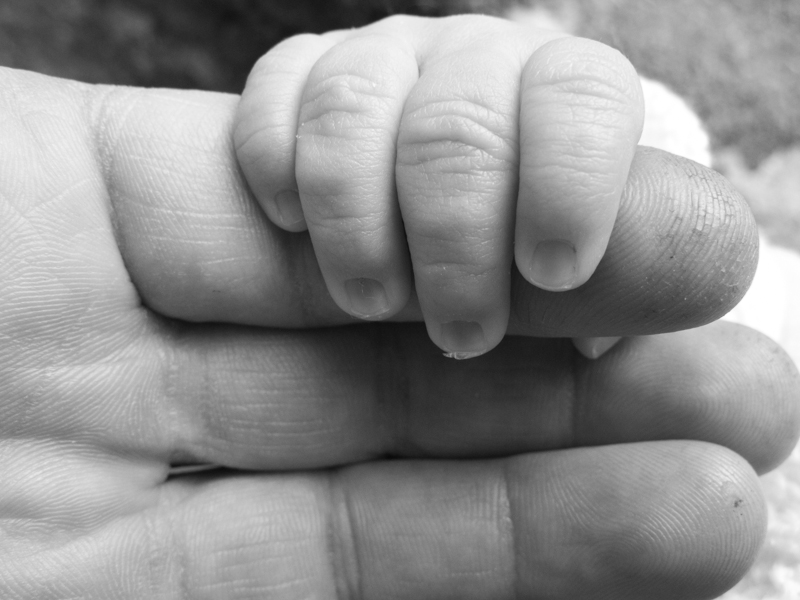
Touch © John MacPherson
There’s been a couple of questions asked on duckrabbit recently.
Benjamin’s question posed in his post At what point do you put down the camera and call the police? elicited some interesting responses, with many querying his motive for actually asking this (important) question. Several tweeters were fairly condemnatory in their opinion of what was being asked, somehow interpreting it as “an inflammatory post” in which he sought to “pass judgment” on the photographer and so on.
Madeleine’s more recent and impassioned post questioning the use of Samuel Aranda’s iconic (and for me powerful, and important) image outwith its original context elicited a similar reaction. And I think it is critical to say that it’s an image that’s important to Madeleine too. One she had ‘invested’ in intellectually and emotionally before she asked this recent question.
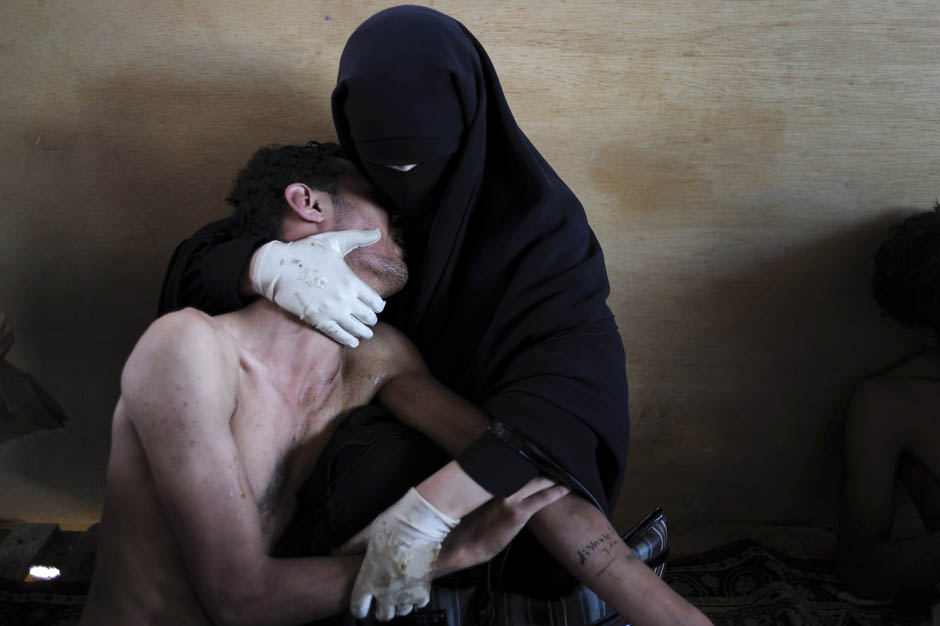
Image © Samuel Aranda
What was interesting to me in both instances was the way the discussion very rapidly shifted away from the questions being asked, and instead focusing more on the motives of the authors.
I have to confess to being surprised at these responses. Yes these are ‘difficult’ issues, but damn, it’s difficult subject areas that are under scrutiny, and ones that surely need discussion?
I’m genuinely perplexed by the reasoning that concludes that attacking the questioner is more important than exploring what the answers might be to their questions.
So I’ll mention one example from personal experience that perhaps underlines why asking questions is important. It might at first seem facile and unrelated to the original topics of ‘domestic violence and child abuse,’ and ‘comfort of a son in a war zone’ but bear with me, because I think it sheds light on this difficult subject, even if somewhat obliquely.
Why? Because I firmly believe that if we can’t (or won’t) question things we see in our everyday lives what right do we have to pass judgment on the ‘bigger’ issues mentioned above? And if nothing else it describes an incident that was bloody important to me.
I’m a home dad, I took on the role when William was 4 months old and mum went back to work. It’s been an interesting experience being the primary carer, offering me valuable insights into circumstances I’d not otherwise have access to, and as a confident older dad, also not afraid to question perceived ‘problems’ whenever I see them (such as lack of male-accessible baby changing facilities in certain places etc).
William had separation anxiety, and the beginning of nursery attendance (which we’d decided would be only a few hours twice a week, so that I could spend as much time with him as possible) was painful in the extreme. I took him into the nursery for his first stay and when he was distracted by a member of staff I was ushered into the nursery office with several of the other staff who were on a break. We were separated from the main play area by a pane of glass, and I was told to “Stay out of sight”. All was fine for a few minutes until William noticed daddy was gone. And he started to get anxious, then cry.
The exchange with the staff went as follows:
Staff, smiling as they saw my dismay, said: “Don’t worry they all do this!” in a jaunty tone.
Me: “Ok, but he’s not going to like this, trust me.”
Staff, cheerily “He’ll be fine! They have to learn!”
William’s anxiety escalated and the tears became full-on panic, desperately looking around for me, and wailing, the staff member with him unable to console him despite her best efforts.
Staff: “Don’t worry he’ll be fine! This is nothing compared to some of them!”
Me: “Ok I’ll take your word for that.”
A minute passed and William grew more anxious and then started to hyperventilate, becoming extremely distressed, red-faced and gasping.
Me: “At what point do you consider enough is enough?”
Staff: “Eh? What do you mean?”
Me: “I mean, he’s not having a good time, obviously, and we can stop that any time we choose by going out to him. I know you said ‘he’s got to learn’, but I’m curious about what you actually think we’re teaching him here? Have you thought about that?”
Staff: “Are you anxious, do you want to go out?”
Me: “No, I’ve asked you a question which I assume as professional practitioners you’ll have considered, which is when confronted by a distressed child in a state like this and in these particular circumstances, at what point do YOU consider it appropriate to intervene? I’m curious about what you think he is “learning” from this?”
Staff, still not getting the point: “We can stop if you want and go out.”
Me: “No, it’s not about what I want, but what William needs, and I’m asking you to tell me from your ethical standpoint, and with your training, when you’ll intervene to assist this child? If the circumstances were different, ie not in a nursery but out in public, and a child was in this sort of state, providing an immediate remedy would be a priority, and to not provide it would be tantamount to abuse surely?”
Staff (several more of them have joined us) are all now anxious: “Err will we go out then?”
Me: “Up to you really, but personally I’m not comfortable with the situation at all. Whilst I’m very uncomfortable with the fact he’s become that distressed, I’m far more uncomfortable and perplexed by the fact that we’re deliberately choosing not to help, and I’m not entirely sure you’ve considered the ethical implications of whats going on here, if you understand what I mean. In the sense that once this situation, one of our making, goes beyond a certain point of distress we’re not only responsible for it, but duty bound to do something to remedy it, particularly when we have the remedy to hand – me. Would you not agree?”
Staff, now quite anxious: “Well yes, er umm I think we should go out then.”
And we did, and William was relieved, calmed down, I stayed, he was happy, I left briefly, and he was still happy, and occupied for half an hour whilst I waited outside just in case I was needed again, but he was still content when I returned. And the nursery staff were great and they all developed a fine relationship with him and the 6 months he was with them were pivotal in his development, and hugely rewarding for all of us.
But that ethical question: When do you intervene? It’s a bloody hard one. The answer will of course vary wildly, with the bewildering variety of circumstances one might ask it in. But that does not mean it’s not worth asking. But there’s an even harder question: why should we intervene? And that’s because we often need to first determine if our actions (and often inaction) serve our own needs, rather than the needs of someone else.
My question raised a few eyebrows amongst the nursery staff, and it also raised further discussion later, some of which I was involved in, albeit very briefly, before I took my son home. It may be that the same routine is still followed in the nursery, no matter, the important thing is that the ethical framework around those specific circumstances has been discussed and hopefully strengthened. Simply, people taking a course of action with the full awareness of what they’re doing; rather than not even thinking about it: the “don’t worry they all do this!” approach, one that ignores the nuances of the personal and sees the behaviour as ‘common’ and not something which deeply affects an individual.
Which brings us back to questions like those posed by Benjamin: “At what point do you put down the camera and call the police?” ; and by Madeleine: ” How are our professional and personal identities shored up again and again by capturing and viewing and trading in the suffering of others, whilst tangible, meaningful outcomes for those depicted are left un-grasped?”
These are big issues with a bewildering variety of circumstances and outcomes, and I honestly don’t know the answers. I really don’t. Sometimes there are no answers. But I’d like to see possibilities discussed. The possibilities of taking a particular ethical stance and ‘making that call’ or ‘questioning the use of an image on a t-shirt’, but most importantly and something that should concern all of us – discussing the potential implications and consequences of NOT doing so, the consequences of doing nothing.
And forgive me if I stretch this even further metaphorically, but…you know, in the nursery, when I comforted my son, I sat on the floor and cradled him, his head buried in the gap between my chest and upper arm, and he gasped and sobbed and convulsed , and I let him feel my presence, know I was there – for him, just for him. And for a moment, despite the fact I wore no rubber gloves, no niqab, and am not a woman, I was that figure cradling a distressed son that Samuel Aranda so eloquently framed. In that moment was contained the universal message Aranda’s image encapsulates – caring.
Surely that’s why its worth doing something, even if sometimes it’s ‘only’ asking those difficult questions?

Author — John Macpherson
John MacPherson was born and lives in the Scottish Highlands. He trained as a welder in the Glasgow shipyards, before completing an apprenticeship as a carpenter, and then qualified as a Social Worker in Disability Services. Along the way he has cooked on canal barges, trained as an Alpine Ski Leader & worked as an Instructor for Skiers with disabilities, been a canoe instructor, and tutor of night classes in carpentry, stained glass design and manufacture, and archery. He has travelled extensively on various continents, undertaking solo trips by bicycle, or motorcycle. He has had narrow escapes from an ambush by terrorists, been hit by lightning, caught in an erupting volcano, trapped in a mobile home by a tornado, kidnapped by a dog's hairdresser, rammed by a basking shark and was once bitten by a wild otter. He has combined all this with professional photography, which he has practised for over 35 years. He teaches photography and acts as a photography guide & tutor in the UK and abroad. His biggest challenge is keeping his 30 year old Land Rover 110 on the road. He loves telling and hearing stories.