
Dark and familiar
Written by John MacphersonI took a trip over to the west of Scotland to see family this week. With some time to spare I thought I’d revisit a place I’d not been for a few years – Loch Arkaig.
Arkaig is a well-hidden stretch of fresh water, tucked in behind the hills to the north of Fort William. It’s on a dead-end road, single-track and poorly maintained, the kind of highland road that kills caravans, bashes the spoilers off low-slung vehicles, and terrifies those foolish Dutch and German campervan owners who were sweet-talked by a salesman into getting a van that’s two metres longer than is really sensible.
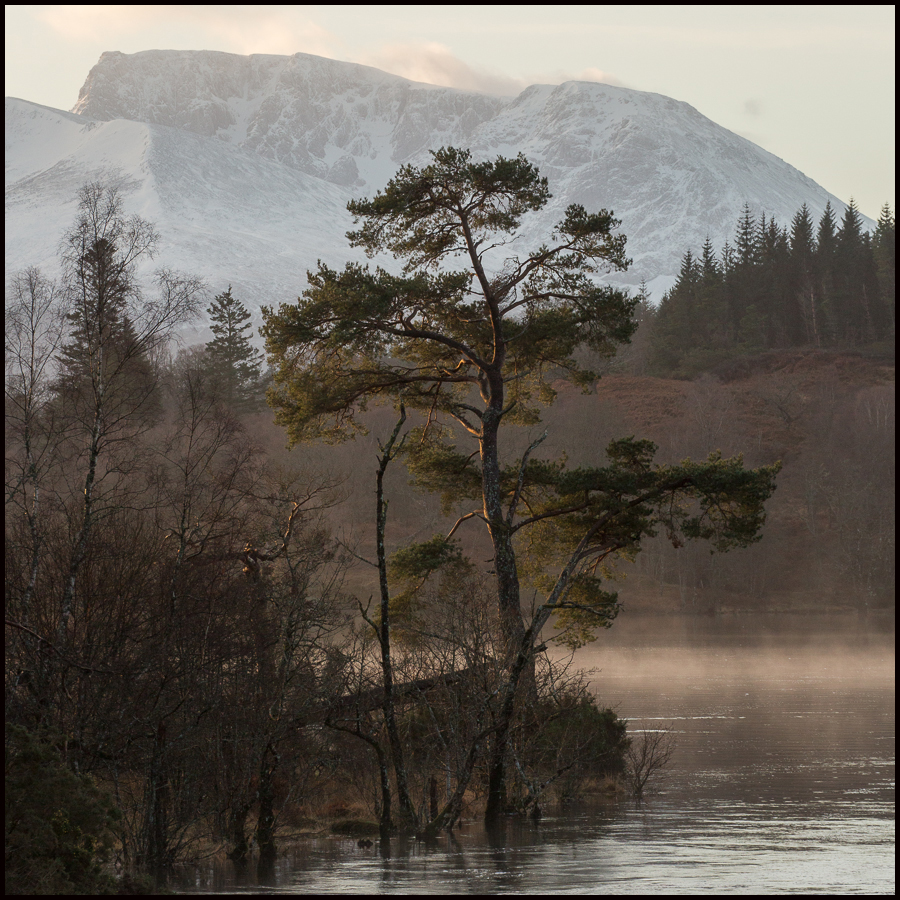
Ben Nevis from Bunarkaig © John MacPherson
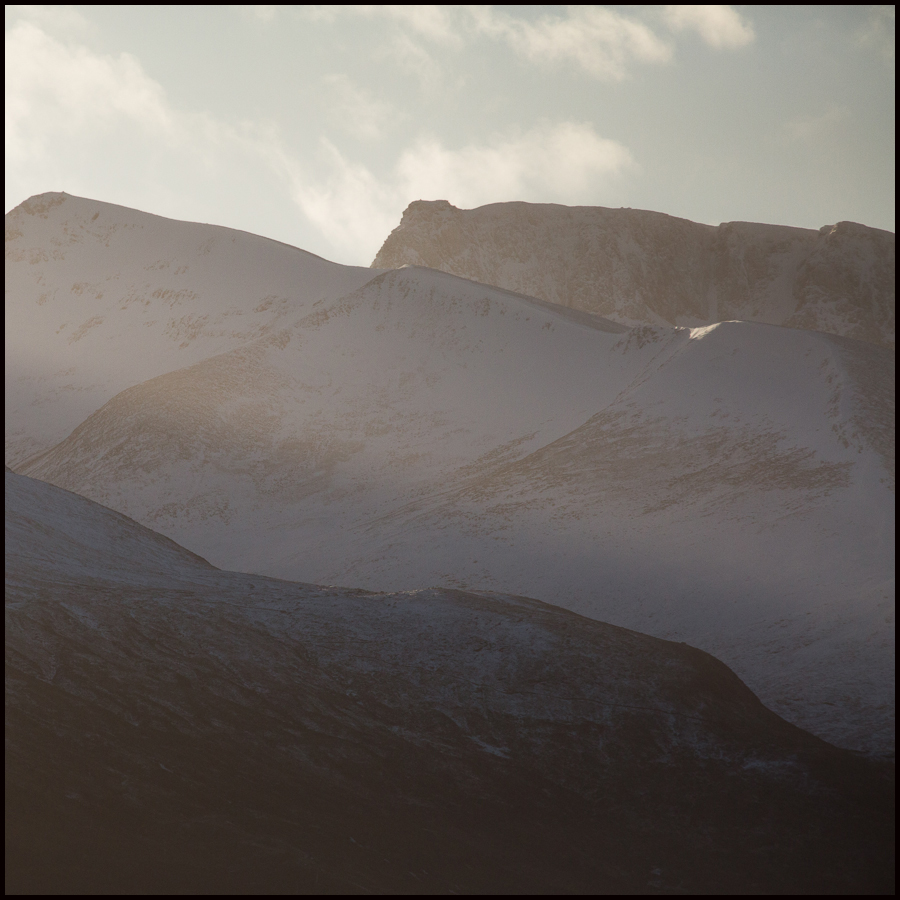
Ben Nevis from Spean Bridge © John MacPherson
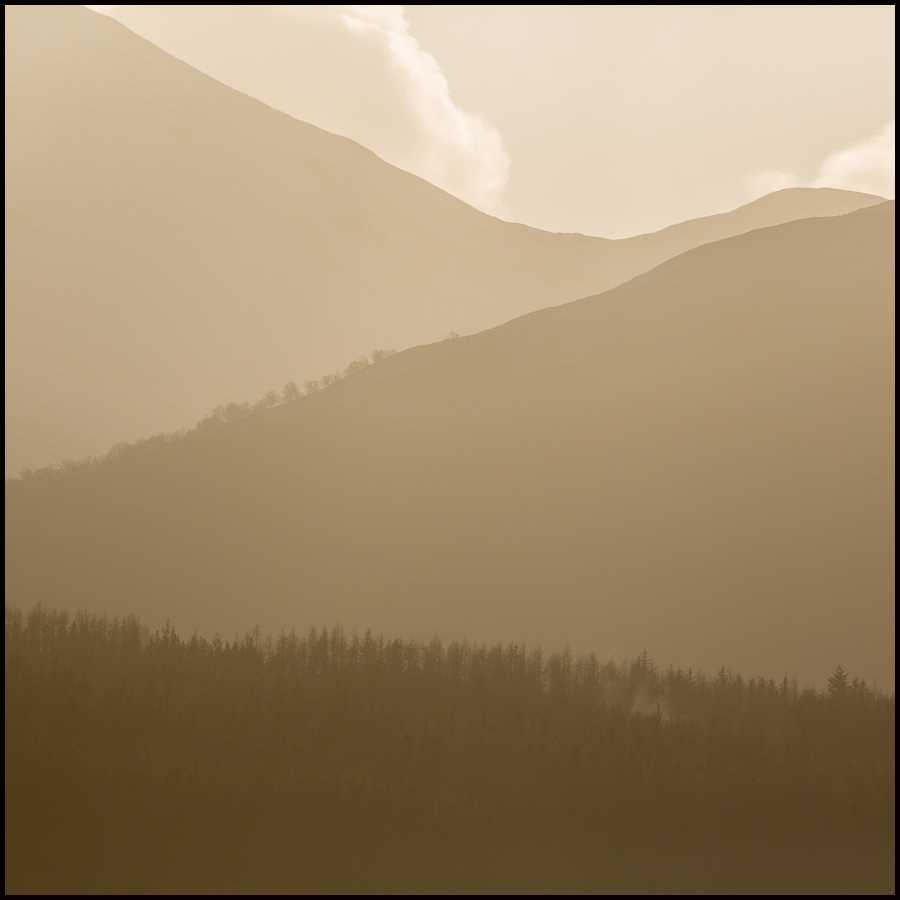
The Grey Corries from Spean Bridge © John MacPherson
Access to it is at first spectacular, following the Caledonian Canal from Fort William on the back road to Gairlochy, or from the other direction, the switchback road from Spean Bridge, both roads offering astonishing views west towards Ben Nevis, its great bulk looming over Fort William, its lower slopes my childhood playground, and then its upper reaches as I grew older and bolder, emulating my dad who was a pioneer skier, one of several committed locals who enjoyed its excellent Alpine conditions back in the 1950’s. Previous to that, at the end of the 19th Century, my grandfather used to hire ponies and attendants that would ferry you to the summit of ‘The Ben’ for 1 Guinea, including lunch. Nothing quite so exotic today, now you just walk.
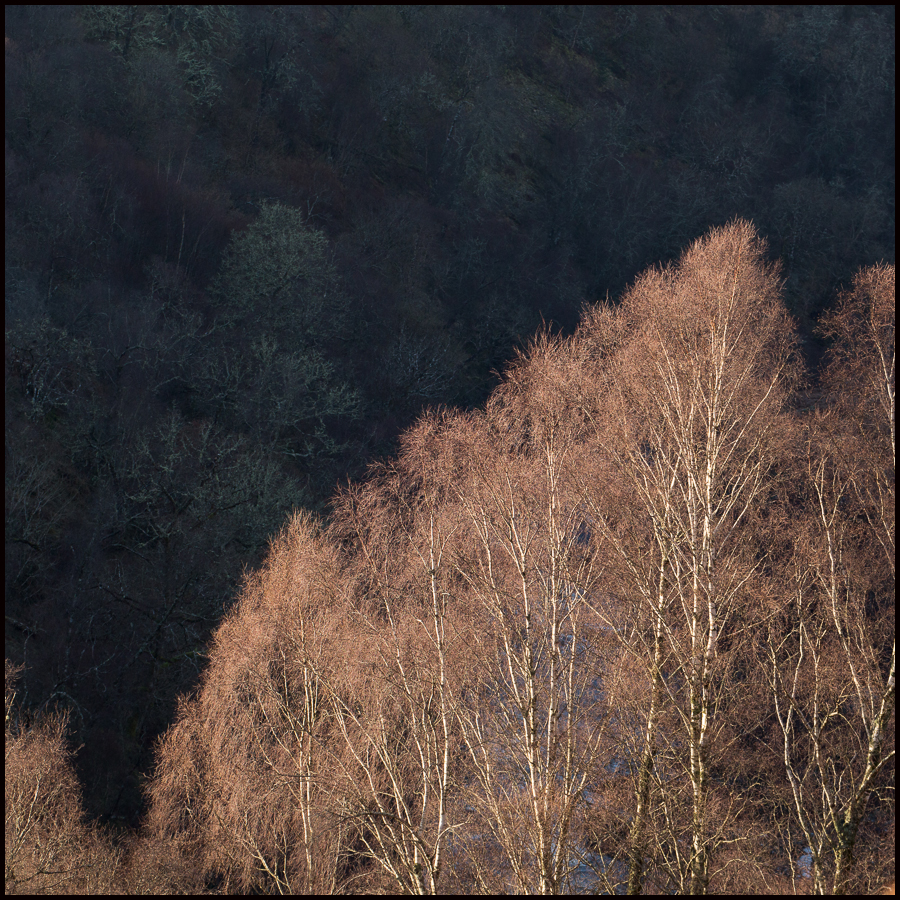
Winter birches near Spean Bridge © John MacPherson
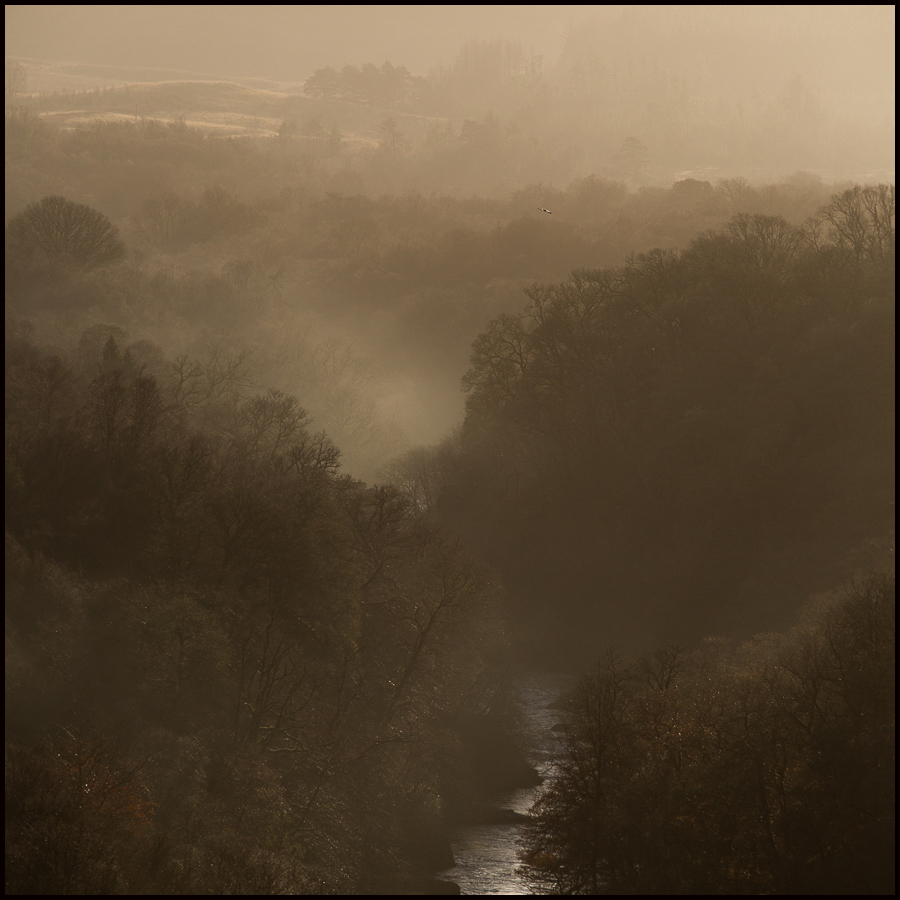
Morning mist over the River Spean © John MacPherson
This is Commando country – the WW2 training for covert operations in Europe took place near here and the Commando Memorial set on the hill above Spean Bridge has to have the most impressive location of any monument anywhere. A fitting tribute to those whose lives were lost.
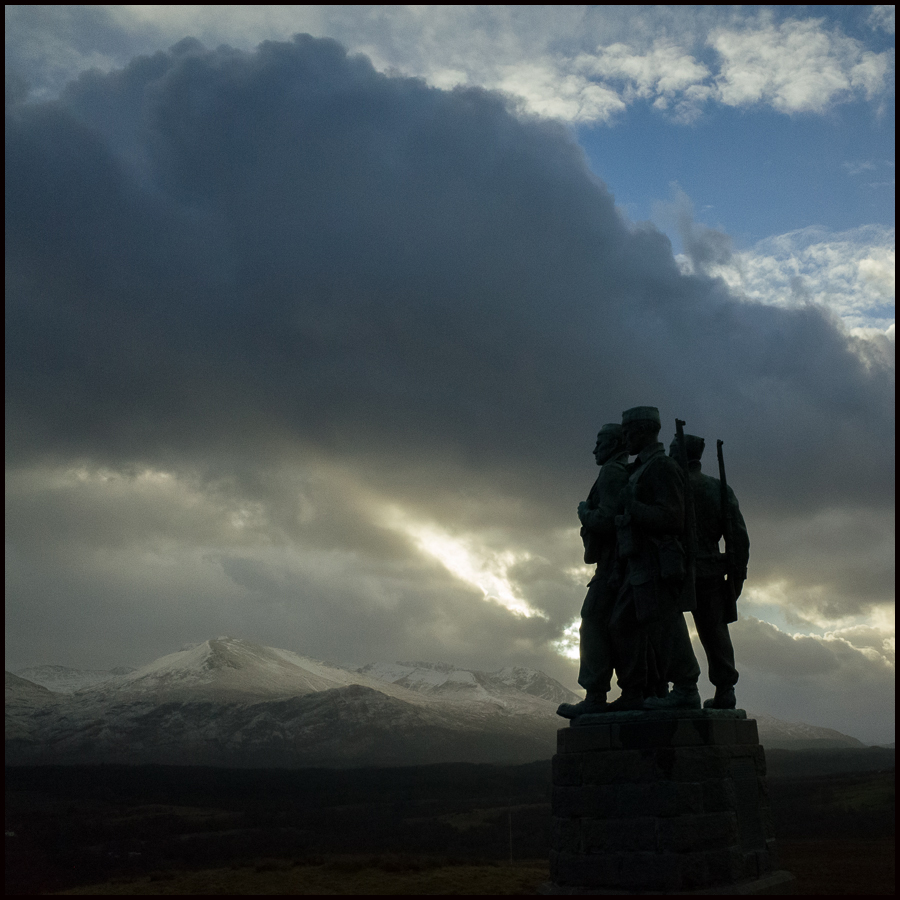
Commando Memorial, Spean Bridge with Ben Nevis behind © John MacPherson
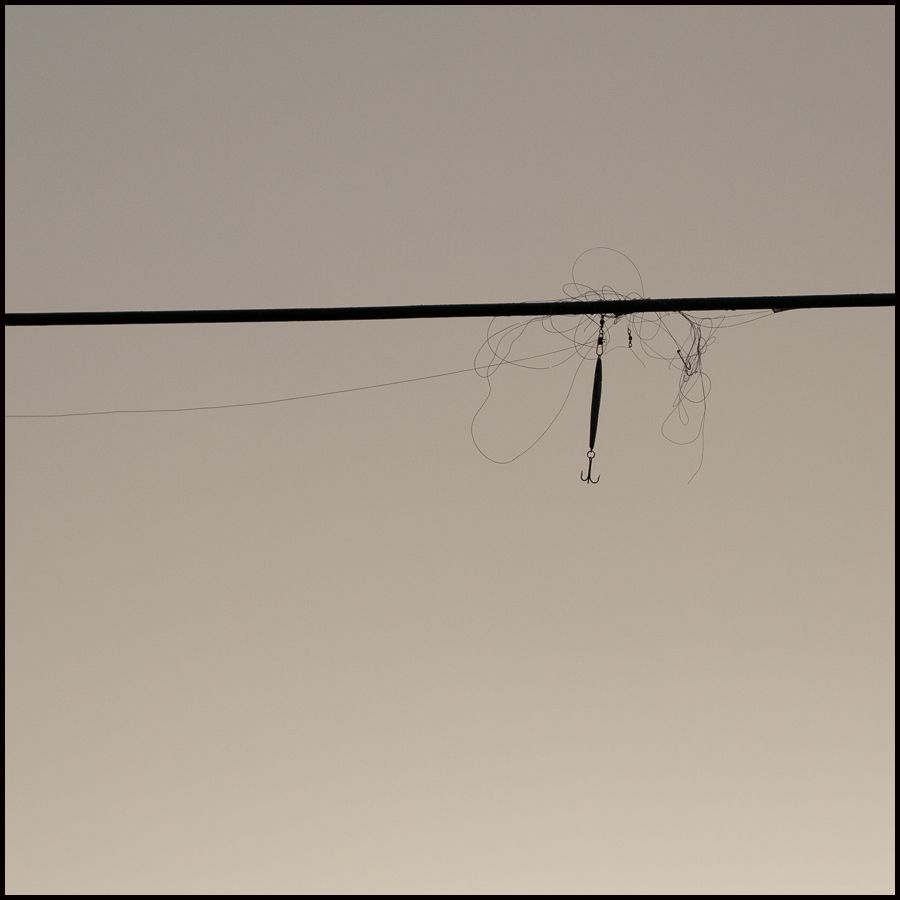
Fishing lure on electrical wire high above the River Arkaig, Bunarkaig © John MacPherson
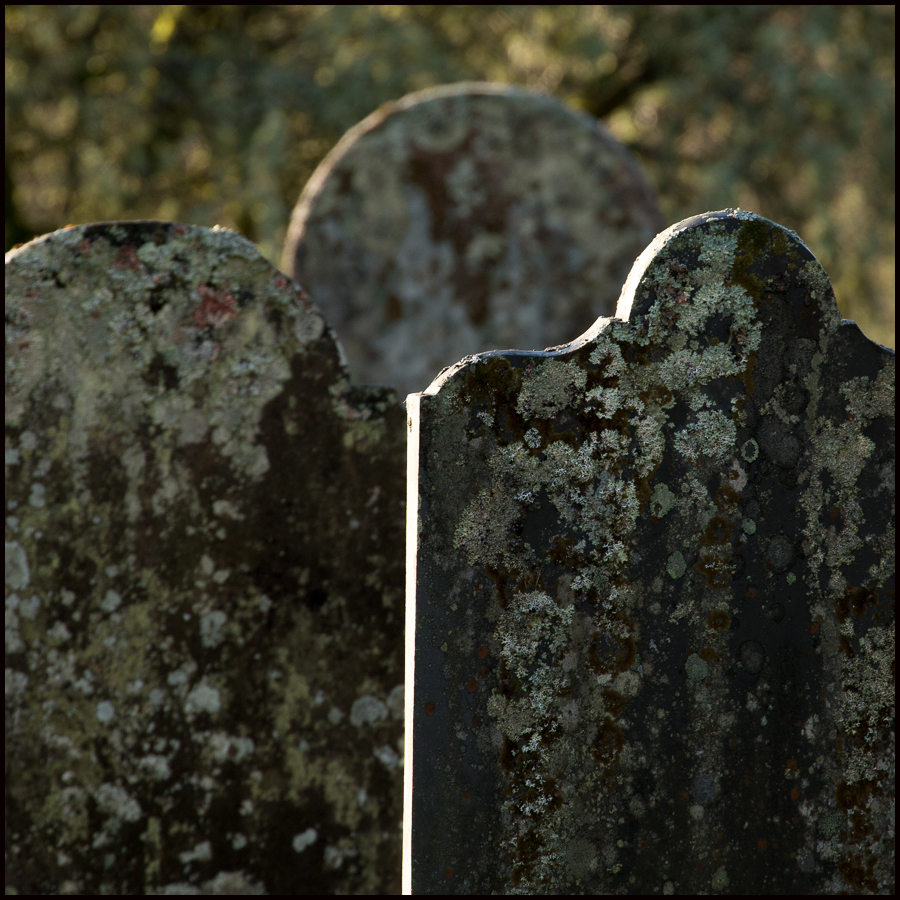
Old graveyard near Loch Arkaig © John MacPherson
It was pre-dawn when I set off and as a consequence I was treated to the sunlight spilling in over the mountains to the north of Ben Nevis, which form an impressive 12 mile long ridge called ‘The Grey Corries’ after the grey quartzite scree that covers some of the sides of the ridge. It’s a fantastic high walk, with epic views all around, and if you are really keen you can add Aonach Mor, Carn Mor Dearg and Ben Nevis onto the end of the Grey Corries walk and really do yourself in. As I did, once, running its length on a glorious summer day and finishing off the ‘adventure’ by vomiting uncontrollably over the dyke at Achintee, then limping home minus both big toe nails which had rather unfortunately detached and were now stuck firmly to the congealed blood inside my socks. But today, I was just looking from afar, and enjoying the light as shafts of rising sun spilled over into the glen below.
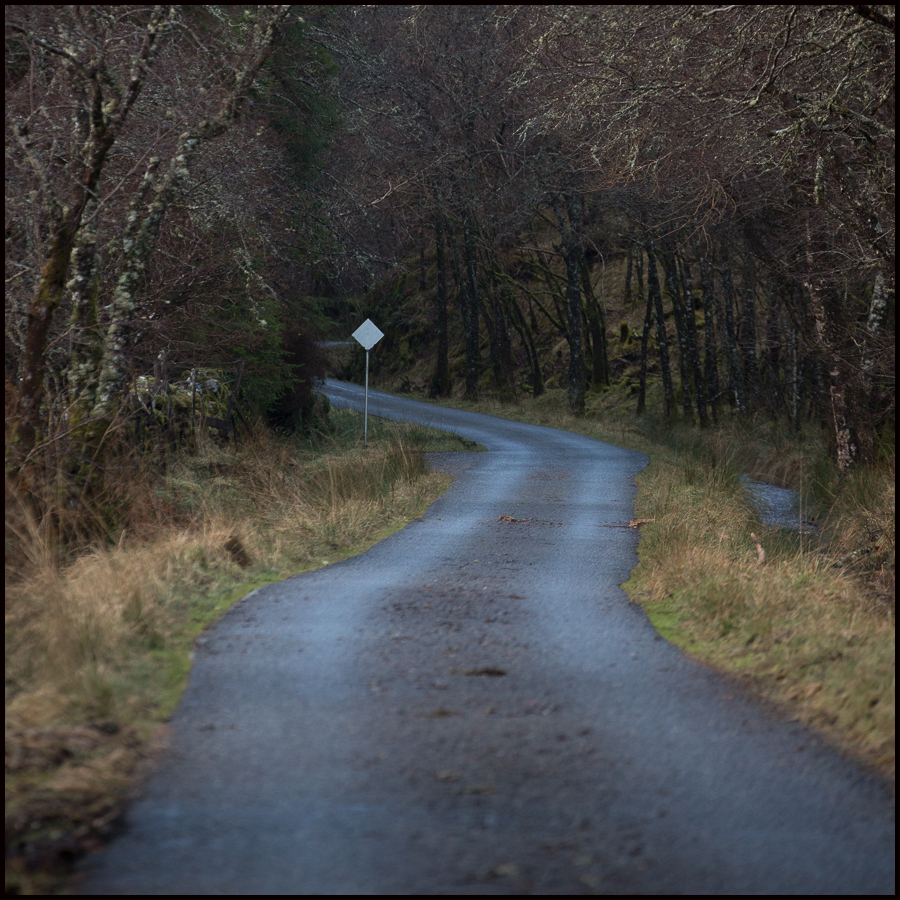
Entering The Dark Mile © John MacPherson
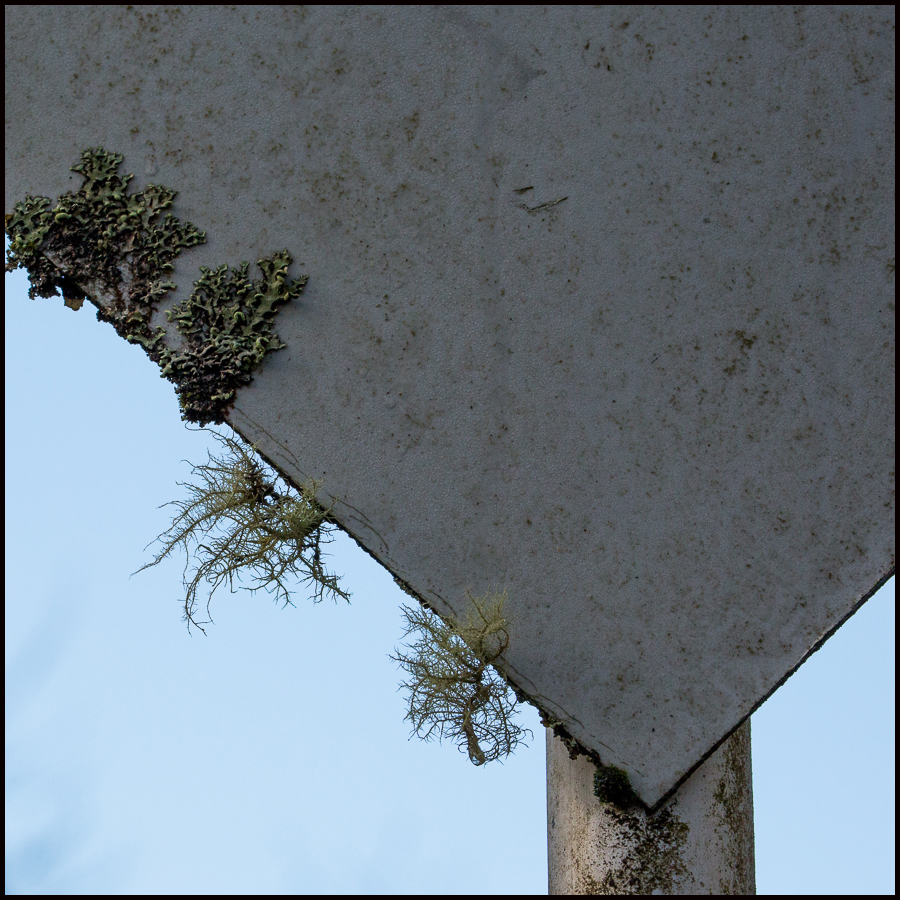
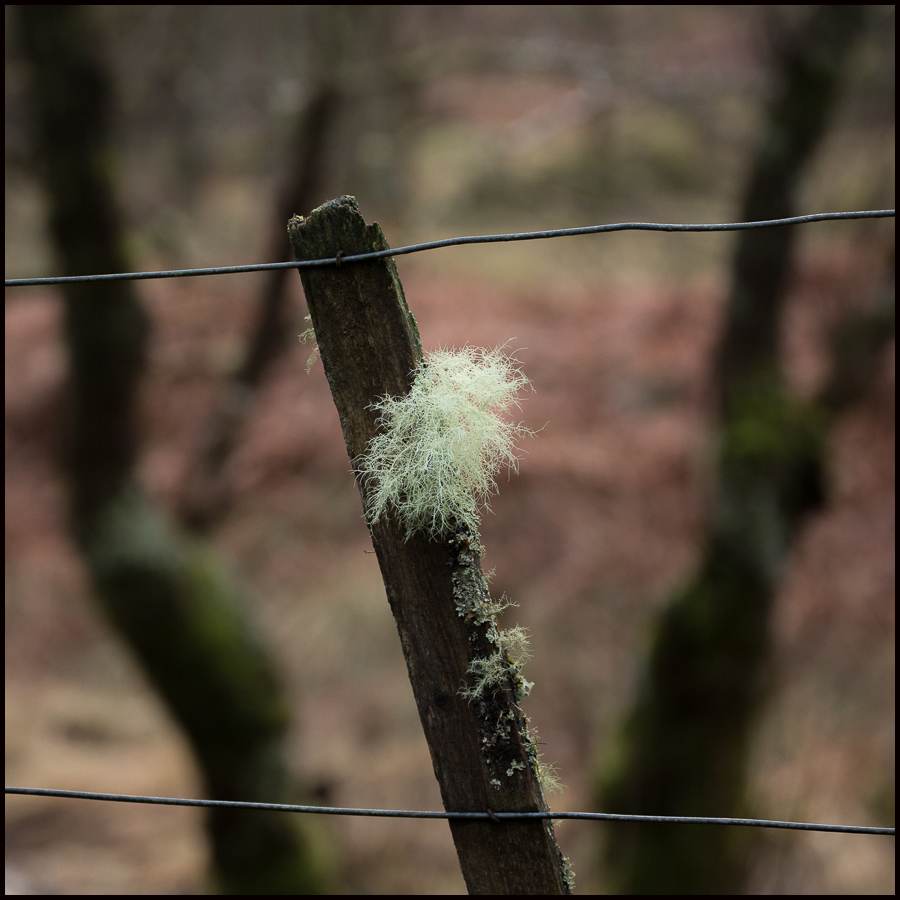
Lichen on Passing Place sign, The Dark Mile near Loch Arkaig © John MacPherson
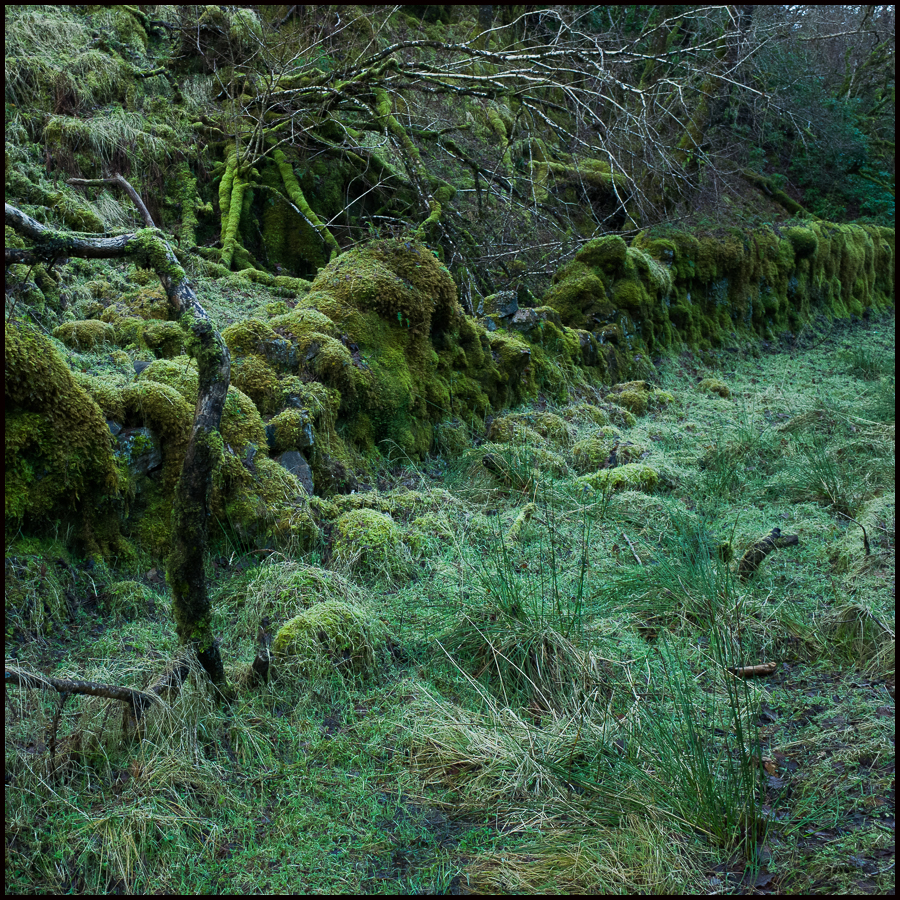
All along the access roads the views are grand, but once past Gairlochy the road narrows, the hills close in, tree-clad and gloomy. This is Mile Dorcha (gaelic for The Dark Mile). The sun rarely penetrates this small glen, so steep are its sides and so narrow its base – in places it is only a metre wider than the single track road that runs through it, the sides rising steeply, tree-clad, from the edge of the tarmac. However it might be more accurate to call it The Green Mile because thanks to its almost perpetual dampness all the trees, fence posts, and drystone walls are clad in lichen and moss, a verdant mat that clings to every surface and branches like some living coat.
You can still find spent bullet brasses here if you’re lucky, remnants of the WW2 Commando training that took place all around this area, the troops based in nearby Achnacarry House. My dad had taken me on several foraging expeditions for spent shell casings when I was wee, but always with the warning that some might not have gone off and I should be vigilant, which simply added to the thrill of this impressive place. My mum’s cousin Bill (Millin), who as ‘Uncle Bill’ had been a prominent feature of my young life, was appointed Lord Lovat’s personal piper whilst undergoing Commando training in Achnacarry and went on to feature in one of the more remarkable D-Day exploits where he played his pipes during events at Pegasus Bridge. But today the Dark Mile was quiet, no skirl of pipes or sounds of conflict.
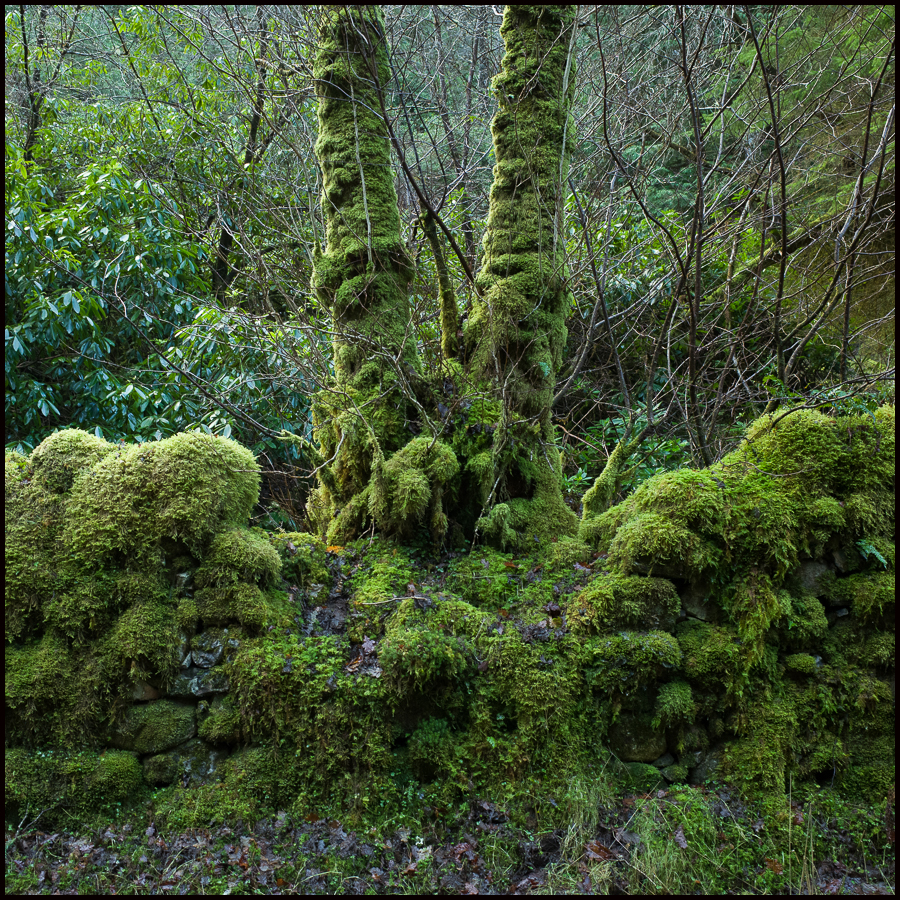
The Dark Mile near Loch Arkaig © John MacPherson
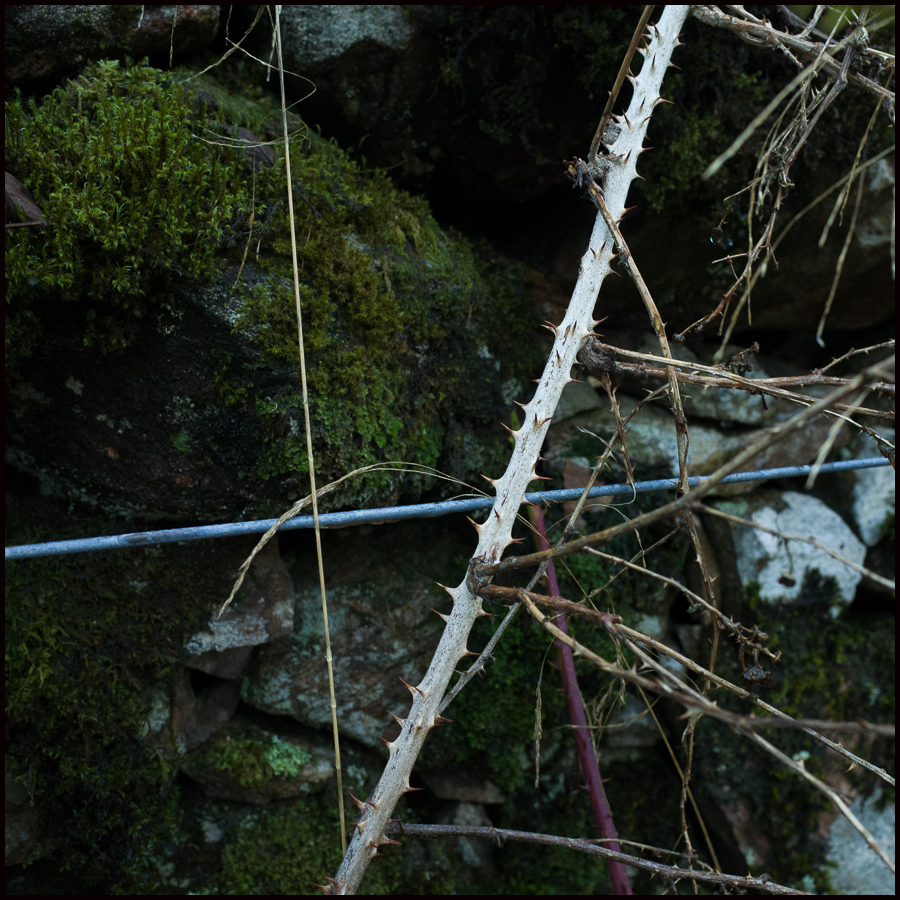
The Dark Mile near Loch Arkaig © John MacPherson
The Dark Mile near Loch Arkaig © John MacPherson
The Dark Mile near Loch Arkaig © John MacPherson
As you pass through the wee glen the sides close in, tighter and tighter, and tighter still and then when you least expect it you pop out at the end and Loch Arkaig presents itself. And rather splendid it is too, stretching far to the west, with the unmistakable conical summit of Sgurr na Ciche, which lies on the edge of Knoydart peninsula, dominating the distant skyline. This is a wild and unforgiving landscape, a long distance from anywhere should you have a mishap.
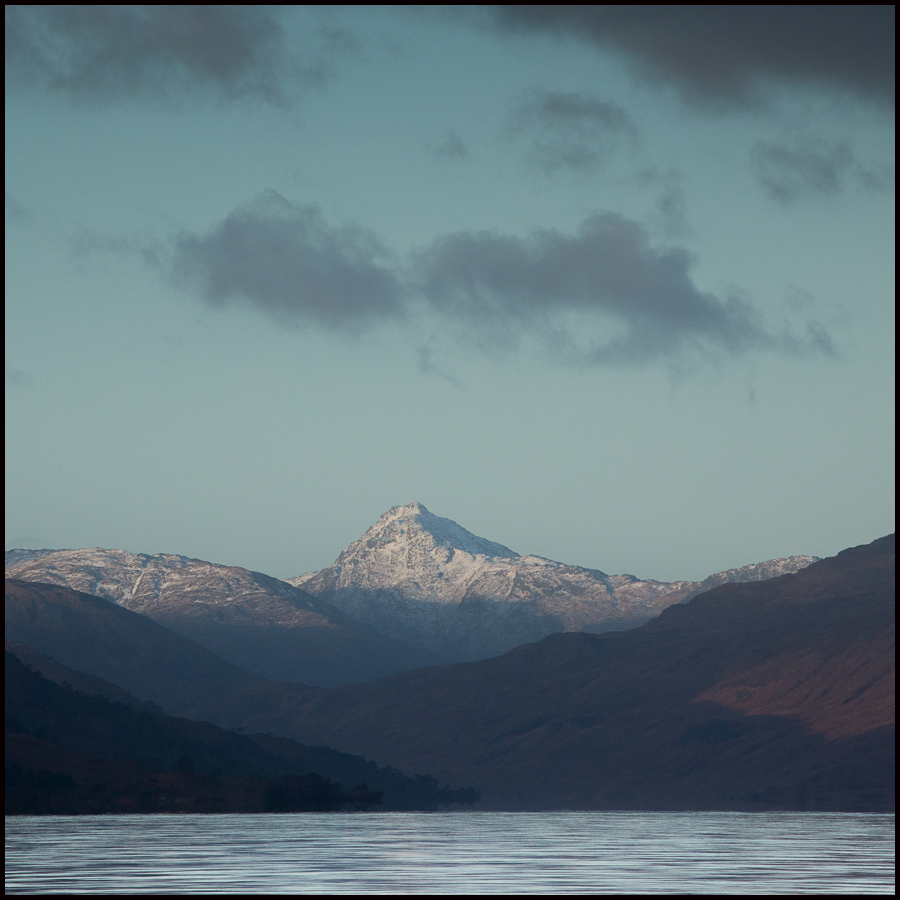
Sgurr na Ciche and Loch Arkaig © John MacPherson
I’d fished up here with my dad when I was younger, and he told me a story about a mate of his who hauled a giant pike from Arkaig, a monster of over 30lbs that put up a fierce fight, almost breaking his fishing rod and very nearly capsizing his boat. What surprised the fisherman was the presence of a pair of osprey’s talons firmly embedded in the pike’s back; the hapless bird had dived and grasped pluckily, but had picked the wrong fish to mess with and been dragged under and drowned. A few straggly sinews attached to the talons were all that remained of its elegance.
Seeing my astonishment my dad followed this tale up with the story of his old school friend who lived on Loch Lomond and whose son, only 6 years old, was grabbed by a giant pike whilst he was wading in the shallows one summer day, the fish firmly clamping its ample jaws around the lad’s ankle and trying to pull him into deeper water. The boy’s father who was only a few metres away putting in fence posts jumped in to save him, and unable to open the pike’s jaws nor lift his son and the pike out of the water, had to beat it to death with a post. The pike was just over 40lbs, not a record for Loch Lomond, the largest pike I’m aware of coming out of its deep waters was over 47lbs, but it was big enough to do a small boy some damage.
Dark peaty lochs with fish that can kill big birds and pull small children in as well? That was enough to terrify me, and I was more cautious when wading after that, whilst keeping one eye on the sky too in case my splashing in the shallows attracted a plummeting raptor intent on hauling me away. Fishing on Loch Arkaig and listening to my dad’s tales taught me that the ‘food chain’ is not as linear and predictable as I’d first thought.
But these formative experiences, sitting quietly in a small boat on a deep dark peaty loch, taught me another fine lesson: optimism. As I grew older I realized that photography is very much like fishing, simply a game of luck. But to make your luck you need to get out there, to float across the surface hopefully and trust that you can tempt something from the depths of possibility.
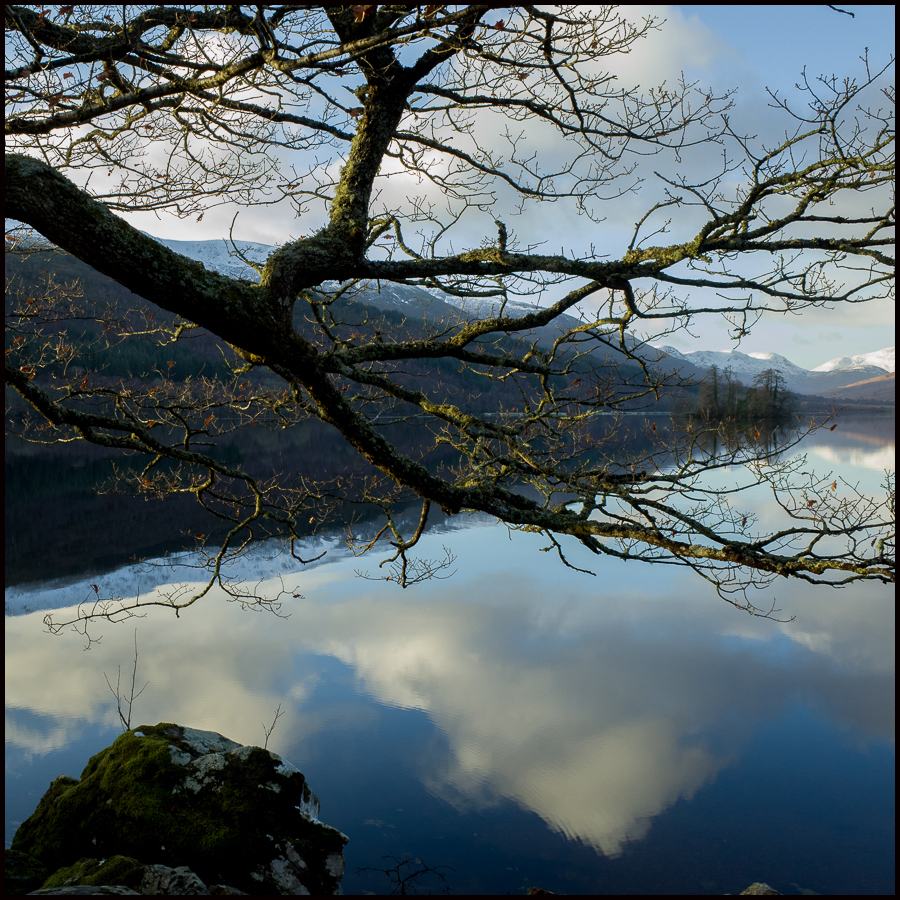
Loch Arkaig © John MacPherson
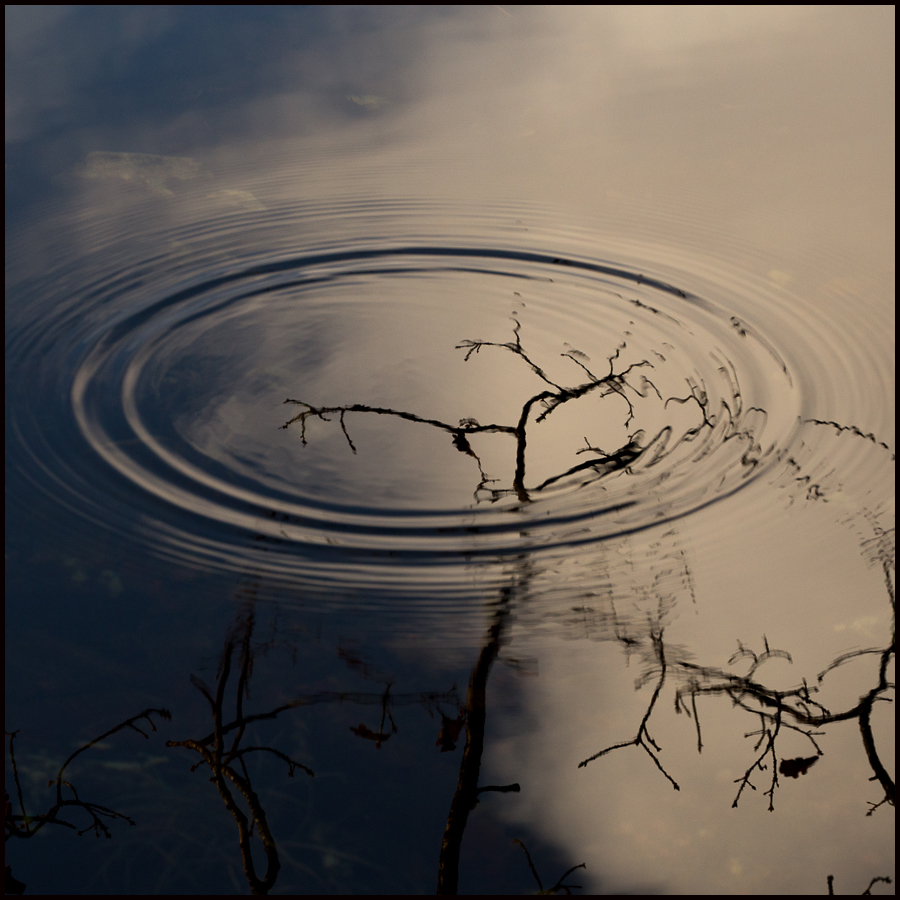
Water drips off tree branches overhanging Loch Arkaig © John MacPherson
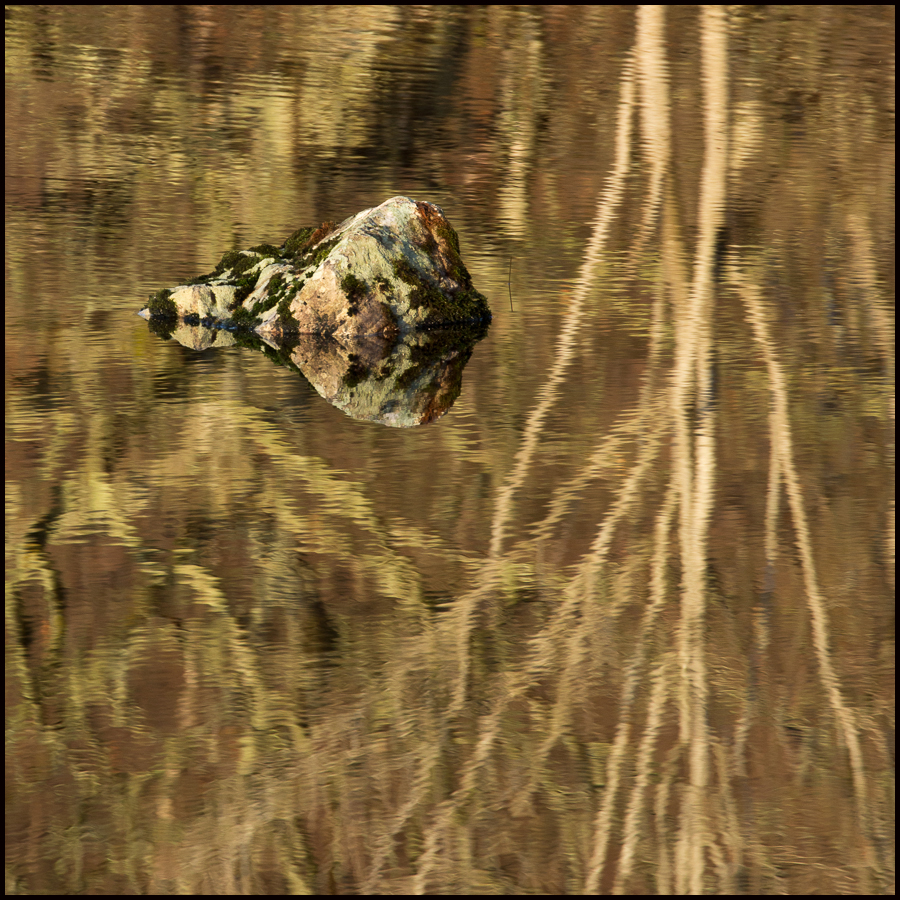
Loch Arkaig © John MacPherson
But there was no real drama for me on this brief visit. Apart from a road covered in ice, the result of a rapid early morning freeze that followed on from the sleet of the previous evening, and required considerable caution on corners lest I side off to join the pike in the loch. The loch itself was calm, its surface rippled only by moisture dripping from the overhanging branches.
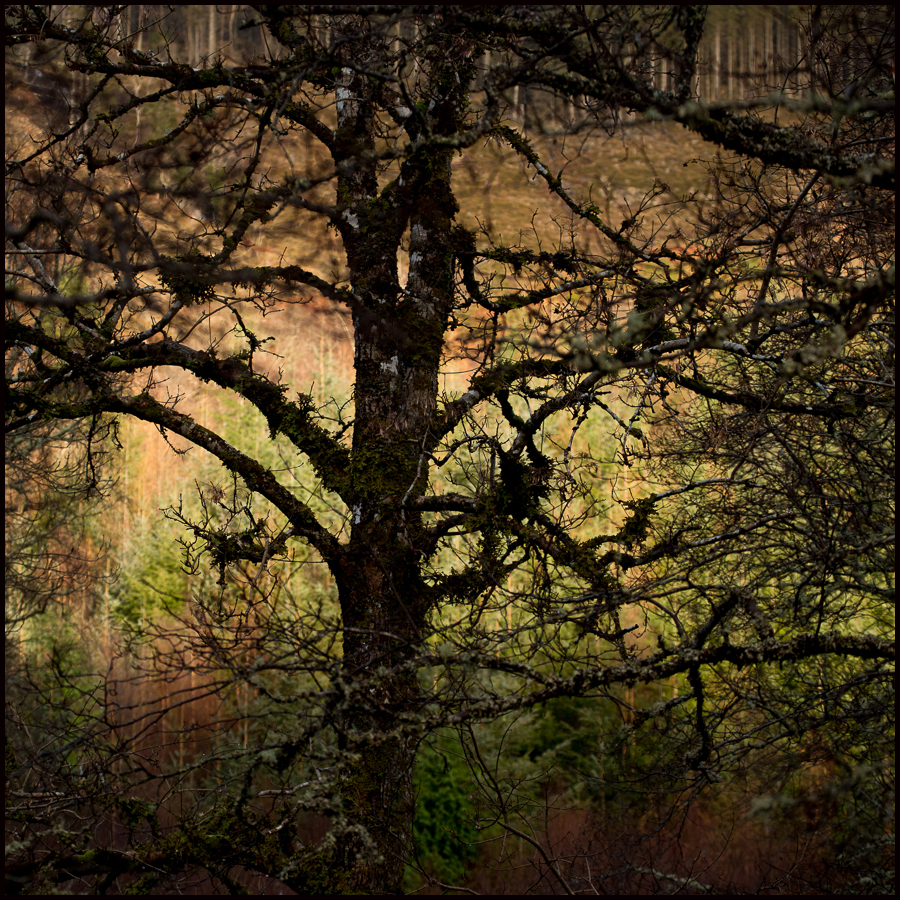
Woodland near Loch Arkaig © John MacPherson
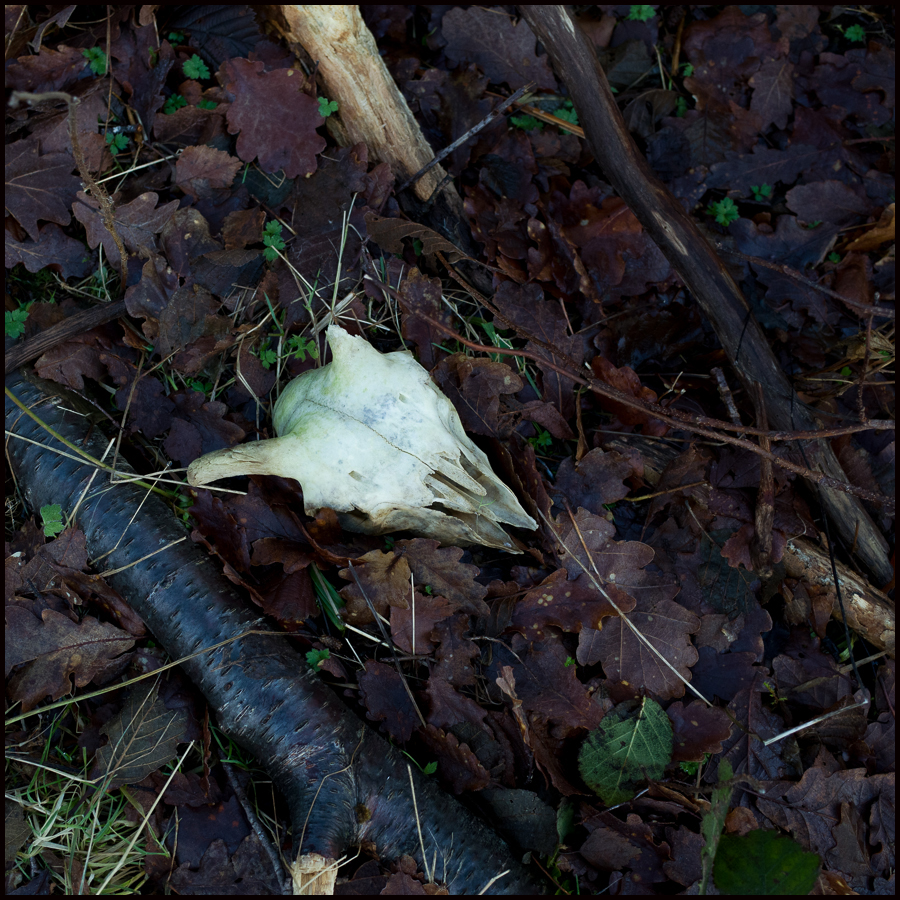
The Dark Mile near Loch Arkaig © John MacPherson
And as the low weak sun made its faint presence felt, it managed to melt the ice in a few exposed places, and backlit the trees.
But not in the Dark Mile; there it remained icy, cold and green, just as I remembered it being on my last trip there, several years ago. Different though, some trees were taller, others had fallen. But all was reassuringly familiar.

Author — John Macpherson
John MacPherson was born and lives in the Scottish Highlands. He trained as a welder in the Glasgow shipyards, before completing an apprenticeship as a carpenter, and then qualified as a Social Worker in Disability Services. Along the way he has cooked on canal barges, trained as an Alpine Ski Leader & worked as an Instructor for Skiers with disabilities, been a canoe instructor, and tutor of night classes in carpentry, stained glass design and manufacture, and archery. He has travelled extensively on various continents, undertaking solo trips by bicycle, or motorcycle. He has had narrow escapes from an ambush by terrorists, been hit by lightning, caught in an erupting volcano, trapped in a mobile home by a tornado, kidnapped by a dog's hairdresser, rammed by a basking shark and was once bitten by a wild otter. He has combined all this with professional photography, which he has practised for over 35 years. He teaches photography and acts as a photography guide & tutor in the UK and abroad. His biggest challenge is keeping his 30 year old Land Rover 110 on the road. He loves telling and hearing stories.
Discussion (2 Comments)
Wonderful pics John. THANK YOU for sharing.
Cheers Ben. It’s a magical place, and when confronted by Ben Nevis and all the rest of the impressive stuff that’s about the district, usually overlooked by most visitors. The woodland on the south side of Arkaig is ancient Caledonian Pine forest and in itself a pretty amazing bit of landscape. Hidden gems!