
Copyright and the Right to Copy
Written by Lewis Bush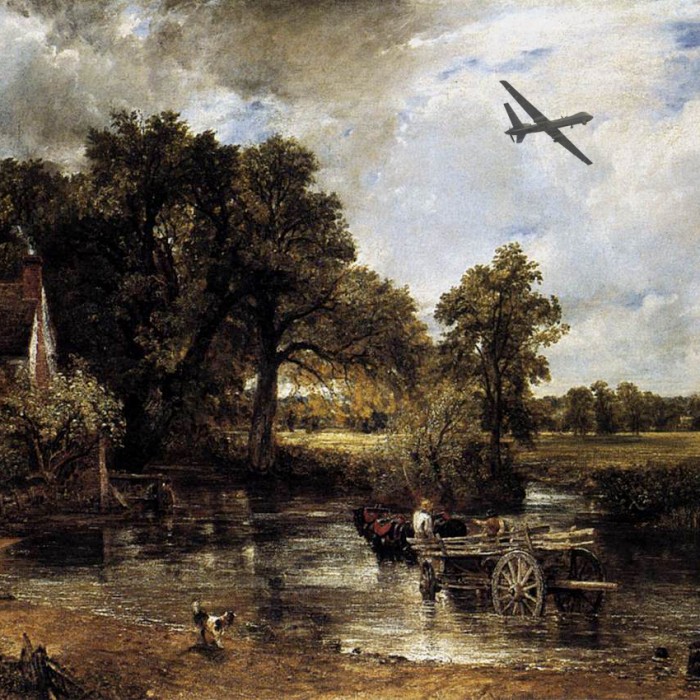
‘Haywain’ (after Kennard (after Constable))
Once again thoughts that have been swimming around my head for a while have been given a kick up the backside by reading someone else’s writing. This time it was Ben Robert’s recent post on his experiences of having a set of photographs go viral, and the mixed blessing of heightened exposure, versus the fact few of the sites that reused his images asked him, let alone offered to pay him for them.
With Royal Assent just recently given to the Enterprise and Regulatory Reform Act it seems like a pertinent time to add a few comments of my own. This piece of legislation basically legitimises the use of orphan photographs (images that lack metadata identifying their owner) by more or less anyone who wants to provided they make a very perfunctory effort to track down the actual copyright holder. Of course the problem with this is that maybe the majority of photographs online are orphans, and for those that aren’t it’s a simple process to strip the copyright holder’s metadata out and behave as if they were always lacking that information. A pretty vile piece of legislation.
I’ve had similar experiences to Ben although on a much reduced scale and it is vastly annoying, and potentially commercially damaging. But I’ve also got to admit I’ve done the same thing to other people. I’ve used hundreds of images on my blog without making any effort to contact the copyright holder. A number of my past and present projects have repurposed imagery from a wide range of sources, some of it public domain material, some of it stuff that was lifted electronically or physically out of magazines, newspapers, advertising. And I’ve made dozens of photomontages that made use of other people’s photographs, again images in the public and private domain (for example the image above, inspired by the recent news of Reaper drones operating from UK air bases)
So I’m in the odd position of having had my own copyright flouted, and having routinely flouted that of others. Coming this perspective I often wonder if it’s realistic to talk about copyright in this sense in an age of such image abundance and availability, in an age where photographs are so often described in terms that suggest they are valueless just because they are photographs, almost irrespective of what they actually show.
I also wonder if we can find any acceptable grey zones for image appropriation. In collage or photomontage for example, is it acceptable to ‘steal’ three images to make a new one if the meaning or effect of that new image is radically different and original? And if not does that mean these techniques are always morally wrong? In the case of collage which almost always relies on appropriation that would surely mean the extinction of an entire genre. What is at stake when a photograph is made or appropriated? Is it what can be visually perceived, by which I mean the substance or content of the image. Is it the idea contained in the image. Or both?
Discussion (2 Comments)
As the post on this subject on The Register http://www.theregister.co.uk/2013/04/29/err_act_landgrab/ has eloquently put it:
“So while the Twitterati and intelligentsia were ranting away about “Big Content”, we’ve just lost the ability to sell our own content. In other words, you’ve just been royally fucked.”
However to return to your own piece Lewis, and your question:
“I also wonder if we can find any acceptable grey zones for image appropriation. In collage or photomontage for example, is it acceptable to ‘steal’ three images to make a new one if the meaning or effect of that new image is radically different and original? And if not does that mean these techniques are always morally wrong? In the case of collage which almost always relies on appropriation that would surely mean the extinction of an entire. What is at stake when a photograph is made or appropriated? Is it what can be visually perceived, by which I mean the substance or content of the image. Is it the idea contained in the image. Or both?”
Any ‘grey zones’ that may have existed have I suspect been well and truly whitewashed by the recent decision in the Richard Prince case. Unless of course your solicitor considers that this decision has only made the situation rather murkier.
Here:
http://www.nytimes.com/2013/04/26/arts/design/appeals-court-ruling-favors-richard-prince-in-copyright-case.html?_r=0
Hah I like that ‘you’ve just been royally fucked.’ ends with the registered trademark symbol, very fitting.
Not seen the Richard Prince case before. Postive, but also as it’s a US court case it may have less bearing on UK based photographers/artists? My mother works with collage and she’s heard scare stories of artists here being taken to court over their use of certain media, I will see if I can find some specific examples from her.
I’m trying to view this bill in the only positive light it can be, that perhaps under certain circumstances it will give us the chance to rip off photographs from large companies and use them for our own ends (for example reappropriating arms company advertising for anti-arms art?) although I won’t hold my breath, I daresay a nasty amendment to the law will soon follow to stop us little people from making use of it.