
By The River
Written by John MacphersonThe River Ness in Inverness, is an interesting piece of water. Inverness derives its name from the Gaelic ‘inbhir’ or ‘invir’ which means ‘at the mouth of’ and with its suffix ‘ness’ from the River Ness, accurately describes its physical location as ‘at the mouth of the Ness’.
By ‘normal’ river standards, it’s only a relatively short stretch of water, but the lower part is fascinating in its diversity. The mouth of the river where it joins the Moray Firth has a narrow opening leading into Inverness Harbour and the basin where cargo boats offload, surrounded by council houses on one side, and the industrial port facilities on the other.
Huge bottlenose dolphins cruise into the basin following yachts out of curiosity, or bow-riding on the pressure wave in front of the large cargo vessels that regularly visit, or chasing salmon running upriver to spawn. Their hunting activity in this narrow channel is violent, dramatic and brutal, salmon thrown skywards and then torn apart.
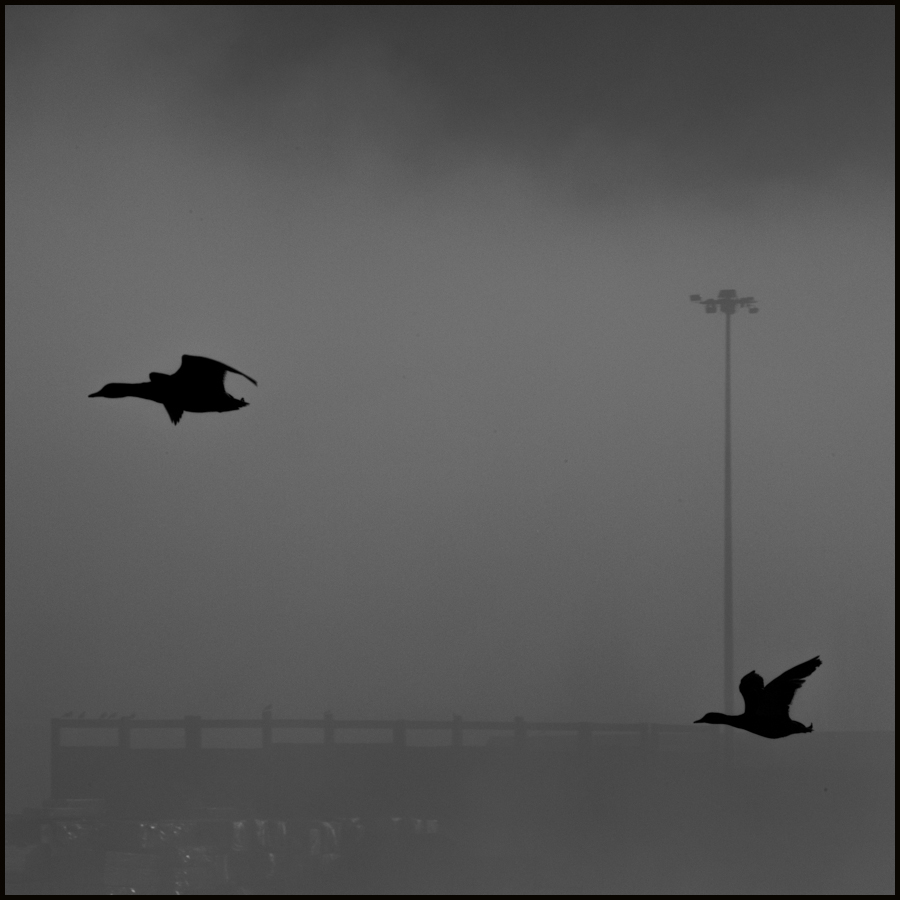
Ducks fly through morning mist over Inverness Harbour basin © John MacPherosn
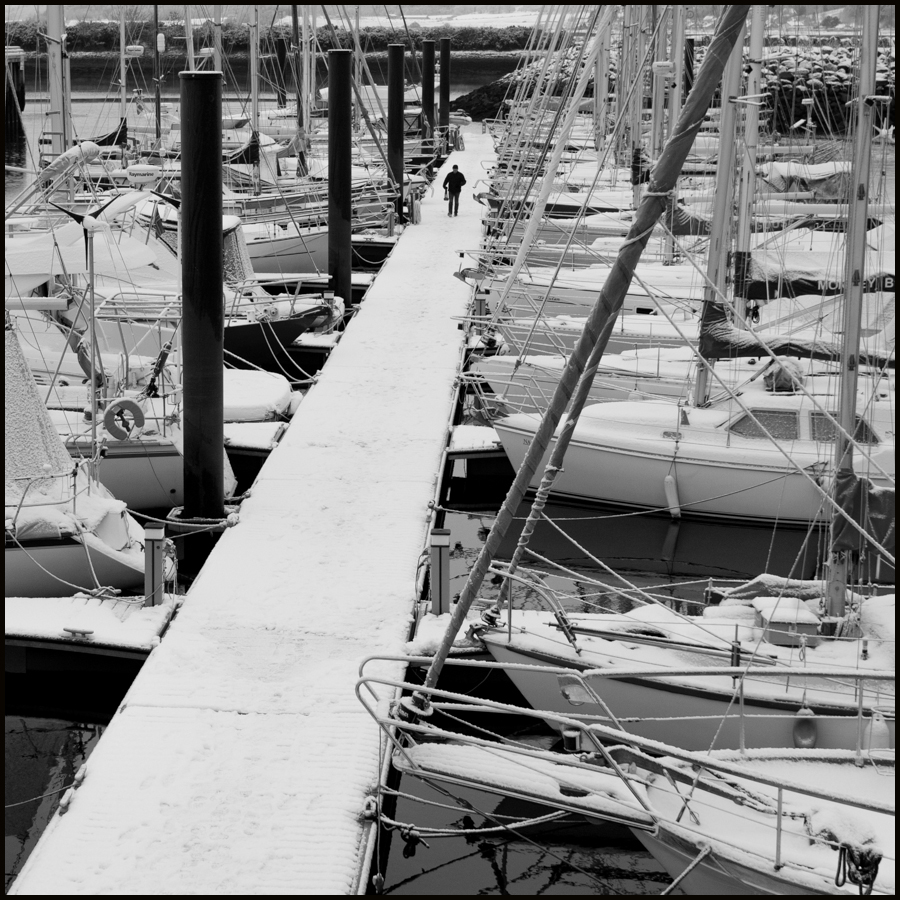
Winter day in the marina, Inverness © John MacPherson
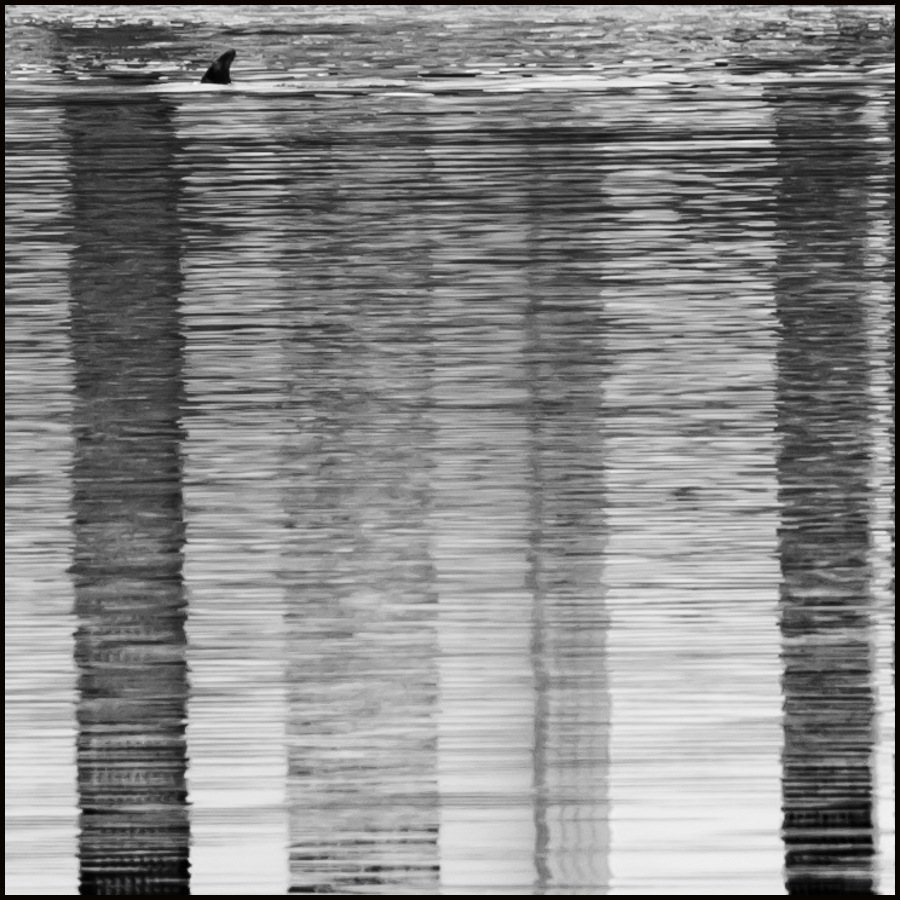
Dolphin in building reflections at river mouth, Inverness © John MacPherson
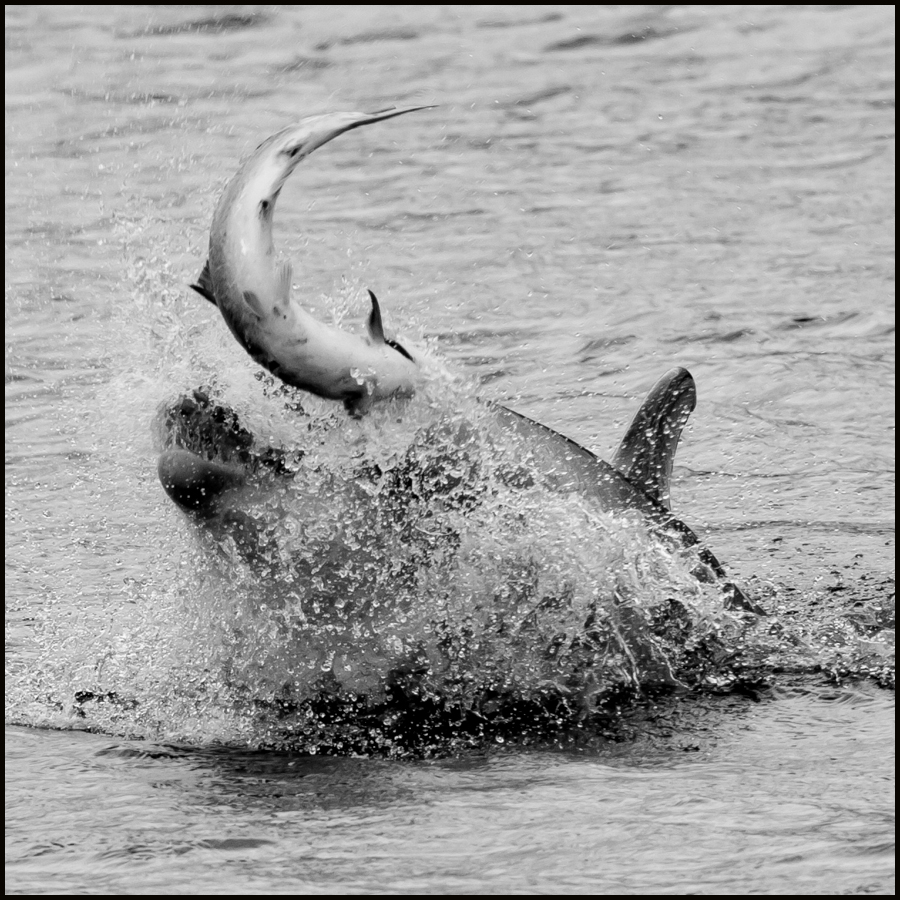
Dolphin and salmon in Inverness harbour © John MacPherson
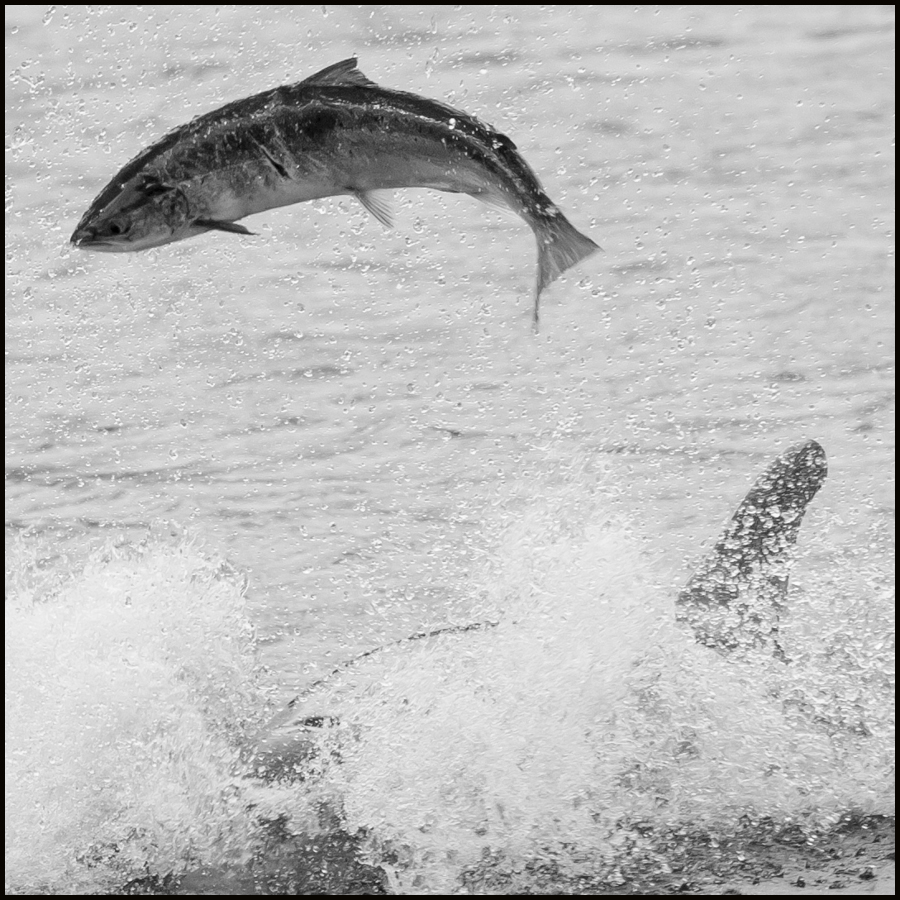
The one that didn’t get away, River ness © John MacPherson
Only a few hundred metres further up, the river passes under a rail and road bridge (one a of series of several transport and pedestrian crossings) that leads into South Kessock. This is a part of the city that has a reputation for being somewhat rough, and inhabited, many would have you believe, by those who cannot manage to escape to somewhere more salubrious. In truth it is a rich and diverse location filled with ordinary people, and a tiny minority who make mischief, pretty much the same as anywhere else. It certainly has colour, character & community which is something that I’d struggle to say about some of the more ‘elegant’ parts of the city.
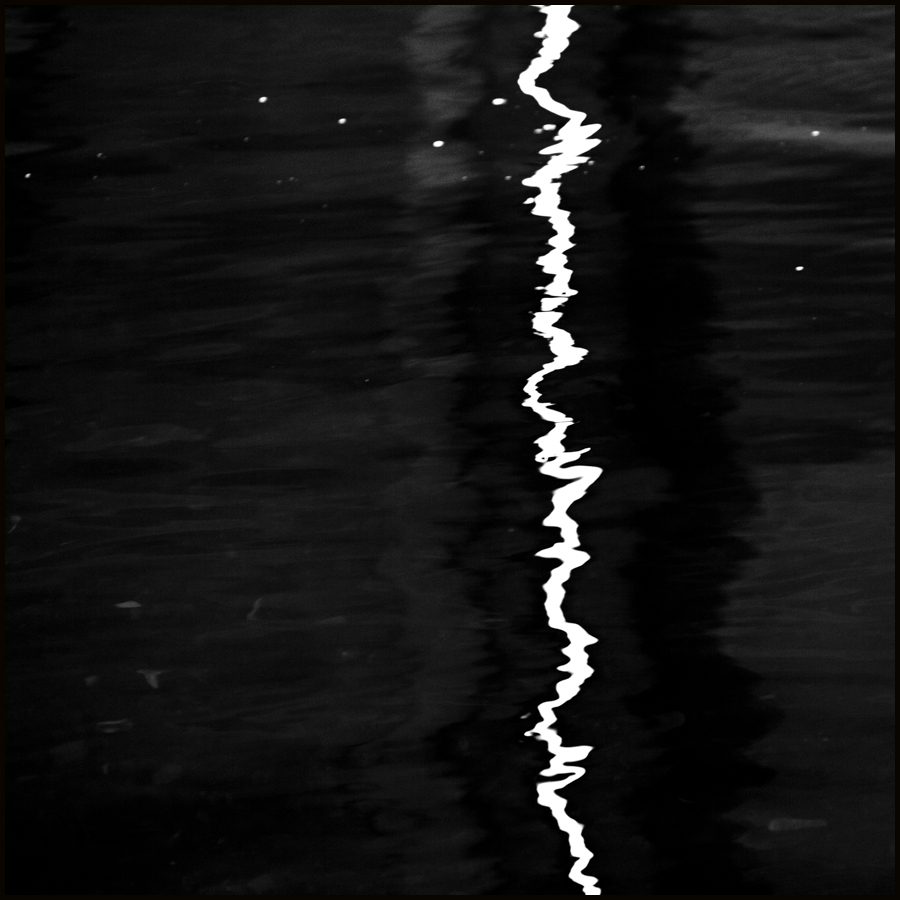
Light spills through a gap in the bridge, reflecting on the river, as foam bubbles float by, River Ness © John MacPherson
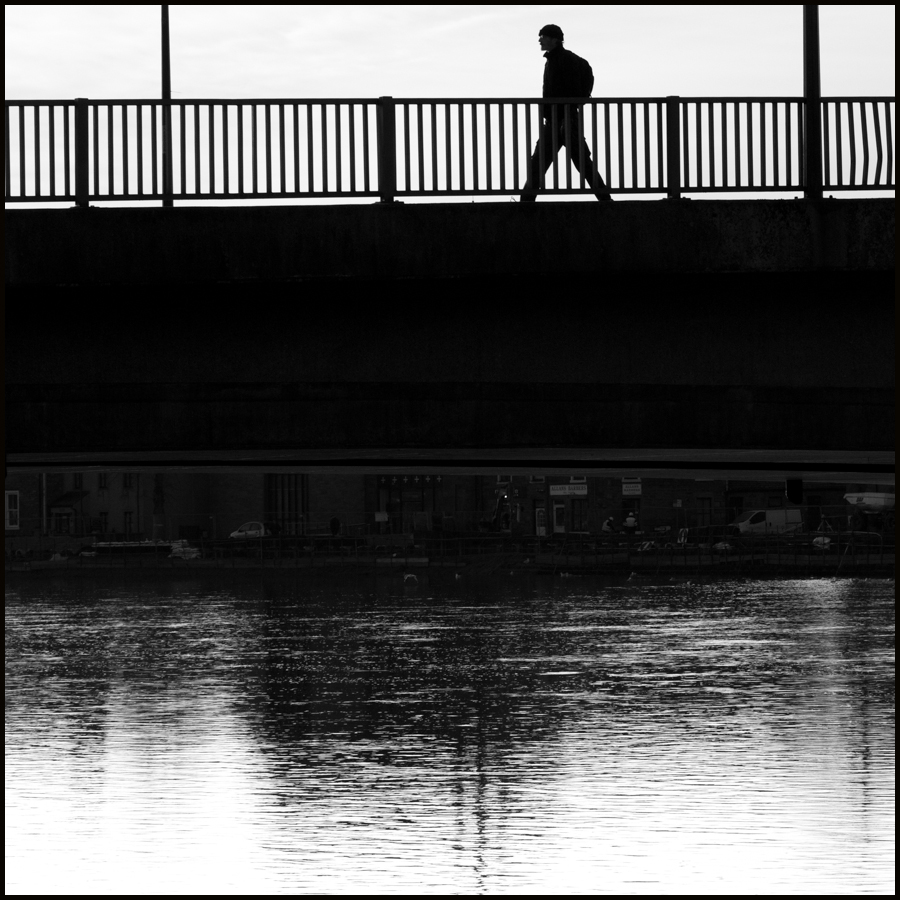
Crossing the Ness © John MacPherson
A few hundred metres beyond this and Inverness city proper crowds the river side, commerce, religion and domestic residences jumbled together. This section of the river is so close to the ocean that it’s tidal, and on full moons when the river is in spate the water sometimes spills over into the city. Recent floods have prompted a new flood defence system which is slowly taking shape.
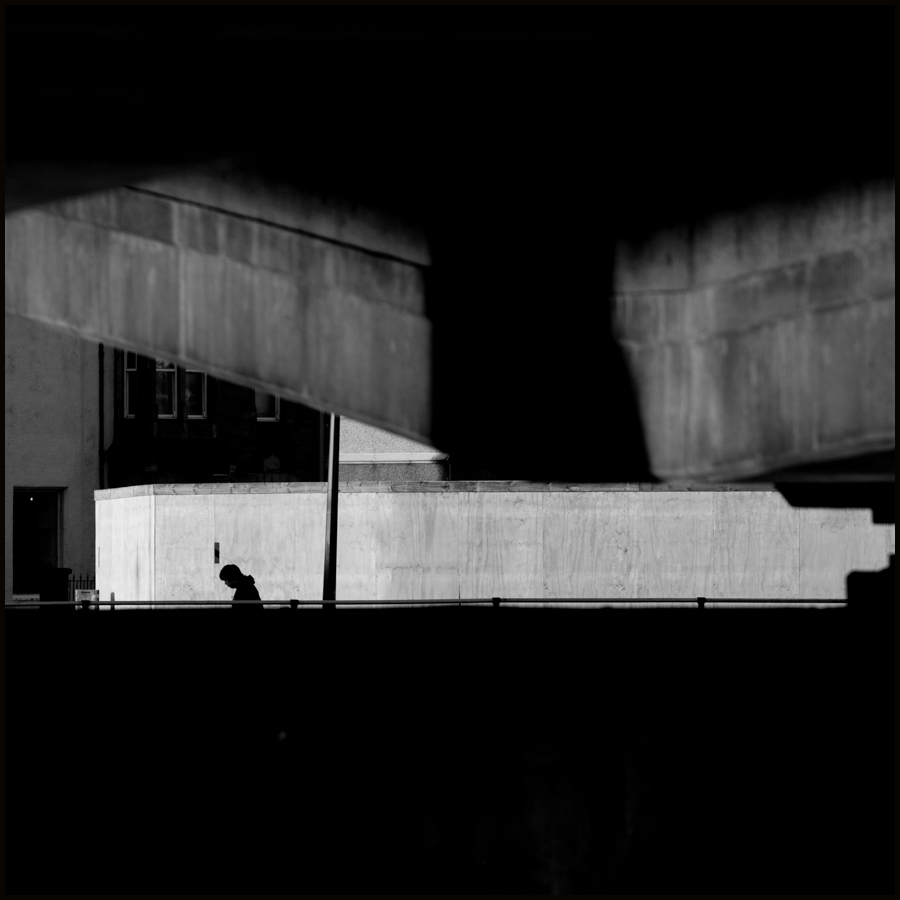
A lone guy on a cold day shuffles along beneath a bridge, River Ness © John MacPherson
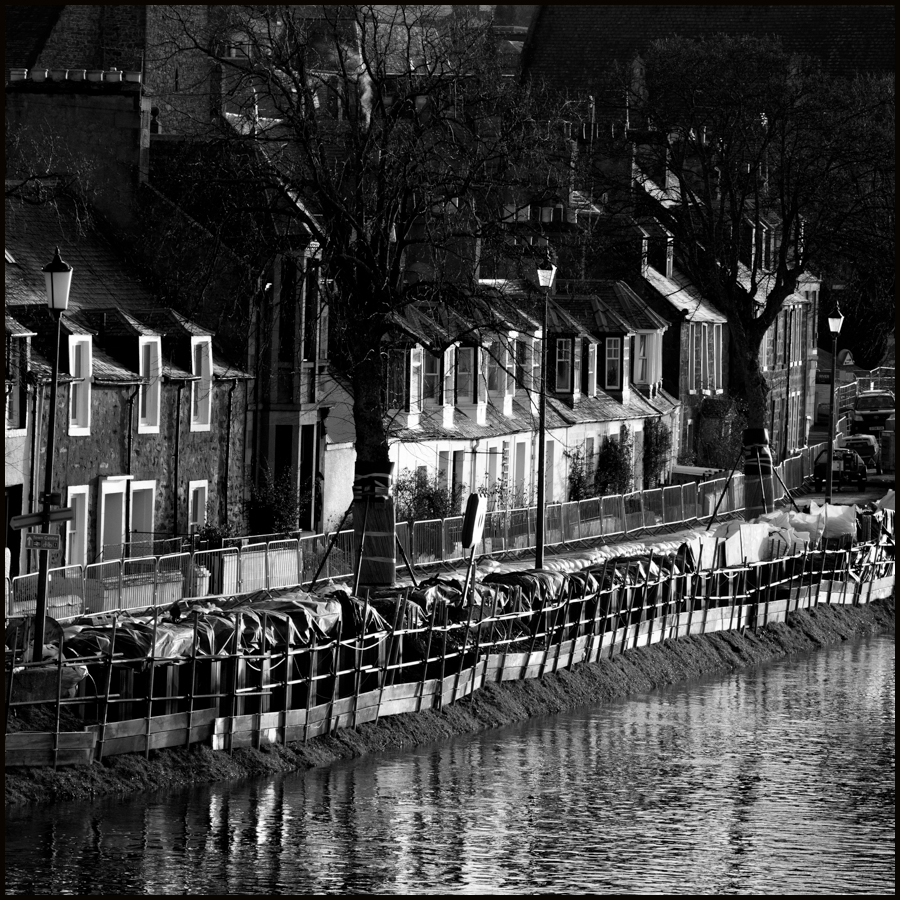
Flood defence works to prevent the river flooding the city © John MacPherson
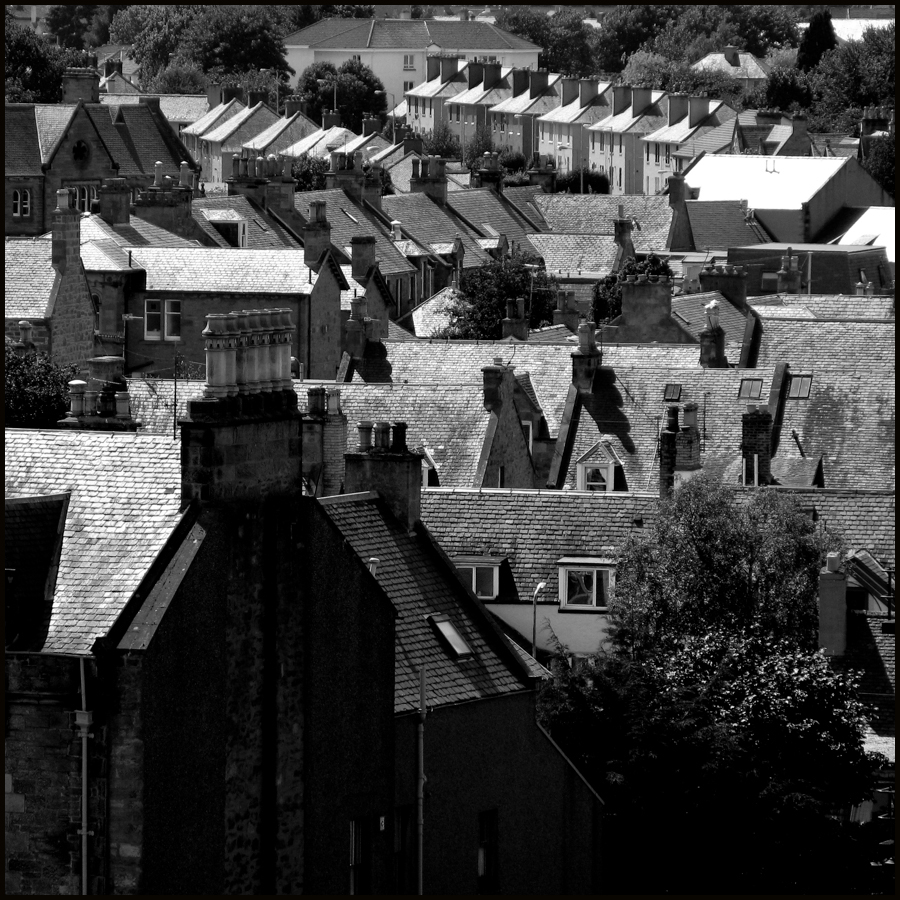
A jumble of houses backing off from the river front, Inverness © John MacPherson
And not much further on, the river widens and the Ness Islands become the dominating feature, tall woodlands, small bridges linking the islands and people walking, jogging, cycling, fishing, drinking and occasionally wafting the sweet smell of something less legal through the trees. The drama of fishermen wrestling with salmon echoes the tussles of the dolphins only half a mile away, but the fishermen stand in the city centre surrounded by passersby, buildings and cars, not distracted by any of it, their focus only on the water and what lies beneath.
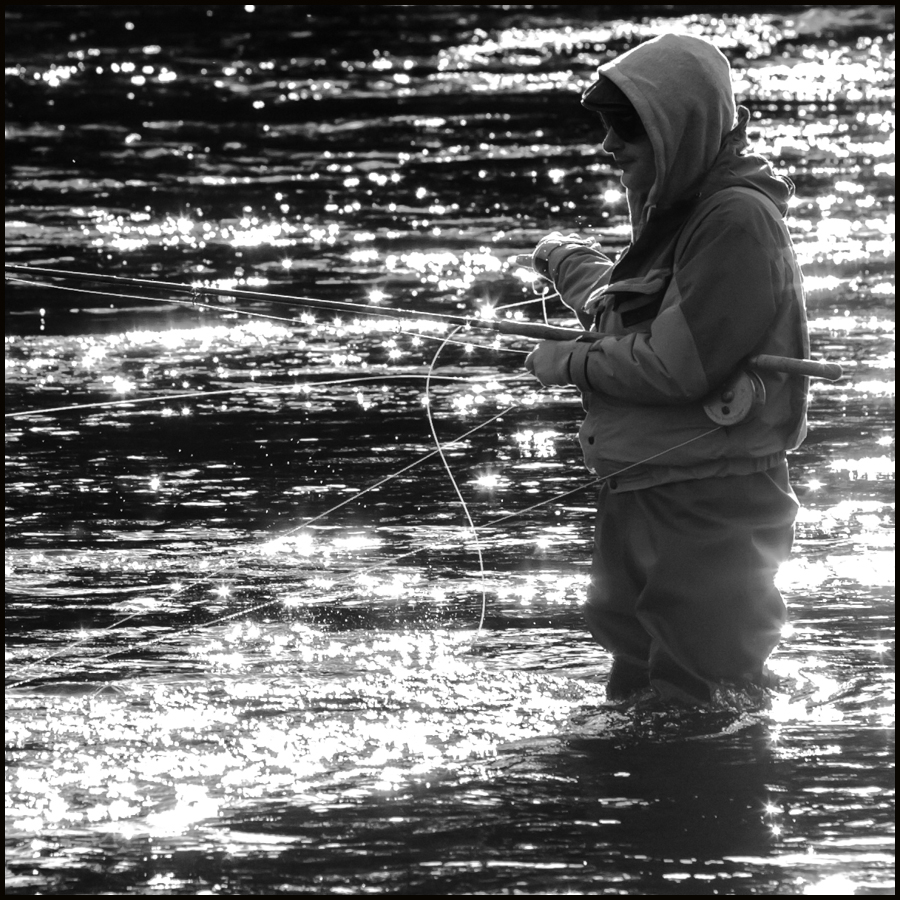
A fisherman stands expectantly in the river in the middle of the city centre © John MacPherson
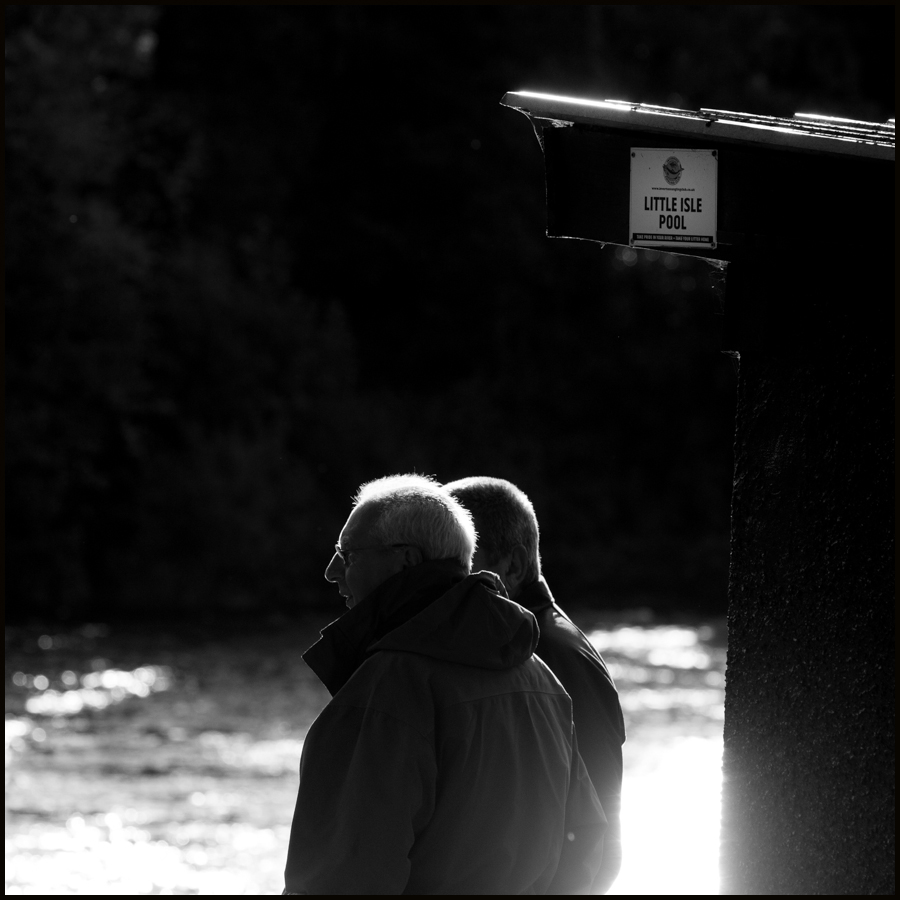
Fishermen contemplate the river © John MacPherson
The islands are only a little over a mile from the sea but the diversity evident in this short stretch of river is considerable. Otters swim and hunt right through the city centre, swans drift by, herons stalk fish by night under the streetlights. And sometimes an adventurous seal will make its way upriver to chance its jaws on a salmon in the upper reaches before Loch Ness.
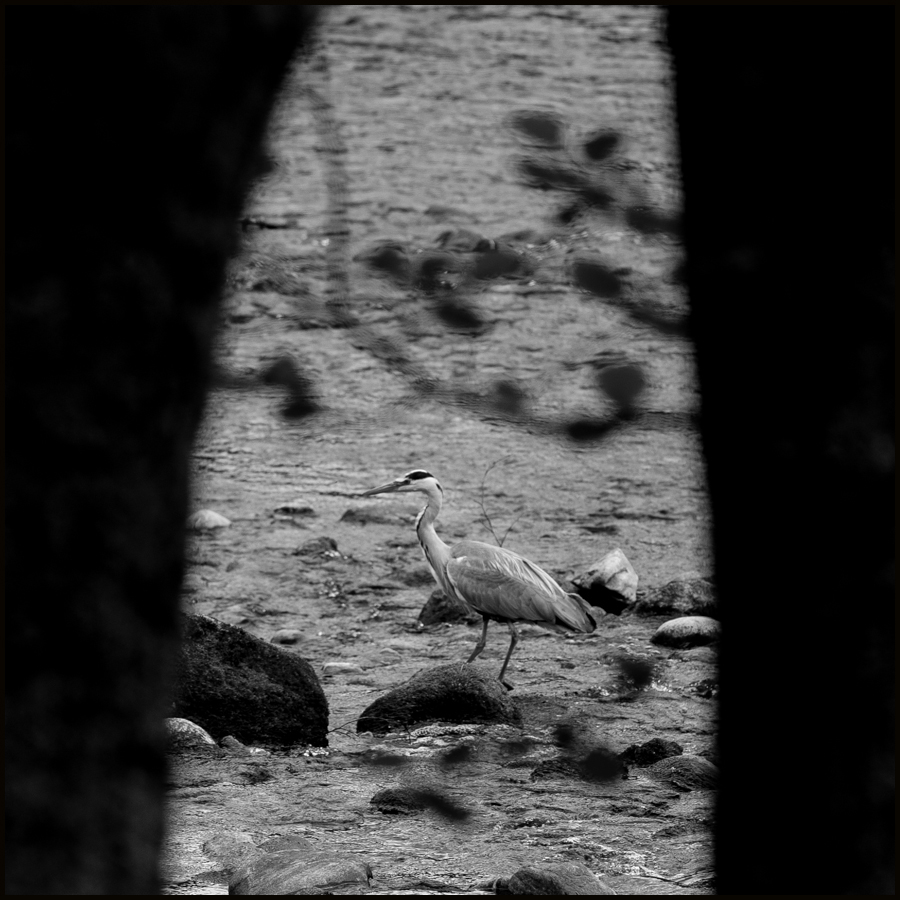
Grey heron hunting in the Ness © John MacPherson
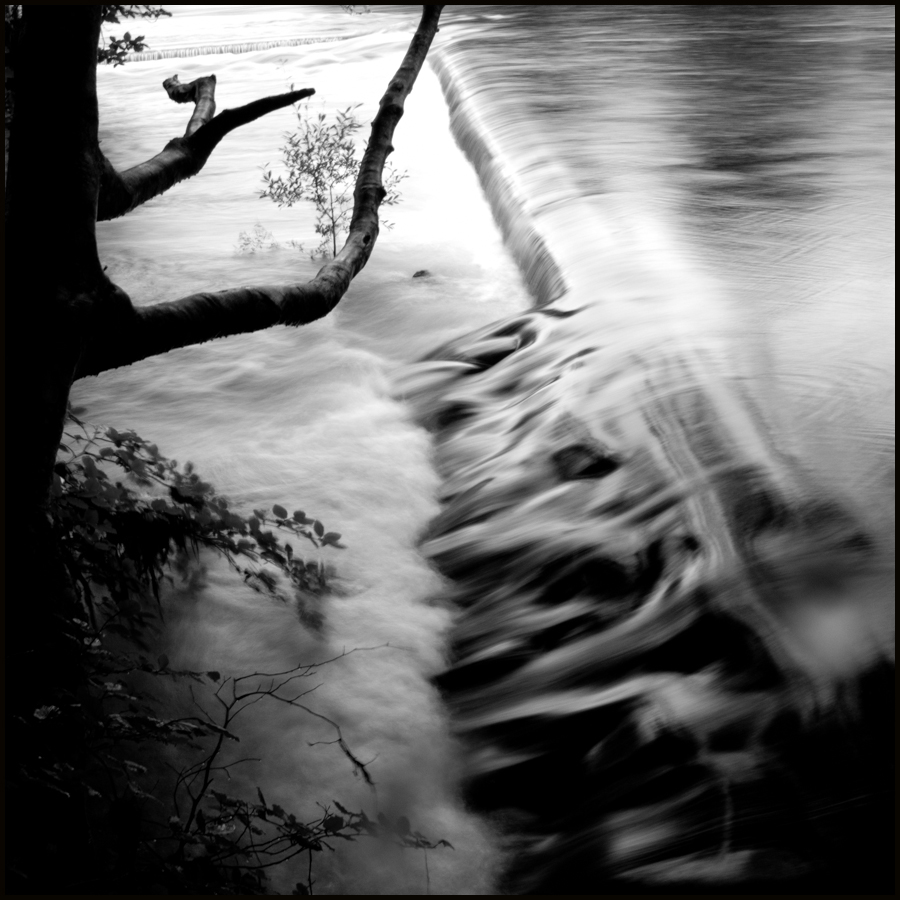
Amongst the islands small weirs slow the water, raising the river level behind © John MacPherson
It’s easy to view the river as something “that divides the town in two” as I heard someone say. It’s an observation that eloquently reveals the limitation of our appreciation of the river, confined only by our sense of what it prevents – easy passage from one place to another, requiring a walk to a bridge to be able to traverse it.
What many fail to see is the river as a connector – linking Loch Ness to the ocean. Enabling many creatures to run upriver, and many others to come down. In spates it becomes less benign, altogether more fierce, and pushing hard on its passage also grows darker, the water carrying a fine suspension of peat from Loch Ness down through the town. And most important of all, the river connects people with nature.
In the lower reaches salt water floods the river as the tides rise, bringing the ocean right into the city centre, a salty tang of sea in the air for those who care to heed it. In summer it acts a cooling mechanism reducing air temperature with all the benefits that provides. And it is also a place to go to stare, to watch, to listen to the water-ripple, and ‘escape’ from work for a spell and return refreshed.
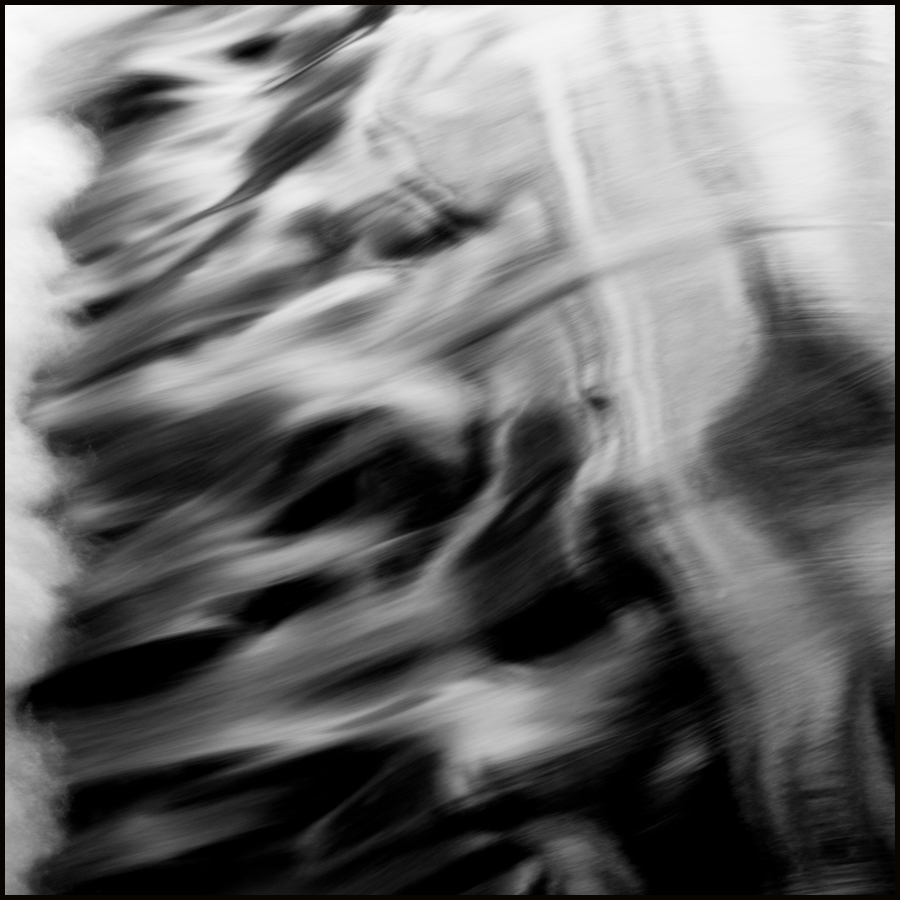
The River Ness © John MacPherson
Rivers are important, as those who live around them will testify: the Thames, the Liffey, the Forth, the Clyde, the Ely & the Taff, the Lagan and the Severn, to name only a few.
But the water cares nothing for all of this. It wanders when its lazy, and rushes when in spate. And through it all is reflective of all around. If you have a river near you, enjoy it, they’re precious things and well worth a wee bit of your time.
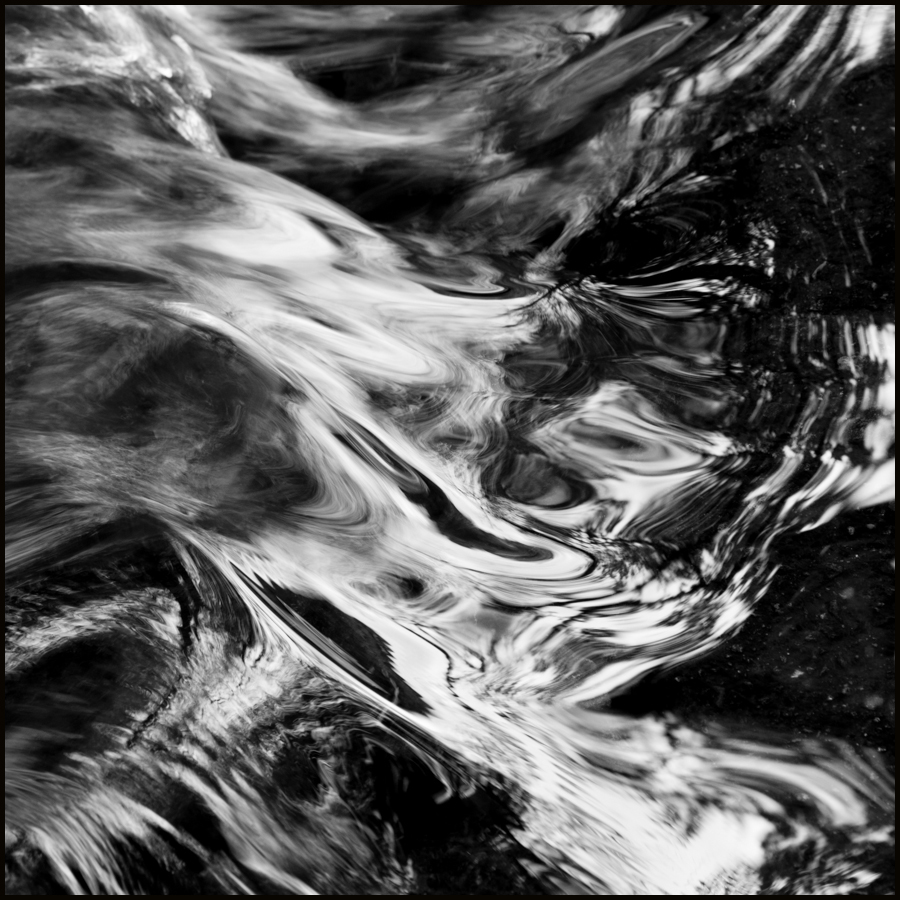
Tree reflections, Little Isle, River Ness © John MacPherson

Author — John Macpherson
John MacPherson was born and lives in the Scottish Highlands. He trained as a welder in the Glasgow shipyards, before completing an apprenticeship as a carpenter, and then qualified as a Social Worker in Disability Services. Along the way he has cooked on canal barges, trained as an Alpine Ski Leader & worked as an Instructor for Skiers with disabilities, been a canoe instructor, and tutor of night classes in carpentry, stained glass design and manufacture, and archery. He has travelled extensively on various continents, undertaking solo trips by bicycle, or motorcycle. He has had narrow escapes from an ambush by terrorists, been hit by lightning, caught in an erupting volcano, trapped in a mobile home by a tornado, kidnapped by a dog's hairdresser, rammed by a basking shark and was once bitten by a wild otter. He has combined all this with professional photography, which he has practised for over 35 years. He teaches photography and acts as a photography guide & tutor in the UK and abroad. His biggest challenge is keeping his 30 year old Land Rover 110 on the road. He loves telling and hearing stories.
Discussion (7 Comments)
Yes, indeed they are precious. Thank you for that wonderful education and beautiful set of images John. Two rivers that have been markers in my life are the Wye and the Hudson – though the latter is not really a river but a tidal fjord. I hope to explore them both more, though obviously exploring the Hudson is more accessible at present.
Cheers Ed. It’s a fine stretch of water and deserves a shout! I once repaired the damage caused by the Wye in flood which burst in the front door of my cousin’s cottage near Hereford wrecking the whole downstairs area. The Hudson is a fine stretch of water too. I took a run up and over heading to the Adirondacks once and was mightily impressed. Rivers – if you don’t visit them, they’re just as likely to visit you!
Cheers Ed – know this is another reply, we have a two-tier system going on here with responses only going one-way and not reflected on here too. Odd.
Hi John, not sure what you mean by this? I only saw this reply and don;t see another in this thread, directed to me at least. Odd.
Thats odd – I wondered what was happening – when there’s a comment here there’s an alert sent to me via the duckrabbit blog site software, in which I then reply. I assumed that reply was going to the recipient, (you) but was not showing in the disqus comments for some reason. However it seems they’re going nowhere! Basically I replied to your post earlier in the duckrabbit blog and simply added an additional comment later here to alert anyone else looking that I was not ignoring you, but had replied. Need to get this looked at.
Gorgeous photos John! We fell in love with the river, the city and the people! hope to see you some time soon!
Thanks Azadeh – it is rather splendid. Glad you enjoyed it and thanks for commenting! Best John