
2020VISION: Making pictures work.
Written by John MacphersonWhat do you get if you give several aspiring young photographers some support, guidance and an opportunity to undertake real assignment work? You get commitment, insight and great results.
I’m really pleased that a major photography project 2020VISION which I’m heavily involved in, is supporting a Young Champions scheme which is giving several young photographers the opportunity to undertake proper assignments with the support of some of the UK’s most experienced pro photographers.
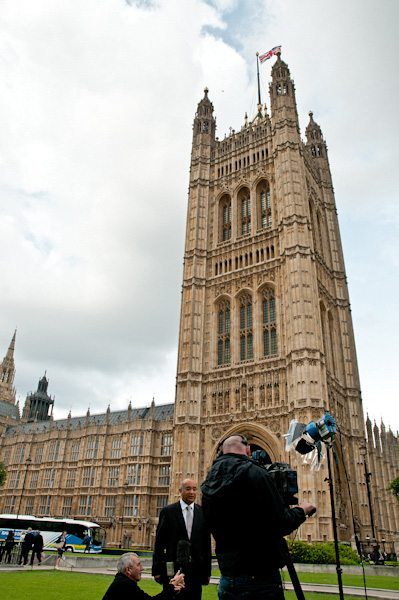
Houses of Parliament © Bertie Gregory
Check out the Young Champions page to see the projects they’re involved in, and for a flavour of what these committed young folks have been doing see recent blog posts by them on red deer in Bradgate Park by Young Champions Kristian Parton here; lovely work on the Dyfi Osprey Project by Jocelyn Williams here, and a great blog here by Bertie Gregory on the peregrine falcons nesting on the Houses of Parliament and really annoying a BBC news presenter! Great images and very very good writing too.
So whats all this about? Well, like so many professional photographers I know, the advent of digital has both enabled us but also created a shrinking return for our efforts. Competition is good, but competition from people who give work away for free is not so good. So what to do? After some consideration we decided to pool our resources and skills, and tackle work that would be impossible as individuals. And so it’s transpired that I’m a co-director of what is probably the most ambitious environmental photography project that’s ever been undertaken in Britain: 2020VISION. Briefly, its aim is to highlight the importance of the links between the health of the environment and human health.
We’ve got a team of 20 top photogs and filmmakers working right now all across the UK including underwater ace Alex Mustard, respected documentary photographer Paul Harris and the charismatic Andy Rouse, as well as numerous other award-winning photographers; with compelling aural contributions from BAFTA award winning sound recordist Chris Watson, musician and orchestrator Martyn Ford, and ably supported by the perceptive observations of eloquent wordsmiths Kenny Taylor, Ed Douglas and David Lindo. Check out the 2020V blog for regular updates on individual project work.
My role, apart from a load of behind the scenes management stuff is to contribute images for a case study on the Moray Firth bottlenose dolphins, and their environmental, social and economic importance. This will form part of an exploration of the issues affecting the wider marine ecosystem which the project is undertaking.
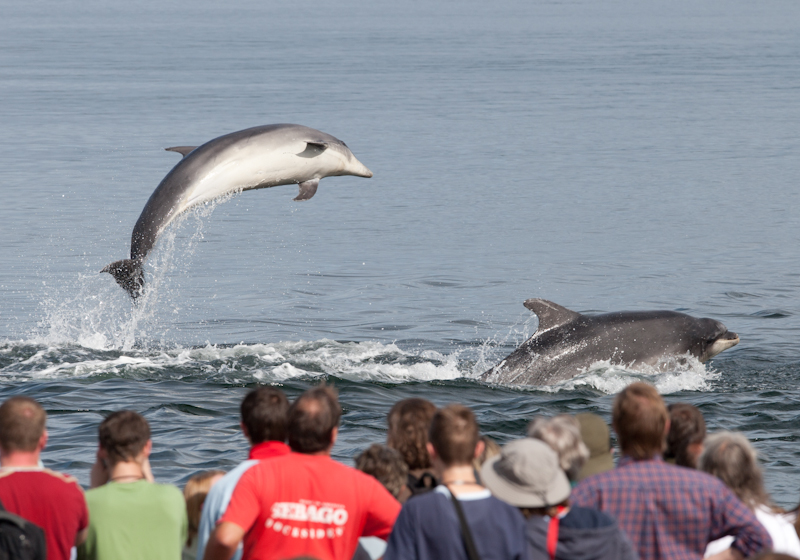
Crowd watching wild dolphins © John MacPherson/2020VISION
These are big charismatic predators: northern bottlenoses have evolved to be almost twice the size of their caribbean cousins to cope with the bitterly cold North Sea, growing up to 4M long and weighing as much as 400Kg. And they attract lots of visitors to the Moray Firth area, whose collective spend is estimated to be in the region of at least £5.5 – £6.5M each year. That’s a serious amount of cash, so these dolphins are really important to our local economy.
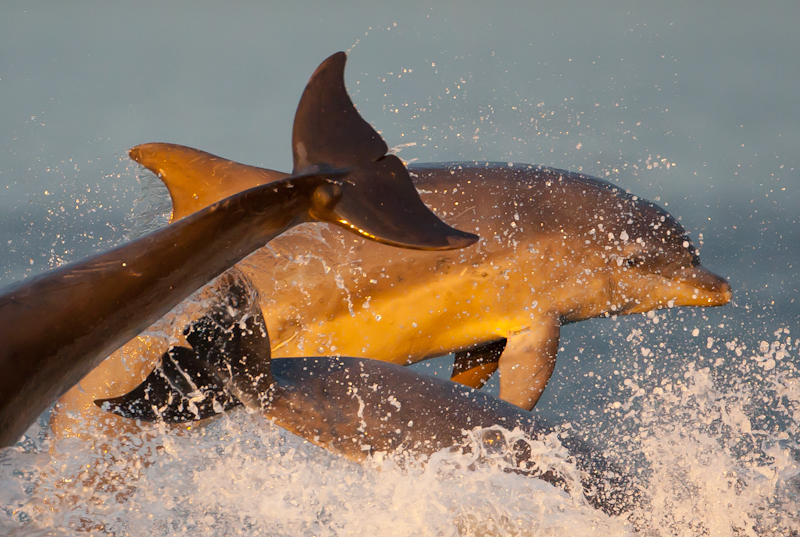
Dolphins leaping in sunset light © John MacPherson/2020VISION
My photography has all been done from the shore in one main location, and its simply a case of standing waiting, and waiting, and waiting some more, then it all happens in a frantic rush as action kicks off with little warning.
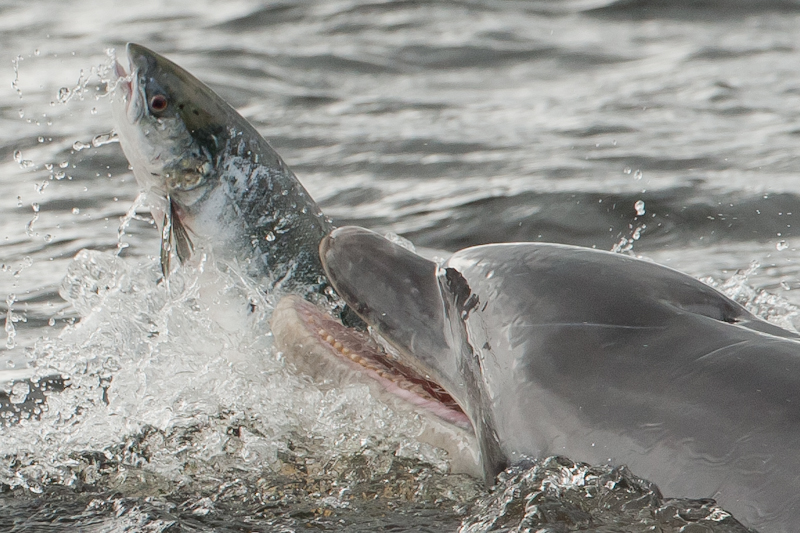
Dolphin capturing wild salmon © John MacPherson/2020VISION
I’ve spent a considerable number of hours in everything from baking summer heat to hailstones and this has allowed a good range of action shots and lighting conditions, and crucially allowed me to capture some images with evidence of the fascinating human response to these incredible animals.
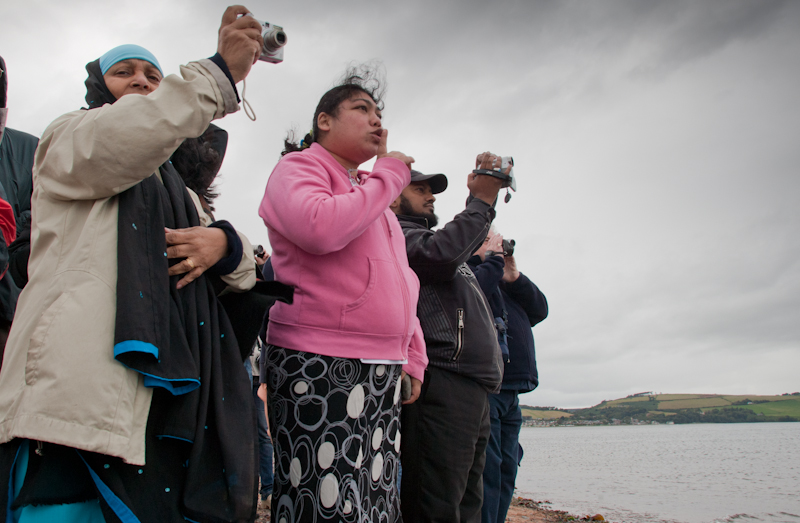
Visitors enjoying dolphin watching experience © John MacPherson/2020VISION
But for me fast shutter ‘frozen’ images, nice though they are, say very little about the fluidity and gracefulness of dolphins so I’ve been experimenting on the bad weather/low light days with the very sloooooow shutter speeds such dim days permit, to deliberately blur the water and dolphin movement. It’s real hit or miss stuff and there’s always the nagging suspicion that I should be pushing the ISO to 1600 and keeping shutter speeds above 1/500th instead of languishing at ISO 100 and anything from 1/30th to a positively glacial 1 sec. (using a 500mm lens!)
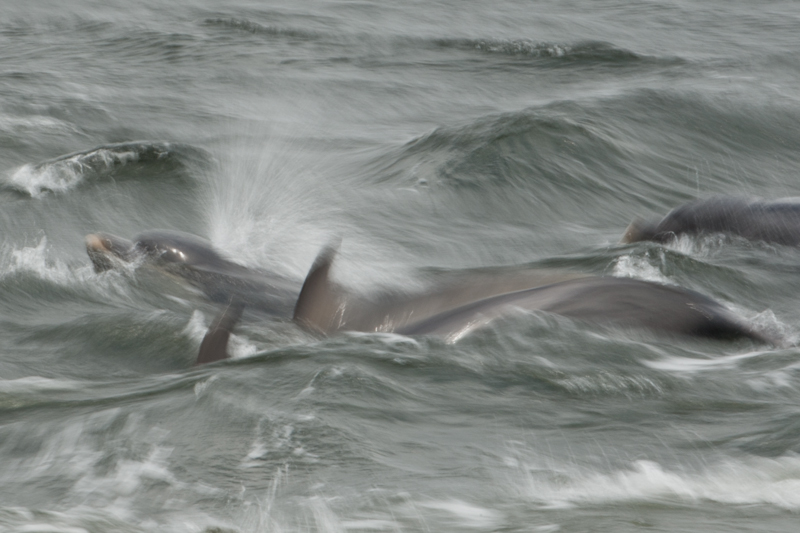
Dolphin group slow shutter blur © John MacPherson/20202VISION
Whats great though is the sheer unpredictability of the results from these ‘slow’ days, as so many varying factors come into play – the speed of the incoming tide, the pace of the dolphins, the strength of the wind etc all conspiring to work their magic. And sometimes it all just works. But occasionally, as below, its the conditions that makes the image. On this particular morning the breeze died, the reflection of a briefly sunlit building (RNLI lifeboat facility) materialized from nowhere, rippling across the water, and just as the breeze picked up again and started to destroy this visual delight a dolphin surfaced in the reflections. Then the breeze stirred it all, the sun vanished, and the moment was gone. But sadly the dolphins might just as easily vanish. Like many species in Britain they are under increasing threat of extinction.
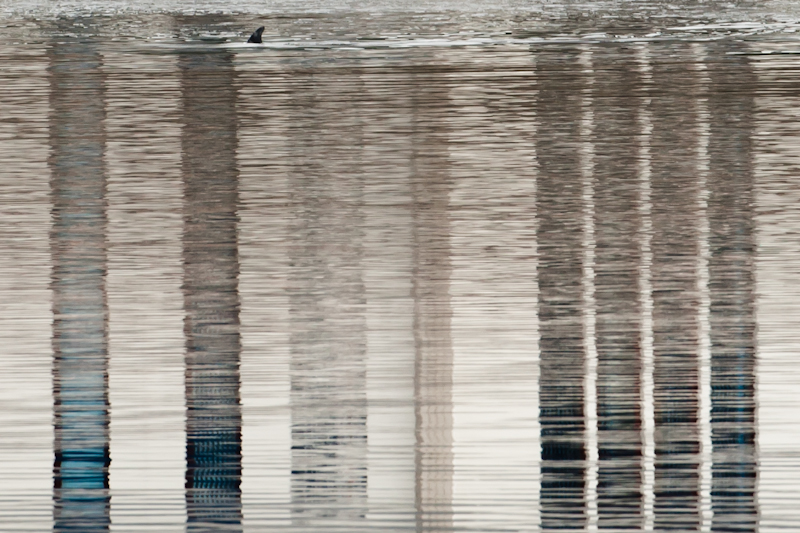
Dolphin fin in reflection of building © John MacPherson/2020VISION
Britain’s range of flora and fauna is astonishing. We are very fortunate to have such a richness and diversity in so small an area. But its under threat, bumble bee numbers are declining and with them goes pollination and threatens our agriculture industry, the marine ecosystem is under threat from pollution, climate shift and numerous other factors, and fragmentation of habitat prevents genetic diversity amongst many species. With all these environmental problems comes a very real threat to human health, one that will affect us all to a certain degree, but which will have a profound effect on our children.
This recent letter in The Guardian from George Monbiot, Jonathon Porrit and others spells it out “we can say that the coalition is on a path to becoming the most environmentally destructive government to hold power in this country since the modern environmental movement was born.”
What, one wonders, will the Young Champions of the future have to celebrate?

Author — John Macpherson
John MacPherson was born and lives in the Scottish Highlands. He trained as a welder in the Glasgow shipyards, before completing an apprenticeship as a carpenter, and then qualified as a Social Worker in Disability Services. Along the way he has cooked on canal barges, trained as an Alpine Ski Leader & worked as an Instructor for Skiers with disabilities, been a canoe instructor, and tutor of night classes in carpentry, stained glass design and manufacture, and archery. He has travelled extensively on various continents, undertaking solo trips by bicycle, or motorcycle. He has had narrow escapes from an ambush by terrorists, been hit by lightning, caught in an erupting volcano, trapped in a mobile home by a tornado, kidnapped by a dog's hairdresser, rammed by a basking shark and was once bitten by a wild otter. He has combined all this with professional photography, which he has practised for over 35 years. He teaches photography and acts as a photography guide & tutor in the UK and abroad. His biggest challenge is keeping his 30 year old Land Rover 110 on the road. He loves telling and hearing stories.