
Networks, trust and rewards – 10 ways to stay ahead in the photography world
Written by John MacphersonThis is a post about a few things it might be worth bearing in mind if you want to see your reputation enhanced, and your work opportunities possibly increase. My apologies that it’s turned out to be rather longer than I intended, but I’m sure most of you already know all this stuff, live it and breathe it, so you can ignore it. However, judging by a few stories I’ve heard very recently from professional colleagues there are some folks out there who might need a gentle reminder to think ahead a wee bit more.
1) When the contractual arrangement is “Turn over all work taken” that’s what you need to do. I recently got some work from an organization I’ve occasionally worked for previously, but which has always been in competition with another photographer. This time I was asked if I could do it at short notice, and was later told off-the-record that the other photographer had been consistently beating me on price but they had just realized he’d been pre-editing the work prior to delivery and sending them only the second-best images and putting the best ones into a large picture library. Don’t be that foolish, you will be found out, and you will lose work in future. That other photographer lost out, and I gained from his foolishness.

Trust © John MacPherson
2) Price fairly. I live in a rural area almost 600 miles from London, and over ten years ago I received a call from the director of a small but influential London-based ad agency, who chatted amiably with me for half-an-hour, just general chit-chat of the ‘sounding me out’ sort, then explained he’d found me via the web and liked my outdoors people and landscape work. He informed me they were working for a major UK drinks multinational on a global whisky campaign.
He wanted a week’s photography work done over the Christmas and New Year period and what would I charge per day to photograph “brooding and majestic landscapes and people enjoying themselves within them”. I thought about it, and offered my normal day rate plus an extra and very reasonable % for the holiday season. The director laughed abruptly and said “I’m not paying that!” and laughed again, leaving a deliberate pause……………………………………before adding “I’ll pay you twice that per day” and laughed again. Then added “London day rates would be more than triple what you charge and some would try to wrestle a lot more out of me because its the holidays. You’ve not tried to take advantage of me so I’m not going to to take advantage of you! I hope you agree that’s a good day rate, and oh yes, we’ll pay you a decent rate-per-mile for travel if you keep an accurate log that matches the image locations.”
So I did as requested and traveled just under 1000 miles that week in some of the wildest blizzards we’ve had in decades, which surprised the client as he’d been closely watching the weather forecasts and thought it would seriously restrict my ability to get about. But despite many road closures I was able to get my ancient Land Rover to nearly all the locations I required. I got promptly paid, and warmly thanked for my efforts. And that job was a springboard to regular work for that individual for the next ten years. If I’d tried to pull a fast one on price on that first job I’m sure I’d not have got any more work from him, and in fact this was something the director confirmed to me several years later.

There’s no business like snow business © John MacPherson
3) Never assume the person you are speaking to in an organization has any power or influence. I called a major publisher in Edinburgh and arranged with a senior member of staff to pay a visit and show my portfolio. It was a 4 hour, several hundred mile journey to their offices. At the publisher’s door a young man, very officious and curt, with a gleam of power in his eye, looked me up and down and said “sorry the woman you spoke with is absent today and I don’t know anything about you, so no, we’re very busy and you can’t come in”.
I told him I’d traveled a long way and it would be a wasted journey otherwise. He again said “no, sorry, too busy”. I put my foot in the doorway and told him I wasn’t leaving until I spoke with someone more senior. He huffily allowed me entry and agreed that HE would look at my work. He did this rather disdainfully, and then a woman walked past and said to the huffy young man “S**** who is this?” He could not remember my name, so had to turn red-faced to me and go “um er um err….it’s er um…you’re er…um…” so I told the woman who I was and as we were speaking she picked up some of my 6×7 transparencies and went “wow!”
To cut a long story short, this was in fact the owner/director of the company and she abruptly dispatched huffy young man to find a lightbox, make me tea, find chocolate biscuits, and I walked out with a contract as main contributor to supply images for one of the most prestigious titles the publisher has ever produced. Which led on to lots of other significant work from the same publisher over the next decade, and from other related publishing houses in their stable right up to the present day.
4) Never promise what you know you can’t deliver, even if the client insists you try. I got a call from a London-based agency asking me to photograph a distillery near where I live. The brief was to make it look ‘bucolic, nestling in the folds of the lush highland countryside, greens and golds and generally with hint of the whisky palette’. I had to say, “sorry I can’t do that”. And explained that, given this was the spring time, London was likely bursting forth with spring greenery, but 500 miles further north the highlands were still in the grip of winter, the trees were bare and leafless and there was more of a hint of dark drama about the place rather than lush spring warmth.
The client talked it through with me, but all the time trying very forcefully to get me to commit to his way of thinking, but I resisted and finally he gave up, and we agreed on a totally different strategy that instead would make the atmosphere of the shoot lean towards a sense of history, dark deeds, bare dark trees and stormy skies loaded with drama. The brief was rewritten, and off I went and was able to deliver what was possible, rather than fail trying to do what was impossible. It’s always worth talking through a client’s needs to ensure what they desire is actually achievable, and occasionally taking the lead using your own personal knowledge and experience.
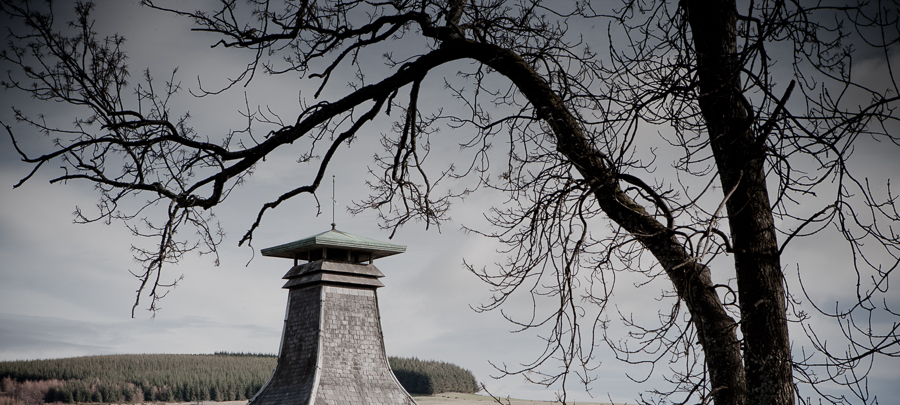
A hint of drama © John MacPherson
5) When you can’t supply an image that’s requested by a client, don’t just say sorry. Suggest a colleague who might be able to. I did this once, and the client later called me back saying thank you, that she’d been able to get exactly what she wanted, and more, from my friend, and was very grateful to me. She then added that this was the first time a photographer had passed her on to a competitor and she was surprised. I said her satisfaction was important, and whether I supplied the image or not, even if I could assist her to obtain it she’d remember me. She did. And I got more requests from her that I could fulfill in the following years. And I got referrals from the colleague I’d passed her on to when he was asked for an image he could not supply, but guessed I could. Networking works in all sorts of ways.
6) Don’t be afraid to have principles (and stick to them). I was asked to ‘assist’ a major (London-based) tv production being made in the highlands and the (rather famous) producer promised me a lot of ‘opportunities’ in return. I did as I was asked, and more, but none of the promises materialized. Nothing at all.
Shortly afterwards some work I was doing which was highly relevant to her production caught the producer’s eye and she was all over me like a rash for access as she could see how it would benefit her production. We had a telephone conversation which did not go as she expected. I politely but firmly put her in her place about trust and making promises and how, in the world where I work, we have standards which people adhere to which benefit all concerned and that she would do well to heed that in future.
There was lots of arrogance and imposing bluster on her part, some of it quite condescending, but ultimately she started to sound tearful and finally started to cry, and then apologized profusely and very genuinely. I then said, “Thank you, now how can I help you?”. She said “What! You mean after how I’ve behaved towards you you’ll still help me?” I explained that of course I would, and that to refuse to do so would be to act as she had, and my standards are much higher, all I needed was an apology and some sense of her having realized that her behaviour had been totally unreasonable. And so I helped her out, she was delighted, her production was a success, and I received a token of her appreciation.

Contract © John MacPherson
7) Be smart about contracts (read them!). I was asked to price a job for a marketing company working in collaboration with, and representing, various individual businesses. They had £6k to spend on a joint promotion. Their brief asked “Could you cover the following list of locations and subjects? We have a budget of £6K. To help determine the successful contractor we’d like a representative set of images submitted with your tender to give us some idea of the range and quality of your work.” There was a very long list of places and subjects they required photographing, far more than their budget could comfortably cover due to the seasonality of some of the subjects eg winter sports, autumn colours, spring festivals etc. Highlighted in red in the brief was one clause which said that one day of the contract work had to be kept aside for a specific business ‘X Company’ that was putting up a significant proportion of the money for the project, and this business would art-direct this one day’s shooting with me to suit their needs.
So I had a stab at pricing my time for it, and put in my tender, noting that it was unlikely that all the subjects and locations could be done within the time scale/cost. I got a phone call to tell me I was the successful contractor and the contracts would be sent out to sign. The contracts arrived detailing my estimates of time, but strangely omitting my pricing, but with a project bottom line figure of £4.5K. I gave them a call thinking this was a mistake and asked “Why does it state £4.5K on the contract? It was £6K in the brief.” It quickly became obvious that they were trying to pull a fast one on me, and get me to undertake the project at a cheaper rate, and when I aggressively queried the price drop from £6K to £4.5K the fellow replied that “Aha you see ‘X Company’ whom we mentioned in the tender who are funding some of this are unhappy working with a photographer they don’t know so have taken £1.5K out of the pot for the one day shoot we mentioned, to pay a photographer they’ve worked with before and whose work they know.” I was rather surprised to say the least.
Fellow then says “So are you confident you can undertake this work in the timescale we require?” to which I replied “I’m sorry but there’s no way I can undertake this work in three days.” “Three days?” he replied puzzled “What do you mean three days, you said in your tender it would be impossible to do all the locations in less than ten days but you would do the best you could to cover them all, and if you read the contract we’ve sent you’ll note that we’ve included that phrase of yours.”
So I replied “Yes but that was before you put a price per day of £1.5K on a photographer’s time. The original brief stated that one full day was to be allocated to ‘X Company’ and if you’ve taken £1.5K off the contract to pay for this it means you’re valuing a photographer’s time at £1.5K per day, so for the remaining £4.5K I can give you 3 days. Why should I work for less than the other photographer?
And naturally I’ll try my best to cover all the stuff in three days, but of course it’s impossible to do it in less than ten days, which is what you’ve acknowledged in the contract by quoting my phrase. Oh and by the way as you’ve omitted my pricing details and day rate from the contract you’ve sent me, and also pre-signed it, and I’ve just added my own signature that makes this a legally binding agreement. So it looks like I’m working for £1.5K a day for three days. So, tell me, what locations do you want me to prioritize?”.
In their blind greed they’d only seen, in the contractual language used, how they might take advantage of me, and failed to consider that there were other factors that might impinge on their bit of devious sleight of hand. Yes it was a total shambles. But not one of my making, and having the signed contracts to wave at them gave me the leverage to work out an alternative and mutually beneficial arrangement, and get paid a reasonable rate for my efforts. (The postscript is another story: their theft of my portfolio images submitted with my tender, their unlicensed use in a book, and then passed on to another company who used them all over a major website for another large and high-profile company. Mess. Big mess. Which they paid for. Having the contract documents and my terms and condition to hold them to were all I needed.) Some clients never learn.
8) You can’t predict the unexpected (but you can enjoy it afterwards). As a consequence of working with my London-based art director on various whisky contracts over the last decade we’ve become good friends despite never having met. One day he called me and asked for a favour: would I be prepared to provide some discounted images to a good friend of his who was starting a high-end bespoke whisky business, who needed images for his advertising but who was working on a shoestring budget. I immediately said yes, no problem. In fact as my art director colleague had been so generous to me over the years I offered the images for free. His friend got unlimited access to my files, made his selection, and was a very happy man.
A few months later a courier appeared at my house with a box. Inside it was another box, wrapped in velvet. Inside that was a hand-sewn flap which pulled back to reveal a magnificent bottle of the very special whisky, on which there was a label with my name and a serial number, and under the bottle a hand-stitched booklet with some of my images in it. What its market value is I can only guess, but its what it represents to me that’s more important than its mere monetary worth.
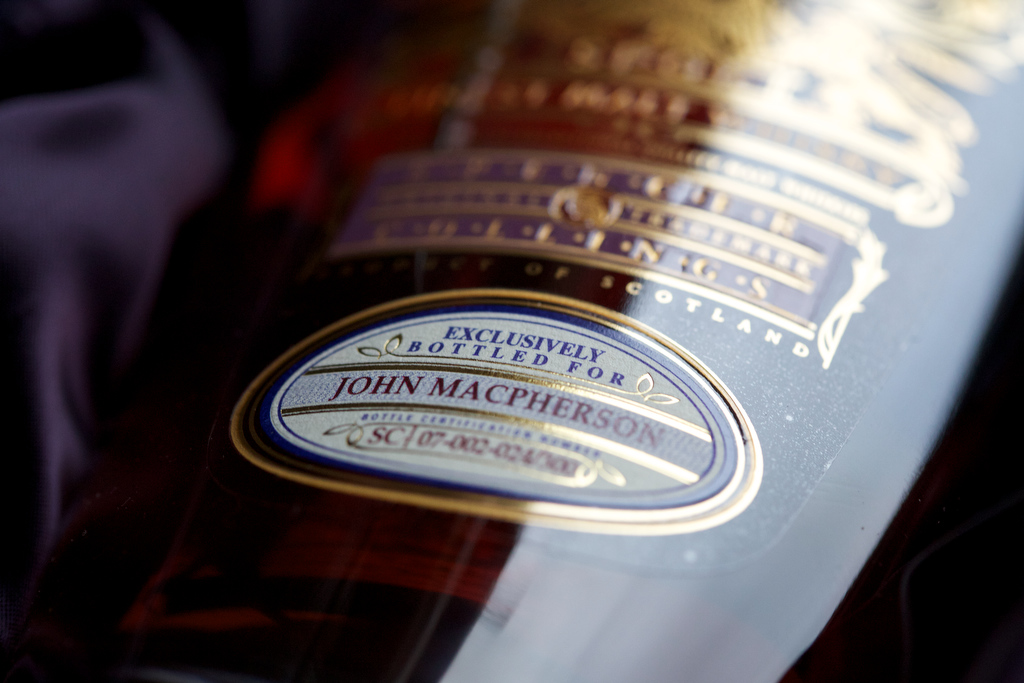
A special dram © John MacPherson
9) Honour your agreement. When the arrangement is “no images to be used in any way until the client has had first use, and any subsequent use to be agreed with the client” it’s a really good idea to honour that. I heard a firsthand account last week from a business colleague who subcontracted a professional photographer to do work intended to publicize the work of the client. Not only did the photographer use the images for personal portfolio reasons without first discussing it, it was done in a way that gained considerable public attention.
However the real failure was that the photographer did not include in the © credit either the hiring agency or the client, and the work was out and off and highly visible without either of the organizations who were paying for it gaining any media profile or publicity, which had been the whole point of the exercise. This created a difficult situation for everyone: the photographer looked somewhat unprofessional, my colleague who hired the individual had a difficult job placating the client. But the worst part was that the client looked as if they had been caught off-guard within their professional network as they were unaware of what was going on and that their project images were out and being seen by their peers, but they’d had no chance to maximize the PR opportunities this exposure represented.
This type of situation reflects badly on everyone, it can destroy trust, and if the damage limitation is unsuccessful it may affect the chances of the client working with (or recommending) the photographer or the business who hired them in future. And it’s easily avoidable.
10) Realize that Business is a ‘human’ activity. It relies on expectations of trust and ‘honour’ on the part of both parties more often than it relies on pieces of paper with ‘cold’ and unforgiving contractual obligations. Me? I prefer the clients I work for that appreciate the former. We trust each other, and that’s a wonderful way to work in my opinion. I hope most of you get an opportunity to do the same. It matters.
Oh, and the special whisky, what was it like?
I have no idea.
I’m keeping it unopened until my wee boy, who is only five, reaches his 18th birthday, and then we’re going to share a wee dram from it, and as we sip I’ll tell him where it came from, and explain why I think having ‘earned’ such things in business, and life, is important.

Author — John Macpherson
John MacPherson was born and lives in the Scottish Highlands. He trained as a welder in the Glasgow shipyards, before completing an apprenticeship as a carpenter, and then qualified as a Social Worker in Disability Services. Along the way he has cooked on canal barges, trained as an Alpine Ski Leader & worked as an Instructor for Skiers with disabilities, been a canoe instructor, and tutor of night classes in carpentry, stained glass design and manufacture, and archery. He has travelled extensively on various continents, undertaking solo trips by bicycle, or motorcycle. He has had narrow escapes from an ambush by terrorists, been hit by lightning, caught in an erupting volcano, trapped in a mobile home by a tornado, kidnapped by a dog's hairdresser, rammed by a basking shark and was once bitten by a wild otter. He has combined all this with professional photography, which he has practised for over 35 years. He teaches photography and acts as a photography guide & tutor in the UK and abroad. His biggest challenge is keeping his 30 year old Land Rover 110 on the road. He loves telling and hearing stories.
Discussion (2 Comments)
Salient points, John. Like a refresher course;-).
Aye Tony. Most folks know it, do it, but it’s always worth a heads up!