The fate of a bird
Written by John MacphersonThe breast feathers of the falcon felt like warm silk in the palm of my hand, soft and delicate. The wild thumping heartbeat beneath the down betrayed the life that still fought within. It had been lying in the sun, on a track in a clearing in the forest. It may have lain there for some time. The weather was hot, too hot, a fierce heat that drew the energy from us and threw it back as thunder and violent lightning storms every afternoon, to remind us how small we were. As we hiked we found the falcon, flapping feebly on the track, one wing smashed beyond repair. My companion Klara seemed unmoved “Its just a bird we can do nothing for” she said flatly. And said nothing more.
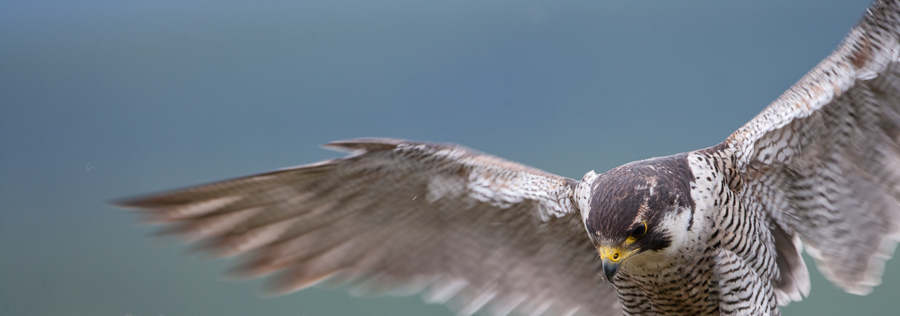
Falcon © John MacPherson
I’d met Klara in Scotland a few months earlier. She was on holiday from Germany and traveling in the Highlands when our paths crossed: she hitched a lift and I stopped. Unusually, I was driving, because my friend and work colleague Paul, who normally drove our Social Work group’s minibus, was feeling unwell and I’d taken over from him that day. Klara and I swapped contact details and said we’d keep in touch.
Paul had started to experience funny tastes and smells, and seemed very tired, so next day we had to send him home. Then we learned that he’d seen his GP and had immediately been rushed by helicopter to hospital in Glasgow with a suspected brain tumour, which was confirmed a few days later.
I visited the hospital with his wife Kath, to offer support. She was very upset and asked me to speak to the specialist. He was awkward and nervous, and studiously avoided eye contact, directing all his comments to a point in space somewhere between the floor and my knees. The onerous task of delivering very bad news. The short diagnosis was: “It’s not good”. We returned to see Paul, and in a quiet moment the specialist said to me “I’m very concerned about your friend’s mental processes which appear to be deteriorating and this may be a consequence of the pressure being exerted by the tumour, he watches the ‘planes taking off from Glasgow Airport and starts mumbling about bears and salmon and the timing has to be right and all sorts of things…..and something about pulling a bag over his head. I’m really very worried”.
I laughed loudly. A deeply amused chortle that visibly disturbed the medical expert. He frowned but I quickly enlightened him: “We’re supposed to be going to Alaska in a few weeks to photograph the salmon run in Katmai and the gathering of the large brown bears that feast on them! Our flights are booked out of Glasgow to Chicago to Anchorage, canoe rented, float plane chartered to drop us in the middle of the wilderness. We’ve applied for some of the limited access permits and been successful. We were offered one of two slots – the first was this week and the second in a fortnight. Paul wanted this week, I wanted the later one. I convinced Paul later was better for the salmon run, which was lucky or I’d be wrestling with this situation in the middle of the Alaskan wilderness. Anyway Paul was really concerned about bear attacks and bought THE book on travel in bear country by Stephen Herrero,’ Bear Attacks: their Causes and Avoidance’ and it terrified him, but he picked up some useful tips, so he’s been practicing them in the house. You’re supposed to leave the waist belt undone on your backpack when you’re hiking so you can quickly pull the sack over your head to protect your neck if a bear attacks you. Paul’s got really quick at doing it.”
Behind me Paul had overheard my comments and mumbled “Even….the biggest bears….can’t….can’t get their……mou…mou….mouths open wide enough to fit your whole head in….but……but….but they can fit your……ne…..ne….ne….neck……you must protect your neck…….the back of your neck….” and slumped exhausted on his pillow. His eyes followed another jet as it climbed past his window and disappeared into the low cloud.
“Oh my!” said the surgeon, “so he’s actually more lucid than I thought, I must alter his medication!”
A few weeks later Paul was still in intensive care, and our Alaska trip was cancelled. My long leave was booked and needed using, so I loaded the motorcycle with camping gear, two helmets and some women’s leather bike gear I’d borrowed, and headed east instead of west, and in a couple of days I was in Germany, having arranged to meet Klara.
It did not turn out as I’d expected. I’d ridden over a thousand miles virtually non-stop in searing heat, my head was ringing from blasting up the autobahn, and I was very very tired when Klara first slapped me, unexpectedly and hard. In my exhausted state I could not figure out why, but assumed language complications and some misunderstanding was to blame, and let it go.
We left for the Harz Mountains on the motorbike. I slowed to look at a view and as I gazed across a stunning landscape my helmet-clad head suddenly and unexpectedly shot sideways, as Klara’s leather-gloved fist impacted the side of it, almost knocking me off the bike. I turned in astonishment only to receive a stern lecture on switching the engine off to protect the environment. I was speechless. And my neck hurt.
Eventually we reached the mountains, and camped. Next day I waited outside the shower block for Klara and dozed absentmindedly in the glorious morning sunshine, reveling in the warmth and light, lots of people coming and going. Suddenly my head exploded in a burst of pain and a swirl of stars that arced and twirled across my visual field as Klara’s hand impacted the side of my head and across my ear, the pressure wave sharply stabbing my eardrum. Stunned I fell off the bench, eyes smarting, but aware of several passersby looking on in concern and bewilderment as my sunglasses clattered onto the concrete. Klara’s mouth was moving, her face fierce, but I could not understand a word above the roaring in my ear.
This was not what I needed, nor wanted. Paul was in hospital, we both should have been in Alaska, and instead here I was being physically assaulted by a seemingly normal person but one with a troubled side. The morning was lost as I sought to make some sense of it all, Klara talking of “therapy and problems” and of “energy-suckers” as she described certain people, pointing some of them out to me across the campsite, and how they were “dragging the life” out of her. But we salvaged something of the afternoon and walked in the forest; it was a glorious hike along a small track through the trees, the air warm and suffused with the aroma of hot pine. Here and there patches of shade, cool and dark, brief and welcome respite from the burning sunlight. And in one patch of sun we found the peregrine.
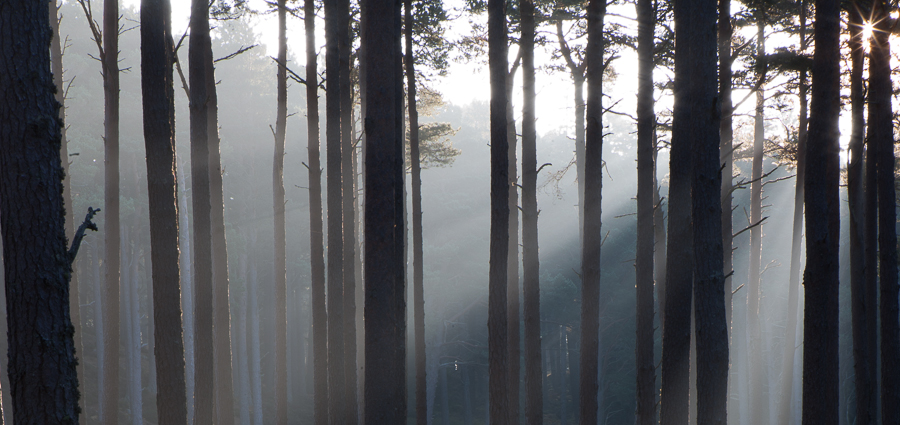
In the pines © John MacPherson
But it was our last walk. I had had enough, and insisted that we depart the next day. I dropped Klara at her home, her contrition turning again, briefly, towards aggression, as I bade her farewell and started the long ride back to Scotland.
Back in Scotland Paul was still ok, and for several months managed to put up a good fight. However he died several months after that.
I drove home from his funeral and cremation, profoundly saddened by the events of the day. I slumped in my favourite chair by the window and sighed, just as the phone rang. It was Klara. I’d had no contact with her since I left Germany, almost a year previously. I told her where I’d just been, that I was still wearing my black tie, that this was not a good time, and I was sad. She said “Oh” in a flat and unconcerned tone, devoid of any emotion. Then silence. Then she said “You have not written to me”. I said “No. I have not. And I wont be writing to you. I hope you have a good life, but I have to say goodbye.” and gently hung up the phone.
I poured a whisky, and sipped, the first drops burning as they slid down my throat, but the golden liquid worked its magic. I thought about our final walk in the Harz Mountains, through the pines, and about the peregrine that we found that afternoon. One side was perfect, the wing intact, elegant and lissome, the other smashed beyond any help, almost severed. I’d thought to wring its neck, but couldn’t find it in me, not at that moment, in that place, so instead had carried it to the shade beside the track, and held it quietly and stroked its head and chest.
I had laid it in the grass in a little clearing I’d made for it to conceal itself amongst the longer stalks. I’d checked the sun’s angle and arc to ensure the shade would last. It would. The peregrine could not fly, so it could not hunt. It could not hunt, so it could not eat. It could not eat, it must die. But shock might hasten its demise. There was no other outcome, I knew. It was just a matter of when, and how.
I often wondered was I kinder to leave it, to spend it’s last few hours in the shade, concealed, with the impression of safety from other hunter’s eyes, from the foxes, and ever watchful ravens. Or should I have ended its life abruptly.
And then I recalled its racing pulse, almost exploding out of its chest as I first gently lifted it, but which had slowed dramatically as I stroked it, and it relaxed. As it perhaps realized I was no predator ready to break its bones. Who knows what it thought, but our paths had crossed by the strangest of events, and maybe, just maybe, its passing was gentler as a consequence.

Author — John Macpherson
John MacPherson was born and lives in the Scottish Highlands. He trained as a welder in the Glasgow shipyards, before completing an apprenticeship as a carpenter, and then qualified as a Social Worker in Disability Services. Along the way he has cooked on canal barges, trained as an Alpine Ski Leader & worked as an Instructor for Skiers with disabilities, been a canoe instructor, and tutor of night classes in carpentry, stained glass design and manufacture, and archery. He has travelled extensively on various continents, undertaking solo trips by bicycle, or motorcycle. He has had narrow escapes from an ambush by terrorists, been hit by lightning, caught in an erupting volcano, trapped in a mobile home by a tornado, kidnapped by a dog's hairdresser, rammed by a basking shark and was once bitten by a wild otter. He has combined all this with professional photography, which he has practised for over 35 years. He teaches photography and acts as a photography guide & tutor in the UK and abroad. His biggest challenge is keeping his 30 year old Land Rover 110 on the road. He loves telling and hearing stories.
Discussion (3 Comments)
John, this sounds like an outline script for a movie. I’d watch it.
I’ve already seen it. In 3D too. Way over-rated I’m afraid! 🙂
The stuff is really fascinating.|