
The power of belief. The need for water.
Written by John MacphersonOne of my interests is deserts. Coming from the highlands of Scotland, and in fact born in a town with the reputation for having the UK’s highest rainfall (between 90 and 200 inches annually depending on precisely where you locate the rain gauge, and what the Gulf Stream is doing that year), this is maybe not surprising. I’ve managed to get into several deserts over the years, and find them fascinating.
I came across an article recently: Darb Zubaidah, Iraq to Mecca by Land Rover, by Dr David Abbott who undertook this expedition a few years ago. It charts his group’s journey in considerable detail and is well illustrated and is a good read for anyone interested in getting ‘away from it all’ and surrounded by lots of sand, but on a journey with considerable historical, archaeological and religious significance. Dr Abbott describes their route:
“More than a thousand years ago, Queen Zubaidah from Iraq built an eighteen meter wide pilgrim road from Baghdad to Mecca. The road was called the Darb Zubaidah, and millions of pilgrims walked this road on their journey to perform Hajj in the holy city of Mecca.
The trip to Mecca was arduous and fraught with danger. Pilgrims died of thirst and encountered hostile tribes during their overland trek. They paid tribute to tribes along the way in return for safe passage and fodder for their animals. It wasn’t a journey for the faint of heart. Lucky pilgrims traveled in the company of military escorts, but for most it was a solitary adventure. You were on your own.
We decided to follow the Darb Zubaidah from the Iraqi border to Mecca. Driving the Darb Zubaidah presents significant challenges, not the least of which is the fact that there are no maps that show the exact route. We had a general idea of the location of the Darb, and we had some waypoints of dubious accuracy for a few stops along the way. A publication from the Antiquities museum revealed important details about the Darb. We read about the pilgrim stations and birqats along the way. What we did not know was their exact location.
Even though we didn’t know the route, we had one major factor in our favor. Pilgrims on the Darb Zubaidah could only survive by following the water trail. Most of them traveled on foot, and they had to reach a source of water every couple of days, or they would die. That meant that if we followed the wadis (dried up river beds), and found the low lying area along the route, we would also discover the shallow wells and birqats that supplied water to the pilgrims.“
Accompanying the article are numerous images, two of which made me gasp, literally, with what they represented:
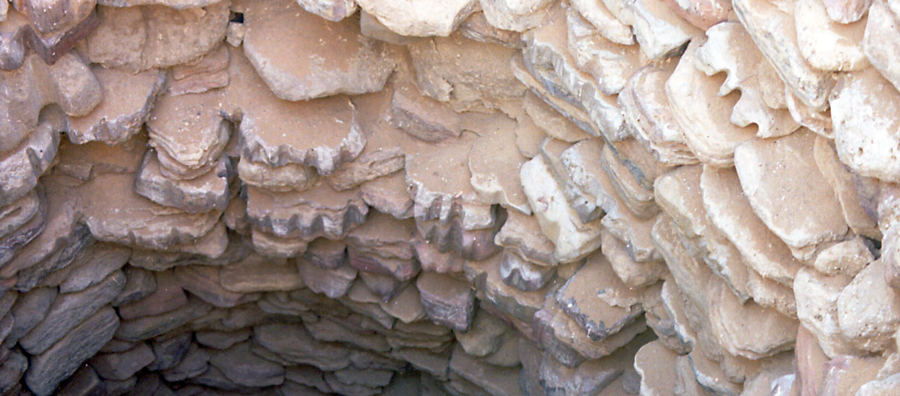
Darb grooved rock © Dr David Abbott
“Pilgrims drew water from these wells for more than a thousand years. The grooves in the rocks testify to the age of the wells on the Darb. It takes hundreds of years for ropes to create the grooves in the rocks that line the mouth of the well. This was the most definitive fingerprint of the pilgrims that I encounter on the Darb.”
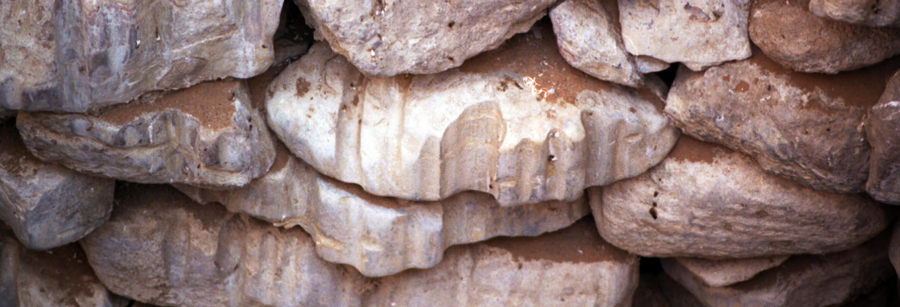
Darb grooved rock © Dr David Abbott
Centuries of devotion, hardship and belief, written by rope into stone, by the need for water.

Author — John Macpherson
John MacPherson was born and lives in the Scottish Highlands. He trained as a welder in the Glasgow shipyards, before completing an apprenticeship as a carpenter, and then qualified as a Social Worker in Disability Services. Along the way he has cooked on canal barges, trained as an Alpine Ski Leader & worked as an Instructor for Skiers with disabilities, been a canoe instructor, and tutor of night classes in carpentry, stained glass design and manufacture, and archery. He has travelled extensively on various continents, undertaking solo trips by bicycle, or motorcycle. He has had narrow escapes from an ambush by terrorists, been hit by lightning, caught in an erupting volcano, trapped in a mobile home by a tornado, kidnapped by a dog's hairdresser, rammed by a basking shark and was once bitten by a wild otter. He has combined all this with professional photography, which he has practised for over 35 years. He teaches photography and acts as a photography guide & tutor in the UK and abroad. His biggest challenge is keeping his 30 year old Land Rover 110 on the road. He loves telling and hearing stories.