
“Cut away all the bits that don’t look like a fish”
Written by John Macpherson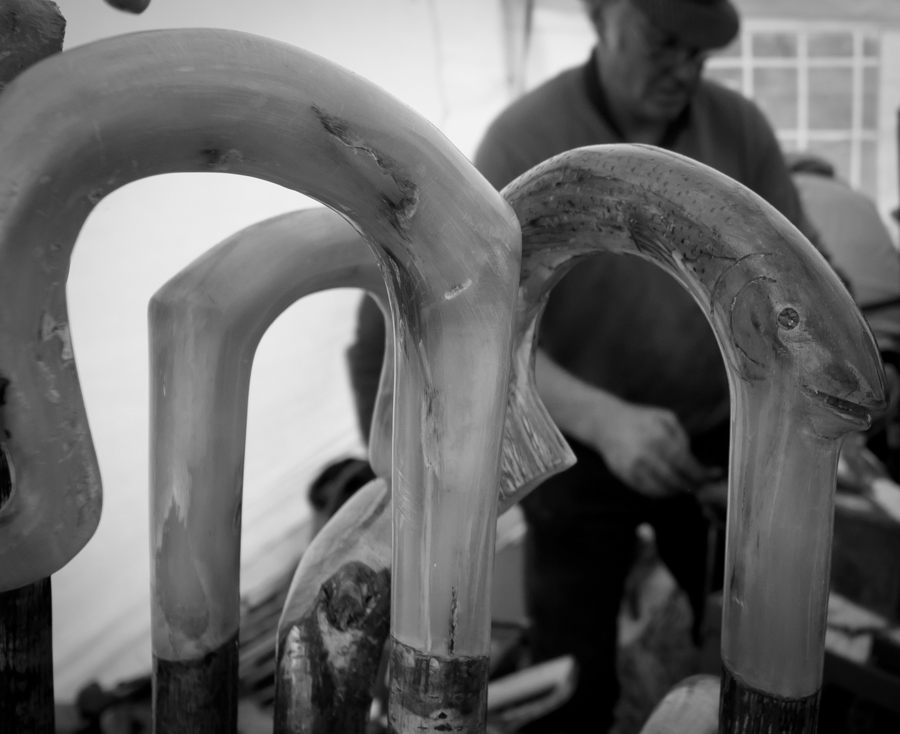
Oh fish where are thou? © John MacPherson
When teaching night class students, and workshop participants, one of the key aspects of the photographic process that causes many of them lots of hand-wringing is composition. Truth is it’s an intensely personal thing and often very intuitive. It’s something that’s really hard to articulate in words and in reality is more often than not simply ‘felt’ when peering through the viewfinder at a scene. Intuition achieving better results than the rigid application of the so-called ‘rules of composition’.
I’ve tried to get people to think around their subject and try to determine “what is it that I am trying to say here, what is it that has attracted me to this” and to consider “what in front of me is relevant to portraying that, and can be included in the frame” and “what is not relevant, is distracting, and should be omitted or given lesser prominence”. By this process of consideration, and inclusion or elimination, you can often lead yourself towards ‘trimming the fat’ from your frame and making the image ‘leaner’ and perhaps more meaningful.
It all sounds rather artful and pretentious, and so one day listening to the radio, a programme about country craftsmen, I was delighted by an interaction between a very ‘proper’ woman interviewer and a gruff west country wood carver who was in his 70’s with a lifetime of wood carving behind him.
Interviewer: “I have Bert here, and he’s a wood carver, making the most astonishing wooden objects from timber taken from the woods around his home. I’m holding one of his pieces, a walking stick, with a glorious carved handle, made of…..I think it’s ash..is it ash Bert? …. (Bert obviously nods in agreement)……ah yes it’s ash, and it’s beautiful.
It’s a most astonishing reproduction of a leaping brook trout, and as I hold it the arching curve of its back falls perfectly balanced into my hand. I can feel each scale of its muscled back through its ‘skin’ which is of course simply carved wood, but Bert’s careful use of grain and texture of the timber has made it almost alive, and the ridge of its dorsal fin is just there under my thumb, I can caress it.
This is….is…..simply breathtaking craftsmanship, that such ‘life’ can be wrestled from a piece of wood is quite remarkable. Tell me Bert….how…..how is it possible to do this, to make such a thing of beauty, and seemingly so ‘alive’, from a lump of ordinary wood………?”
There followed a silence. A long bottom-shuffling silence as Bert carefully digested and considered this difficult question…..then……clearing his throat, and speaking in a stern and clipped tone….
“…er…..umm…..ye….well….er…..ye just start wi a block o wood and er….cut away all the bits that don’t look like a fish…..and …er….eventually yer left wi a fish.”
And then fell silent. Like the process of ‘composition’ Bert was describing in his method of work, his use of words was equally lean and meaningful. Leaving the presenter to hastily try to respond to this wonderfully simple, but deeply profound response. She failed.
I thought this a beautiful description of the deeply personal process that is composition, responding to the qualities of your raw material and creating what is required and appropriate simply by removing that which is not. Now when I teach composition I tell that story, and ask people simply to “….cut away all the bits that don’t look like a fish”.
It’s deeply satisfying as a tutor to hear the delighted call from a student: “Yessss! I’ve got a trout!”

Author — John Macpherson
John MacPherson was born and lives in the Scottish Highlands. He trained as a welder in the Glasgow shipyards, before completing an apprenticeship as a carpenter, and then qualified as a Social Worker in Disability Services. Along the way he has cooked on canal barges, trained as an Alpine Ski Leader & worked as an Instructor for Skiers with disabilities, been a canoe instructor, and tutor of night classes in carpentry, stained glass design and manufacture, and archery. He has travelled extensively on various continents, undertaking solo trips by bicycle, or motorcycle. He has had narrow escapes from an ambush by terrorists, been hit by lightning, caught in an erupting volcano, trapped in a mobile home by a tornado, kidnapped by a dog's hairdresser, rammed by a basking shark and was once bitten by a wild otter. He has combined all this with professional photography, which he has practised for over 35 years. He teaches photography and acts as a photography guide & tutor in the UK and abroad. His biggest challenge is keeping his 30 year old Land Rover 110 on the road. He loves telling and hearing stories.