
Lighting creative spaces
Written by John MacphersonSome of you may remember my previous post The Final Cut, about craftsmanship and the indefinable ‘feel’ that well-used tools often possess, and the price we often must pay for ‘progress’.
What that post mentioned only obliquely was the workshop, the space in which such tools were used. Truth is, these can often be hugely atmospheric places, and as a carpenter I’ve been lucky to work in several, and whenever I’ve come across them subsequently as a photographer I’ve delighted in poking around in their dusty depths.
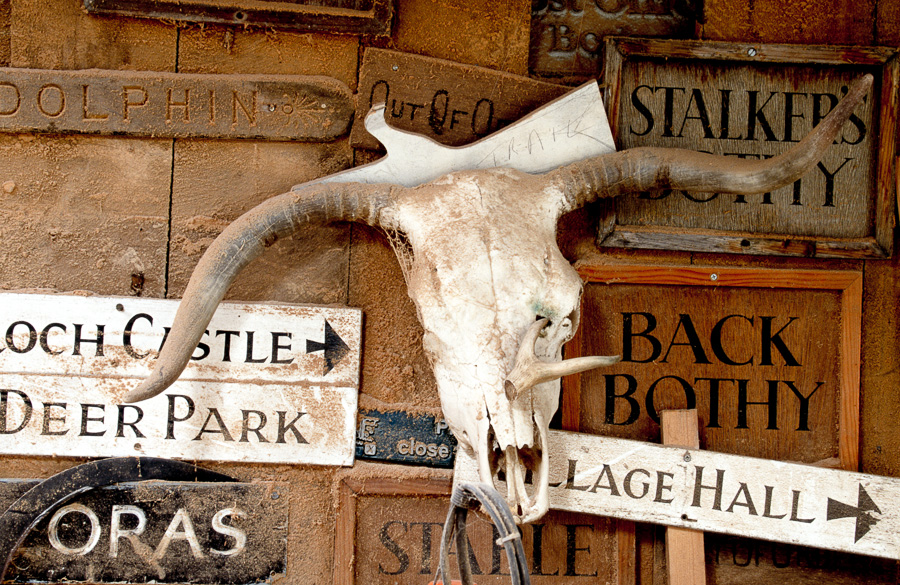
Joiner’s shop, Isle of Rum © John MacPherson
A few years back I was undertaking a documentary photography project on the Isle of Rum National Nature Reserve just off the Scottish west coast, recording a variety of ‘stuff’ over the course of a year. There’s an old blacksmith’s forge and a joiner’s shop hidden in the outbuildings of Kinloch Castle, the latter workshop still used by the resident island carpenter. It is gloriously dusty and cobwebbed, with all manner of objects nailed, screwed, stacked and precariously balanced against its walls. I spent a pleasant hour poking around there one afternoon.
Subsequently I was asked to photograph some of the furniture that Sandy the joiner had made in this old ‘shop, fashioned with care from well seasoned Rum timber he’d gathered over the years. Sandy was making items that would otherwise have been bought in as mass-produced items from the mainland, costly in environmental terms and certainly going against the grain of ‘sustainability’ that a National Nature Reserve should be promoting.
After some discussion Sandy decided we should take the photographs on the Castle’s extensive lawn – it was a lovely sunny summer day so why not. This turned out to be a hilarious afternoon of activity, as all manner of incredibly heavy timber furniture was dismantled in the various homes it resided in, loaded into or onto Land Rovers, or if too big for the Land Rover hoisted instead onto the tractor and trailer, and ferried to the lawn of the Castle, and then re-assembled so that I could photograph them.
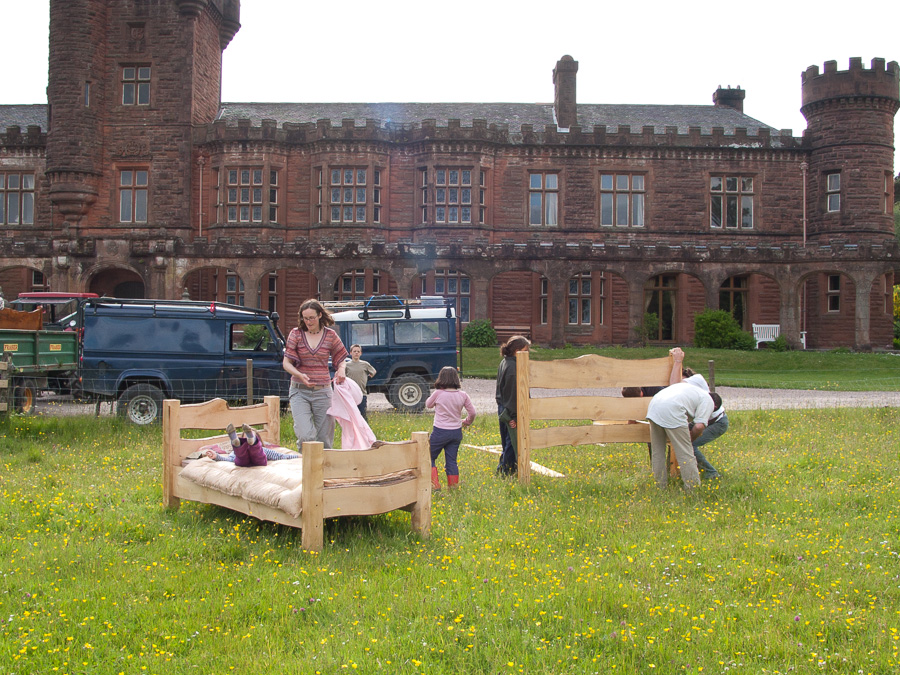
Carting in the furniture © John MacPherson
But of course this being a small close-knit community of only a dozen people, everyone got involved and it became the focus for fun, children playing on the beds, dogs diving around, and when the ferry from Mallaig arrived and disgorged a horde of daytrippers they wandered around bemused at the spectacle of several beds complete with duvets and pillows being carefully assembled on the lawn.
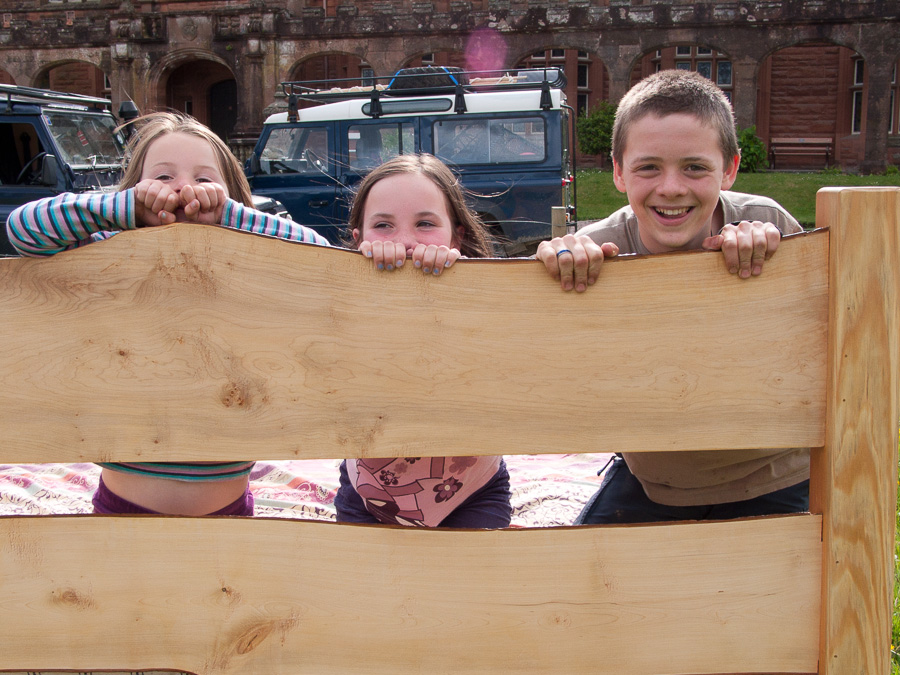
Rum children © John MacPherson
I overheard one conversation between a visitor and an island resident:
“Err….um….excuse me…..why are you making up beds out here, is there a reason?” enquired the bemused visitor
“Och aye, we always sleep outside here in the summer time ye know……
…what… midges…a problem? ….naw….you get used to the midges, and they’re no too bad when it’s windy….what….rain? …..no no….you see the duvets are special waterproof ones so rain is no a problem either…..”
…..and off went the rather puzzled daytripper, tightly clutching their camera containing the incontrovertible photographic proof of this strangeness, to see if the rest of this impressive but highly unusual island lived up to its reputation for being somewhat ‘different’ from it’s near neighbours!
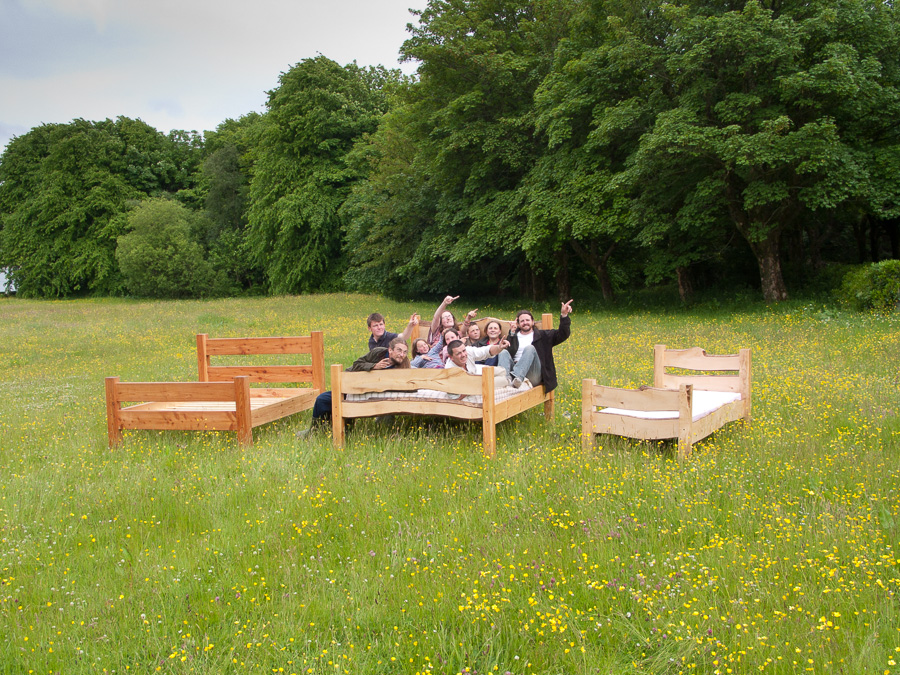
Rum residents and a bed © John MacPherson
Eventually all the furniture was assembled and I was able to get some lovely shots of coffee tables, dining tables, beds and people, and in the process capturing something of the fun we’d all had.
But what I love about such furniture, hand-crafted of local timber, is not only that it celebrates and utilizes the products of local woodlands, and the hands that crafted it, but it unites people. Conversations occur over coffee tables, the world is put right over dining tables and children might be conceived later in the robust expanse of those carefully built beds.
And it struck me recently that although we often remark on the quality of furniture, particularly older items, doors, the ornate design of window facings, and the glorious sheen from paneled walls in older houses, we often overlook the workshop from which all this stuff emanates, the place of its ‘birth’ I suppose. I was reminded of this a week or so ago when I read an article in the Boston Globe: ’18th Century Woodwork Shop a Rare Find’.
Seems this largely intact joiner’s shop has been completely overlooked, used a store-room, and is a hugely important piece of American history:
“All the benches were there. It’s likely to be the earliest known joiner and cabinet maker’s shop on its original site” anywhere in the United States, Burrey said. “The woodwork on the house [being removed] was probably built in the shop.
“The way the benches are in relation to the windows, how the light comes in to light an area, the location of the tool racks on the walls,” all tell of how the craftsmen used the shop, Burrey said.
Gary Naylor of Hanson, a specialist in antique woodwork and tools, said the shop’s interior revealed signs of a Federalist craftsman’s workshop.
“When I saw the [foot-operated] lathe there, I knew it was a highly skilled craftsman,” Naylor said. “A lot of different features in the building are untouched, intact. When I turned around and saw the opening for the fireplace, it was all coming together.”
The president of the school’s board of directors said Berrybrook had no idea of the building’s historical value.
“We really thought nothing of it. We had used it as storage,” Christopher DeOrsay, an architect, said recently. “We gave [Burrey] a tour. His jaw hit the floor.”
Burrey’s remark about the light reminded me of Rum, both the joiner’s shop, and the forge where the blacksmiths would have worked on the horseshoes for the island ponies (which were, and still are, used for various tasks but mainly stalking duties). I’d photographed the blacksmith’s bench and vice, located beside the window, attracted by the quality of the daylight that flooded in and illuminated the work space – precisely the reasons why the original craftsmen had situated this vice where they did.
We take for granted modern lighting, controllable and constant, but our ancestors were not so well served, and workshops often developed around their need to allow daylight to illuminate the working area. The old workshop I started my apprenticeship in, and from which I once dragged and burned hundreds of old wooden tools, had big windows, every sliver of light valued for the accuracy it could enable when working.
The new workshop we moved into had none of this. It was ‘modern’ and daylight had been dispensed with, it only had a few small windows situated high up, and to illuminate the gloom, distributed liberally across the ceiling were fluorescent tubes giving a constant, even, but sterile glow.
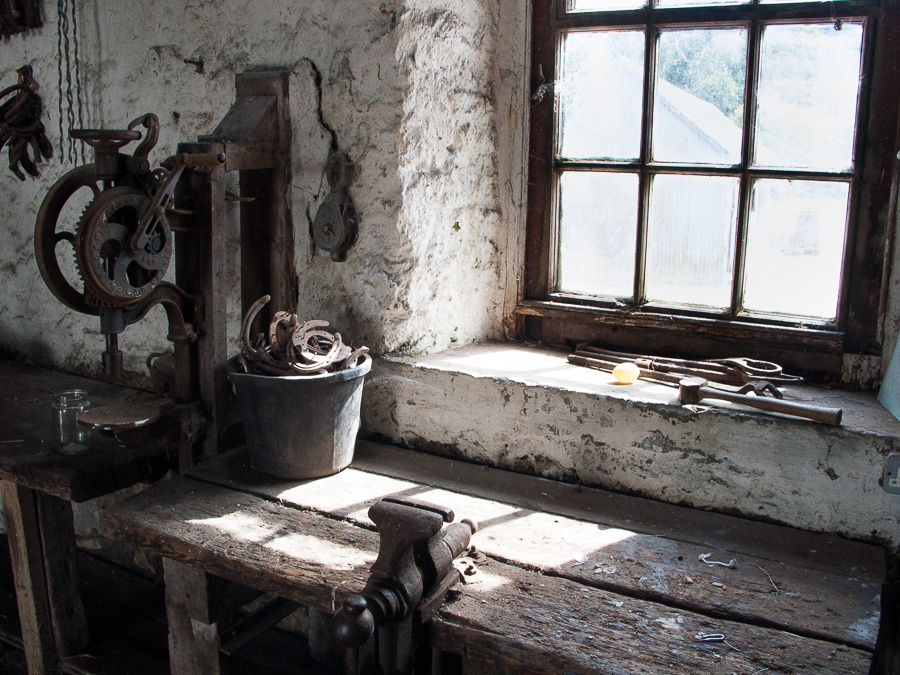
The forge © John MacPherson
We celebrate the craftsmanship that skilled hands produce, and rightly so, but we should not overlook the spaces in which those hands laboured. They are hugely important, atmospheric places, suffused with history, and with the passage of time they too become worth preserving.
Painters, weavers, woodcarvers, and all sorts of artisans, including we photographers, utilize the subtle nature of light in our endeavours, often in our own ‘creative spaces’, relying on its illumination for the accuracy and quality of our work. The times may have changed, but our need to control and utilize light remains the same.
I smiled with delight when I saw what had been discovered in the Berrybrook School, and the lessons we can learn from it, and if you like craftsmanship as I much as I do, you may smile also.

Author — John Macpherson
John MacPherson was born and lives in the Scottish Highlands. He trained as a welder in the Glasgow shipyards, before completing an apprenticeship as a carpenter, and then qualified as a Social Worker in Disability Services. Along the way he has cooked on canal barges, trained as an Alpine Ski Leader & worked as an Instructor for Skiers with disabilities, been a canoe instructor, and tutor of night classes in carpentry, stained glass design and manufacture, and archery. He has travelled extensively on various continents, undertaking solo trips by bicycle, or motorcycle. He has had narrow escapes from an ambush by terrorists, been hit by lightning, caught in an erupting volcano, trapped in a mobile home by a tornado, kidnapped by a dog's hairdresser, rammed by a basking shark and was once bitten by a wild otter. He has combined all this with professional photography, which he has practised for over 35 years. He teaches photography and acts as a photography guide & tutor in the UK and abroad. His biggest challenge is keeping his 30 year old Land Rover 110 on the road. He loves telling and hearing stories.