
Lone Star State (of mind)
Written by John Macpherson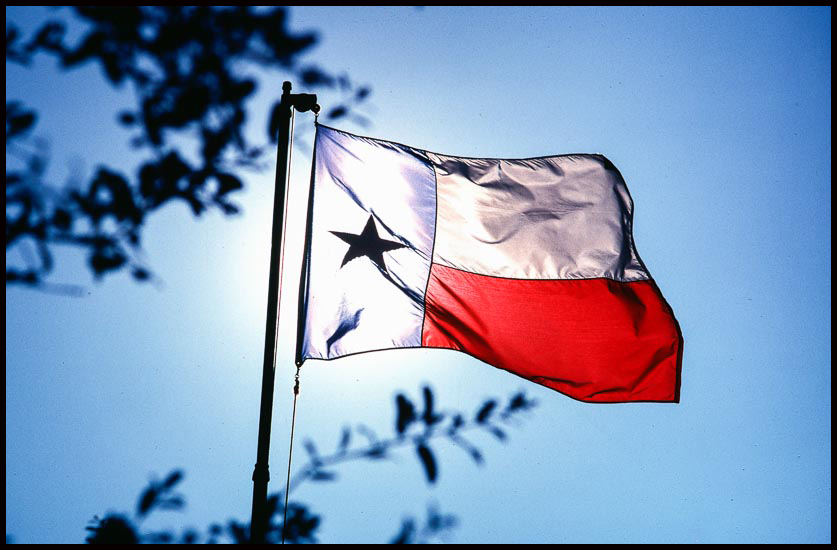
The Lone Star state © John MacPherson
Many of you who read my (long) piece on Scotland ‘Another Country’ will have noted my mention of traveling during downturns in the Scottish building trade in the late 70’s, and having b&w contact sheets with pictures of Highland Games in Scotland on one half of the sheet and images of Texas on the other half. I thought it might be interesting to show some of these other images (and some colour ones as well). Often the contrast between disparate places can reveal more about each. This is another long piece, but there’s lots of images, and if I’m honest there’s another reason for this post, but more of that at the end……
I spent several months in Texas, how, why and what transpired as a consequence is a story all of its own. And it’s a story that in itself is revealing: of the American dream, of aspiration and racial tension, and of how the pasts we often think we’ve left behind continue to haunt us. I suppose in many ways it’s an ordinary story, one of immigrant American people and their dreams. But in that ‘everyman’ aspect lies a window into what it is to be uprooted and to seek refuge in ‘another country’, to try to build a new life and prosper, but despite those freedoms, to remain in exile.
It was December when I went to Texas, from my small country where space is at a premium, houses rarely have expansive gardens, and in my own home town the ‘limited space’ for development is generally confined to thin coastal strips backed by mountains that rise steeply from the sea. These mountains attract every passing cloud no matter how small and suck the rain from them, to then throw it down unceremoniously on us in epic quantities.
A friend living in a particularly damp coastal glen measured over 200 inches of rain in his gauge one year. Other parts of my home district never see direct sunlight in the winter months so steep are the hills around them. Distances are relatively short as-the-crow-flies but often three to four times further on tortuous roads that wind around the numerous fjord-like sea lochs, the probing fingers of the Atlantic that clutch the west of Scotland in their briny grip. We are familiar with water, whether from the sea or the sky.
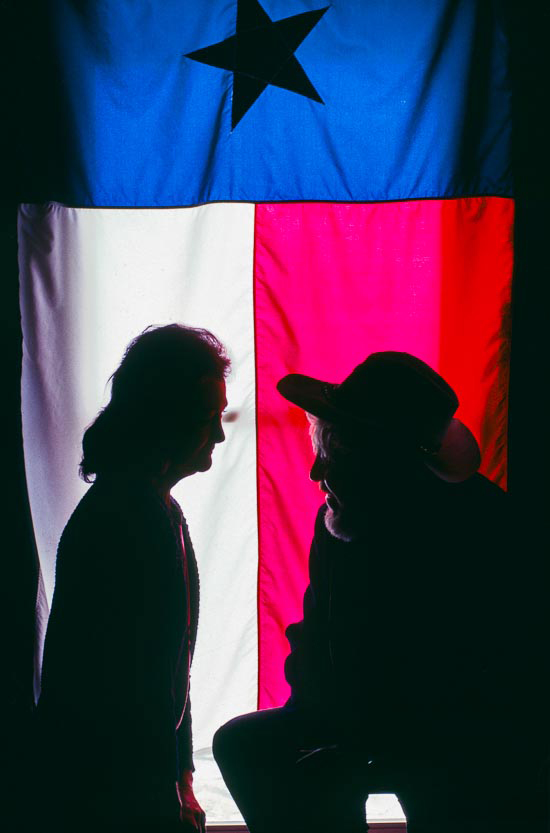
Mickey & Don, barkeepers, in front of a state flag they have hanging in the pub window, Canyon Lake Texas 1979 © John MacPherson
Texas in the winter was a revelation. There was sunshine! And straight roads, many of them four and six lanes wide. I was struck immediately by the space. Lots of space. Horizon curving, sky dominating space. And it was a sky I could see without having to actually put my head back and look upwards as I’d to do in my home town (given that the highest mountain in the UK is in my backyard). I entered my first proper shopping mall in Texas, and was astonished at the water feature INDOORS – you have to understand that up to that point I’d spent most of my teenage years as a carpenter in Scotland gamely fighting to keep water OUT of buildings!
I spent several months in Texas, cycling about, meeting people living in rural areas and small Hill Country towns, before I eventually headed out into West Texas and the Permian Basin, as I rode west to the Pacific. And this post is, simply, a celebration of those people I was fortunate to encounter.
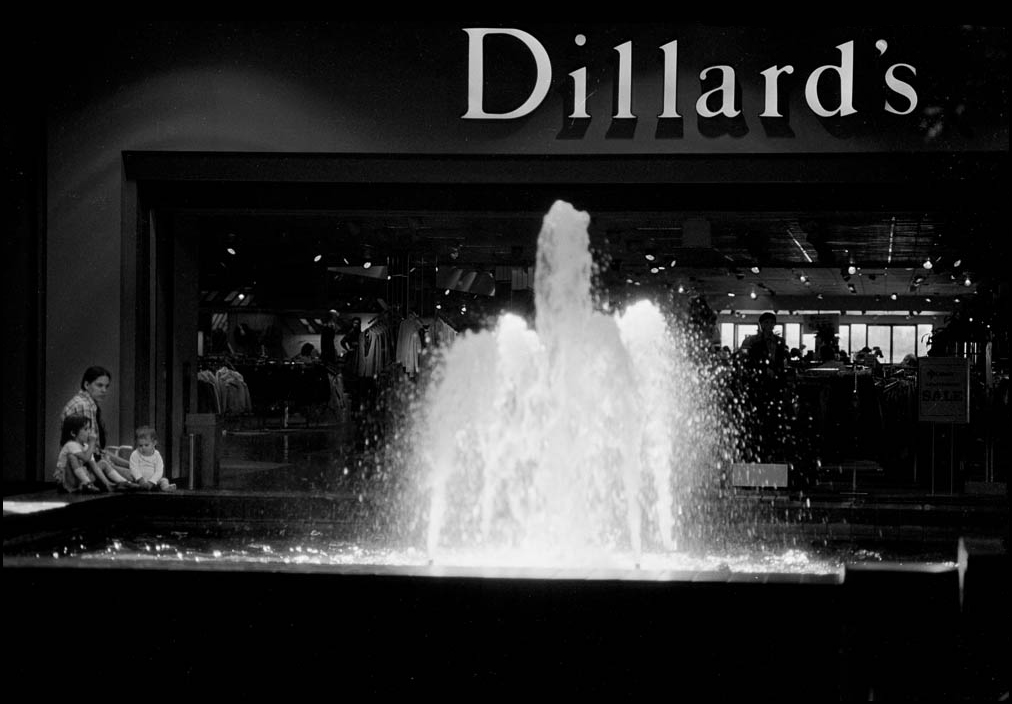
Shopping mall, Texas 1979 © John MacPherson
It was an interesting time, late 1979. It was the start of the Iran hostage crisis, catapulting events in the Middle East into sharp focus for many Americans. Jimmy Carter was at the helm, two years into his Presidency, and dealing amongst other things with a nation shocked by the partial nuclear meltdown at Three Mile Island only a few months earlier.
This was also the start of the second oil crisis in the USA, caused by decreased supply due to the Iranian Revolution. Under Carter’s watch the Soviet war in Afghanistan commenced, and in Europe the Cold War continued. Britain meanwhile was in the grip of Thatcherism, and the IRA were relentlessly bombing their way forwards, killing Lord Mountbatten with a bomb on his boat only a few months earlier, and in a separate incident a few hours afterwards at Warrenpoint, killing eighteen British soldiers in an ambush. We were making global headlines, but for all the wrong reasons.
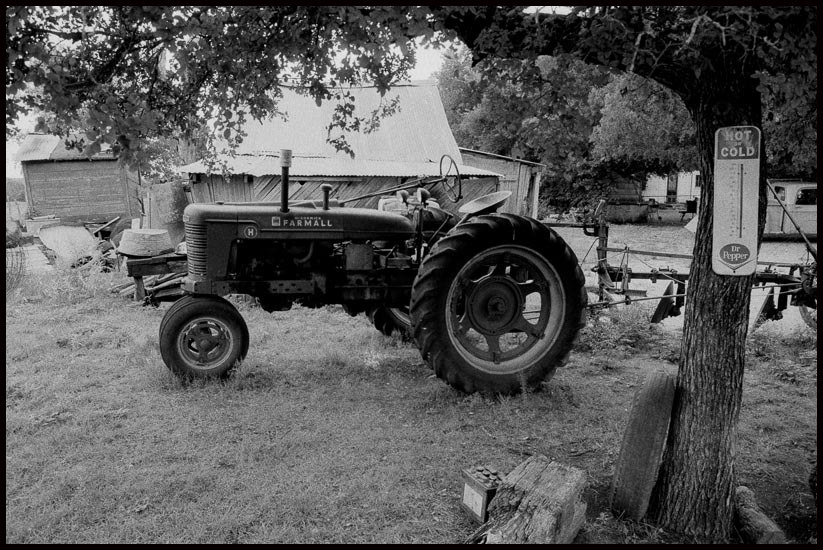
Uvalde, Texas, 1980 © John MacPherson
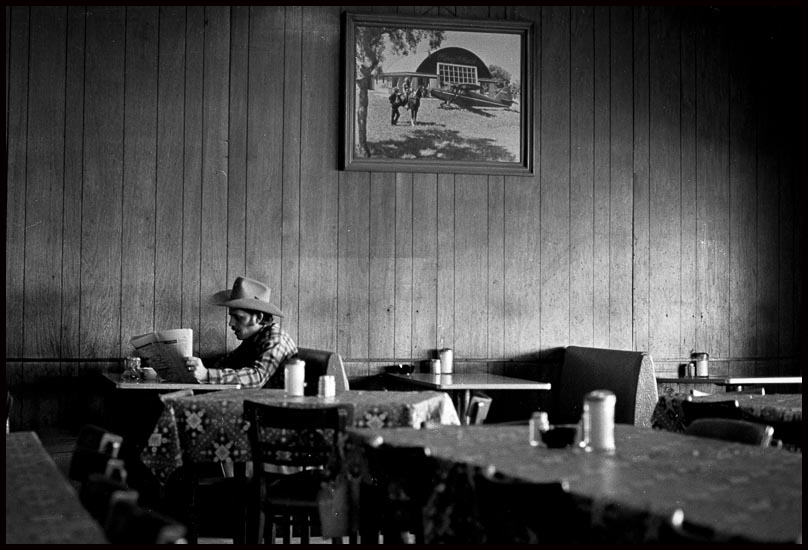
Rural Texas 1979 © John MacPherson
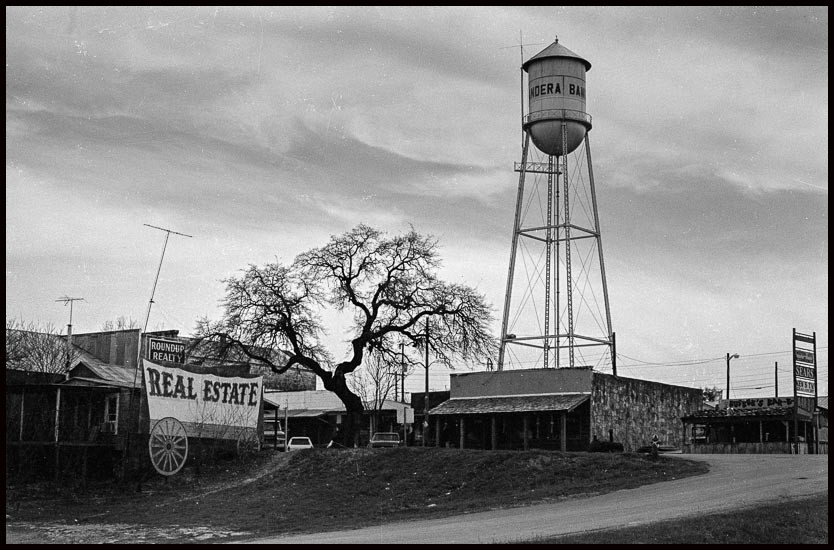
Bandera, Texas 1979 © John MacPherson
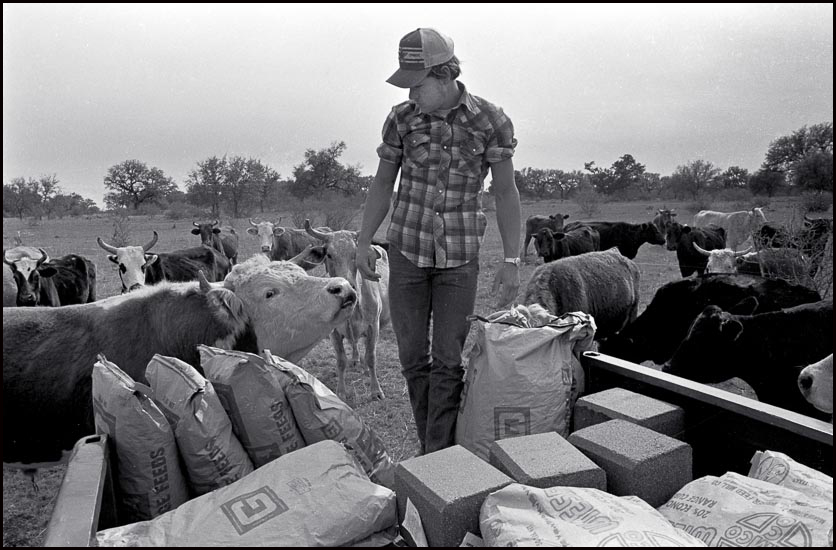
Preston Jennings, Texas 1980 © John MacPherson
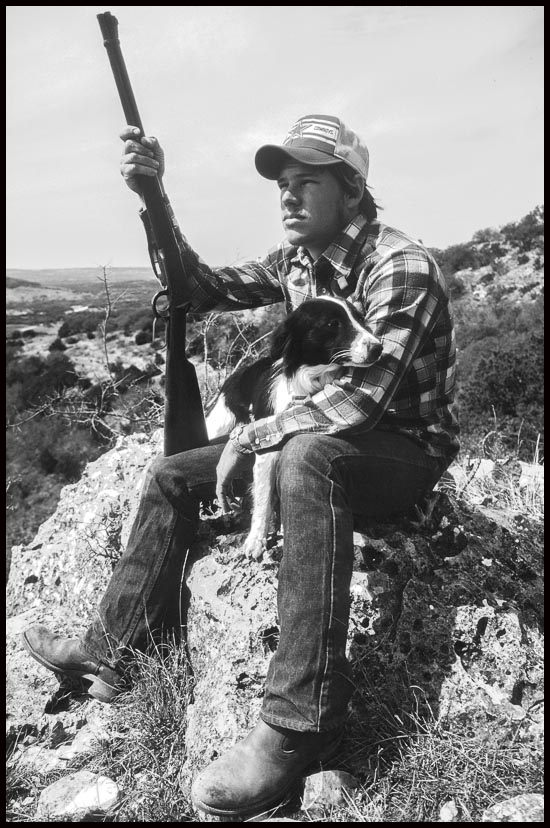
Preston & his dog, Texas 1980 © John MacPherson
I mention all of this because it had an impact on things I was witnessing, and it influenced the way I was treated. I’d met a couple of families and through them was introduced to several more. But simply wandering about in rural Texas on a bicycle was a great way to meet a great many more people. There’s something liberating about cycling that strangers relate to.
Cyclists are vulnerable, and they are also ‘open’ – not sealed into some speeding metal box that ‘protects’ them from the gaze of those they pass by. Many of the people I encountered and spent time talking with had simply smiled and flagged me down as our orbits collided in that sort-of cycling slow motion that perversely allows more to happen than if one was moving faster. They invariably offered me hospitality, conversation and insight, and on occasion a bed for the night if not space for my modest tent.
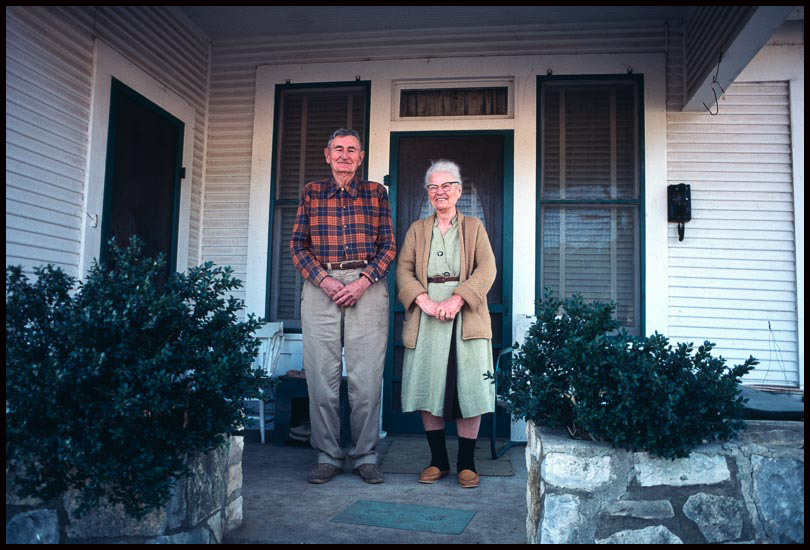
Oma & Opa Kanz, New Braunfels, Texas 1980 © John MacPherson
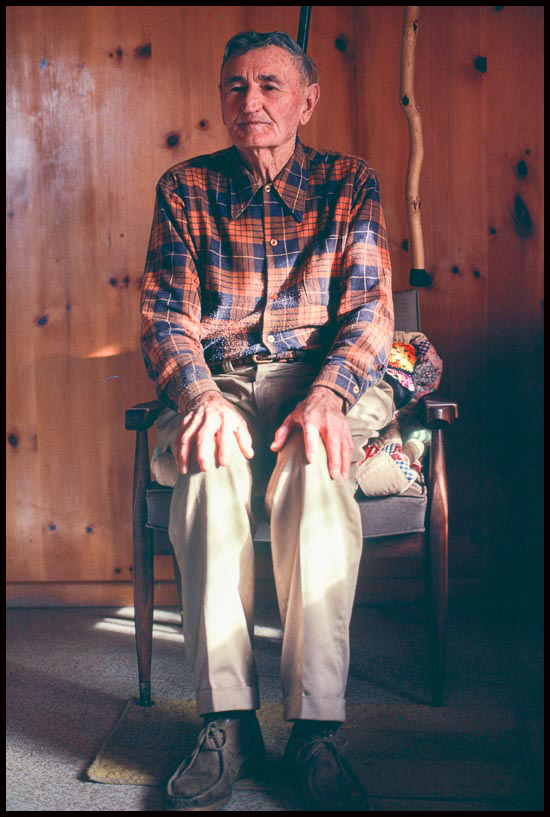
Opa Kanz, inside his home, New Braunfels, Texas 1980 © John MacPherson
I had a few fraught moments, one in an VFW (Veterans of Foreign Wars) hall where I’d gone with some folks I’d met to play bingo. With my road-worn mahogany skin, dark hair and fulsome beard, not to mention the funny accent, I attracted attention. On a visit to the toilet I was cornered by two large and powerfully built elderly men. “Are you an Iraynian?” said one, a half smile on his face, the kind of smile that lulls you into trust but means the opposite. “No, I’m from Scotland” I hastily replied, also smiling. My very very best smile in fact.
“Scotland?” he said incredulous. “Scotland with the bagpipes?”
“Yep, that’s the one” I said.
He smiled and put an arm on my shoulder “Damn, boy I got relatives in the old country way back, they were McGregors or something! Heard your accent – kind a threw me, come and have a drink!” And I did. Several in fact, in a long friendly evening of banter. But despite the friendly outcome, it was a revealing encounter, a brief glimpse of some of the racial tensions that simmered just beneath the surface.
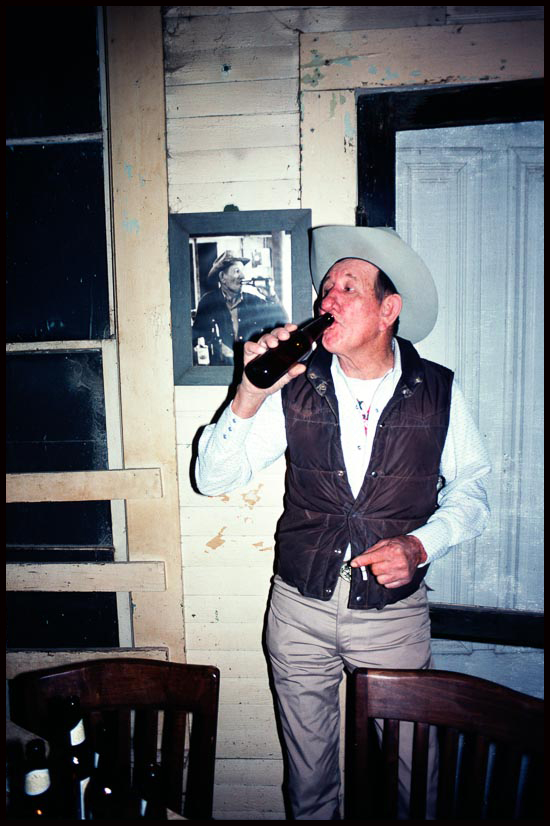
Gruene Hall, Texas 1979 © John MacPherson
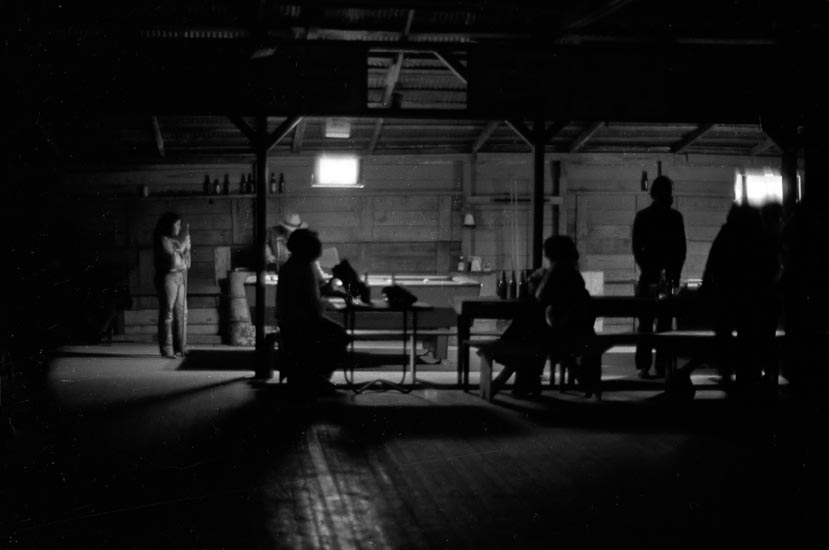
Rural pub and pool hall. Texas 1980 © John MacPherson
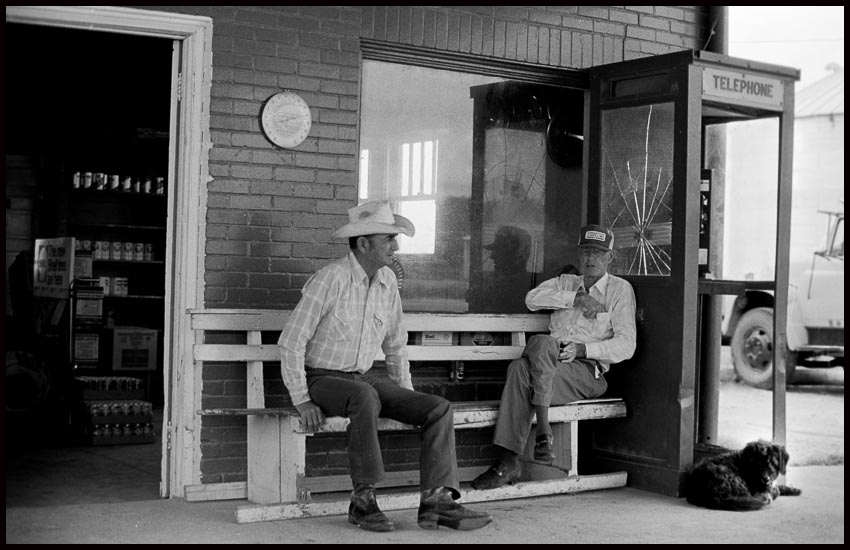
Watching the world go by, Texas 1980 © John MacPherson
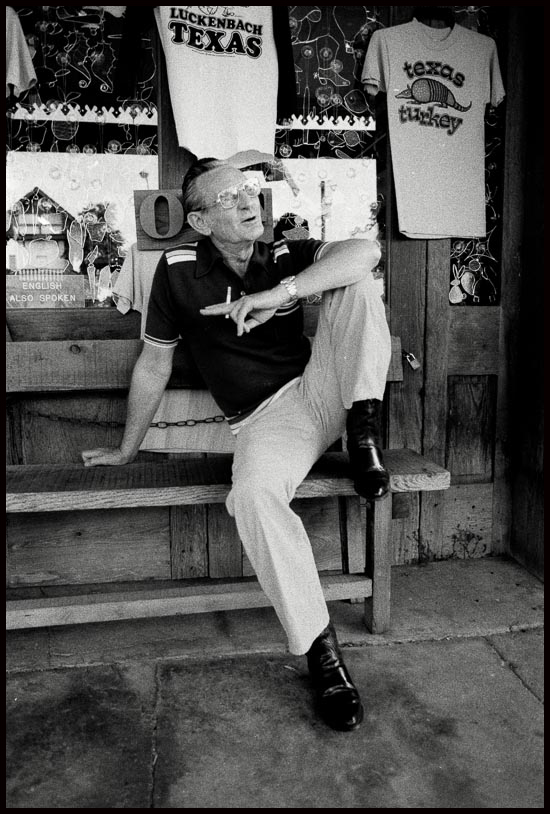
Texas 1980 © John MacPherson
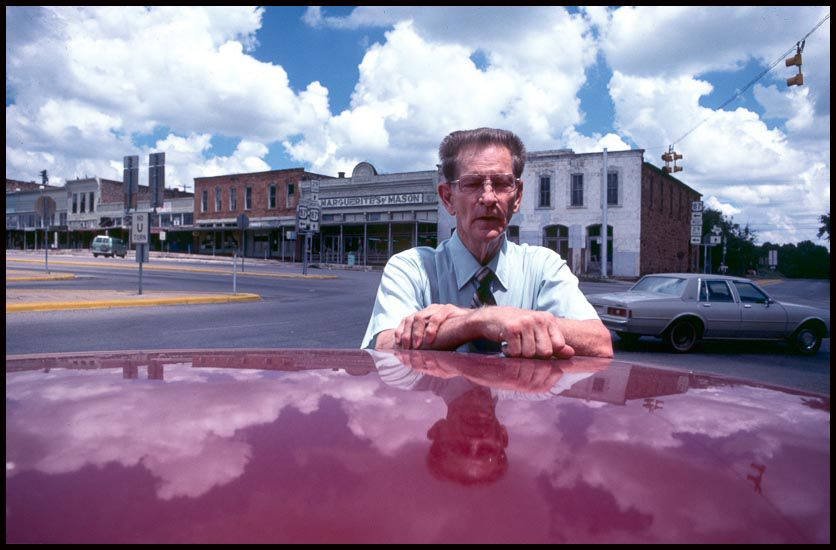
Businessman going to lunch, Mason, Texas 1980 © John MacPherson
The VFW folks I spoke with were more aware of global conflicts than most, and had a good grasp of geography. Other people I spoke with were less aware, and shocked at Scotland’s apparently close proximity to Moscow and the Cold-War-risks they perceived that closeness represented (the same distance as from New York to Denver). And when I revealed how much closer Belfast was (less than half the width of Texas), they expressed wonder that I could live so ‘casually’ with terrorist activity and bombings apparently so close to my home.
The repercussions from America’s foreign policies and global interventions had had little direct effect within the USA at that point, yes the energy crisis was nagging at the country’s heels, but there had been no direct impact from American involvement in the Middle East. However 9/11 would change that forever. With hindsight it may be fair to say I was witness to what was in many respects the last years of an age of innocence in America.
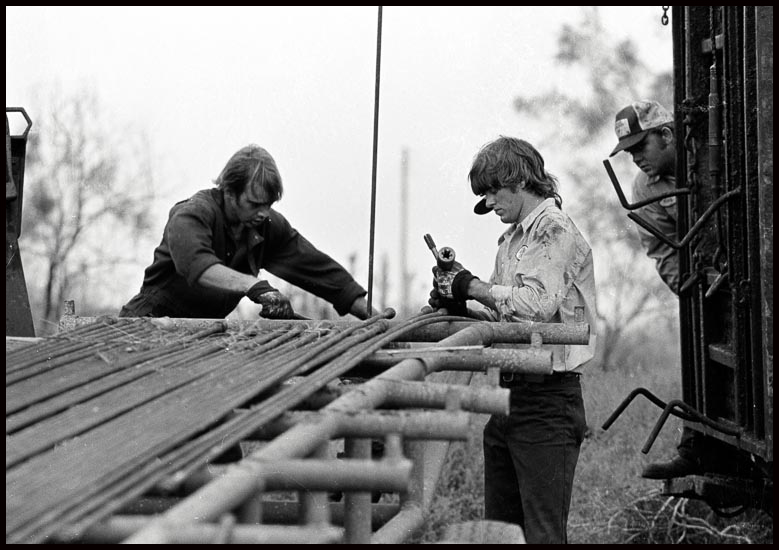
Oil workers on a drill rig, West Texas 1980 © John MacPherson
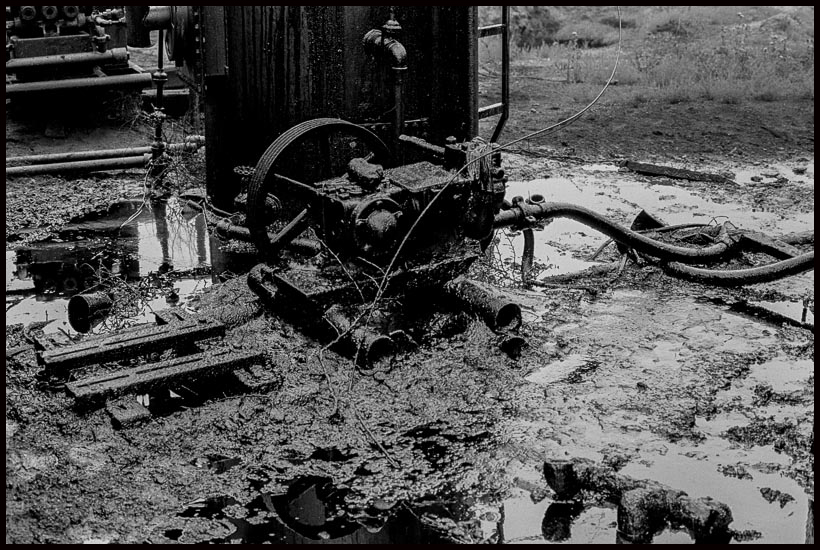
Texas crude, West Texas 1980 © John MacPherson
Some of the folks I’d met in West Texas were connected with oil, directly or indirectly, and with the ongoing crisis in the (‘Persian’) Gulf business was booming for them, the price of oil was rocketing (and eventually reaching almost $40 a barrel from it’s previous average price of $16 a barrel). Old wells that had become uneconomic to operate were now being re-opened and water-flooded to recover residual oil reserves (so-called ‘secondary production’).
Meanwhile back home in Scotland business was also booming in the North Sea as oil production was ramped up to meet demand. Strangely (given the current furore over Scotland’s use of Sterling if the Yes vote succeeds) when I arrived in Houston I tried to change some UK pounds for dollars, “Are they Scottish notes or English ones?” asked the cashier. When I asked why she explained that she had differing exchange rates, that a Scottish pound note was worth 3 cents more than an English one! Her only explanation was that “It must have something to do with the oil men going to Aberdeen. But I’m not sure really.”
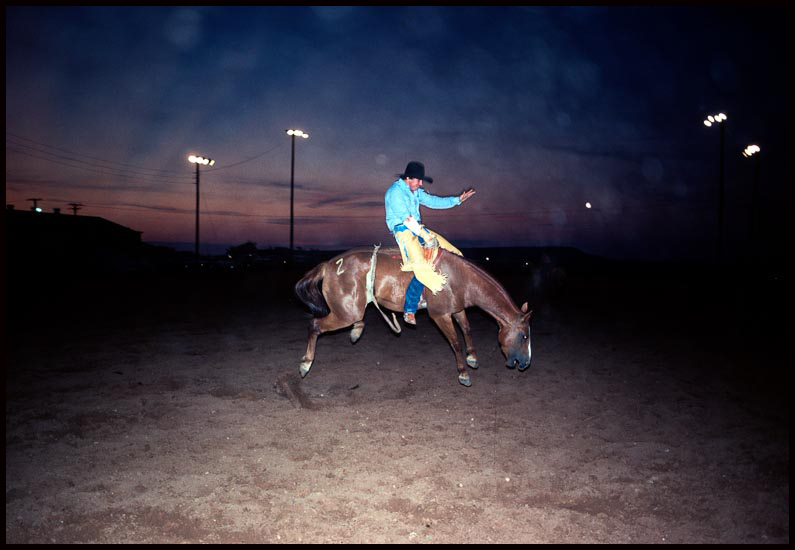
Small town evening rodeo West Texas 1980 © John MacPherson
I was very fortunate in the people I met, solid rural folks, hard-working, deeply religious, and all immensely kind. I attended a small town rodeo in West Texas one day, it started late afternoon and ran on into the evening. I was the only tourist, and was invited into the ring by the MC and introduced over the tannoy to all the spectators and performers, who gave me a round of applause.
It was a great evening of camaraderie, excitement and some truly astonishing riding skills. The passion for such events was palpable, whole families turning up with coolers of food and beer and cheering on their favourites late into the night. Like the Agricultural Shows and Highland Games I’d recently attended at home, these events were the focal point for the community and the atmosphere was splendid, and familiar.
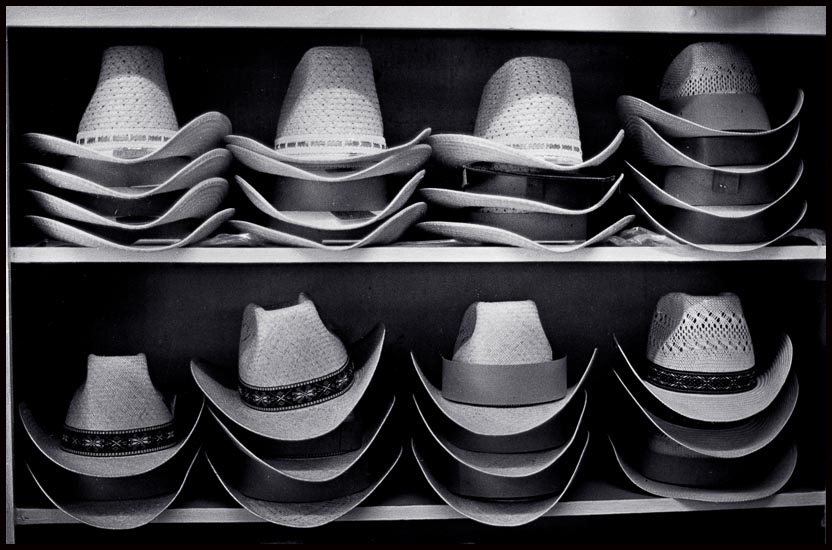
Cowboy hats, Western wear shop, Texas 1980 © John MacPherson
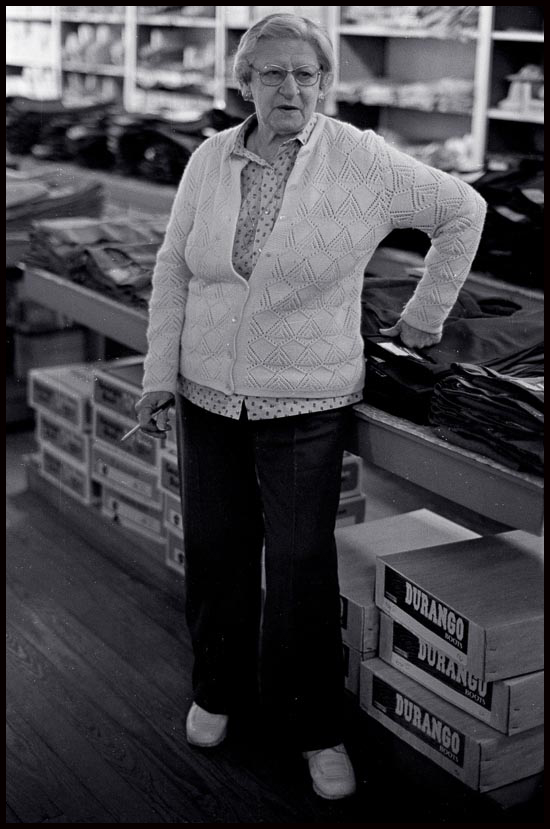
Owner of Western wear shop, Texas 1980 © John MacPherson
One of the more sobering events I experienced at this time was in a small south Texas rural school with a group of African-American children. It’s also a seemingly insignificant incident but one that underlined for me how powerful photography can be, and it has been strongly influential in shaping my feelings about photography’s power to communicate. It’s too long to add, so if you are interested you can read it here.
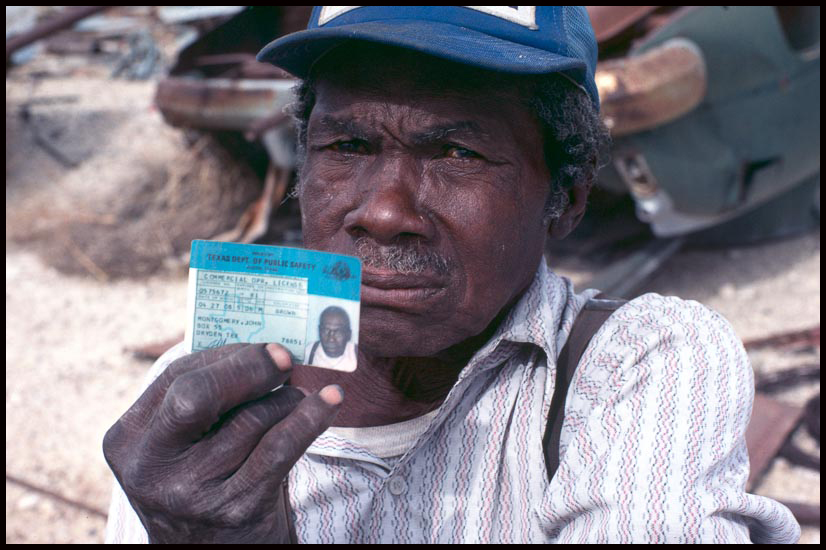
John Montgomery, Dryden, Texas, 1980 © John MacPherson
But there are many many fascinating people I met, such as John Montgomery an elderly African-American man, in Dryden Texas. There’s not very much in Dryden, and he was pottering about in a junk yard beside a garage when I stopped, and we sat and talked for a while whilst I poured water down my throat to try to rehydrate.
His stern look belied a gentle and engaging humour, and his stories of small town life and trying to wrestle a living from the passing trade in a rural area were ones I’d heard in many places, but like all such tales, made all the more poignant and meaningful for hearing them first-hand and passionately told.
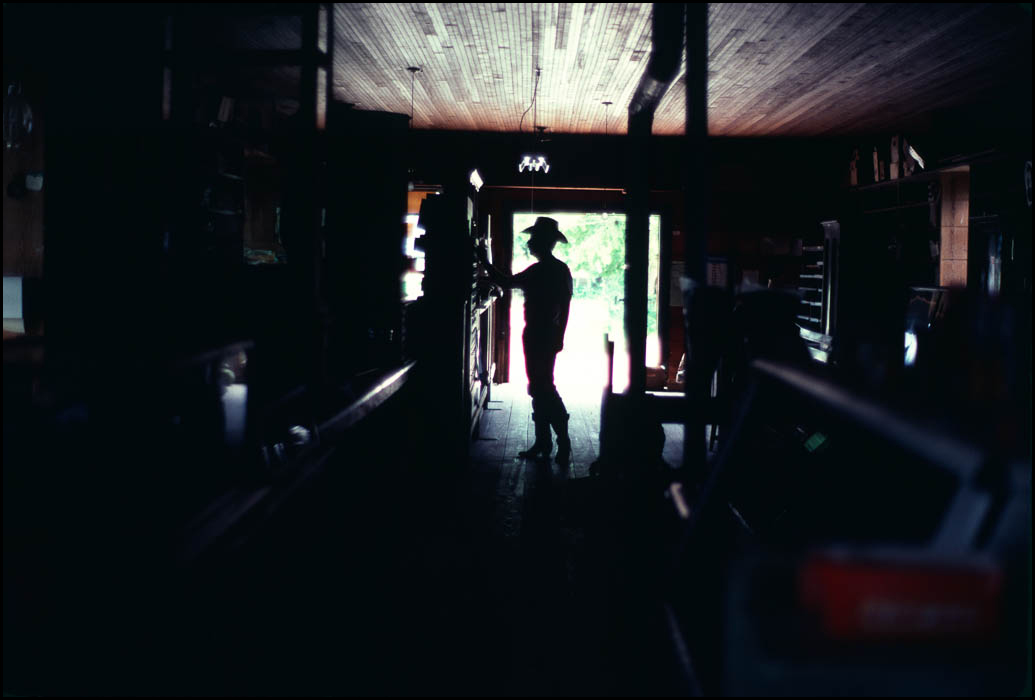
Collecting the mail, Fischer, Texas 1980 © John MacPherson
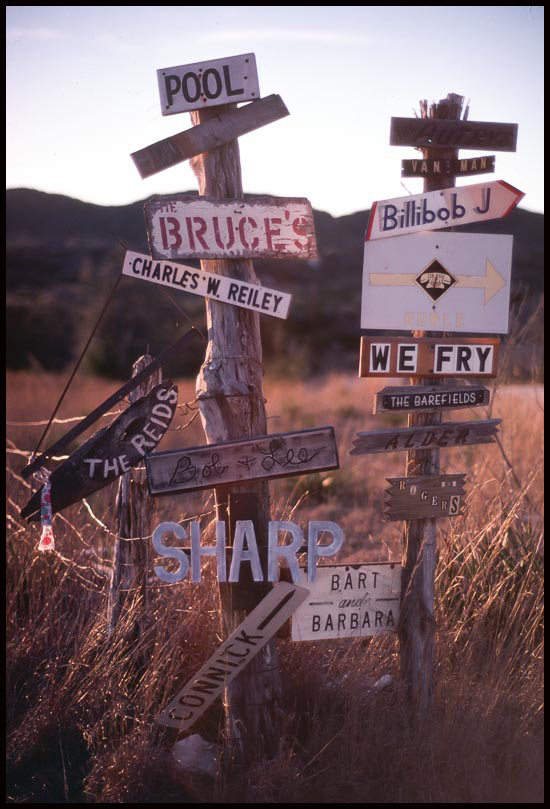
Rural road signs, Texas 1980 © John MacPherson
And then there was the Elrod family in Uvalde Texas, who graciously allowed me a glimpse of what goes on at the end of those rural dirt roads that lead off the tarmac into the brush. I had often cycled past a post with a higglepiggle stack of signs on it, many different family names, hinting at the life that goes on somewhere ‘out there’ but which a casual passerby might have no inclination to follow. But ‘out there’ as I discovered, were being created many stories, the lives of ranchers, oil workers, mechanics, road menders, drivers, doctors, nurses, chemists, shopkeepers, barmen and women, and of course cowboys. Just ‘ordinary’ people getting on with their ‘ordinary’ lives.
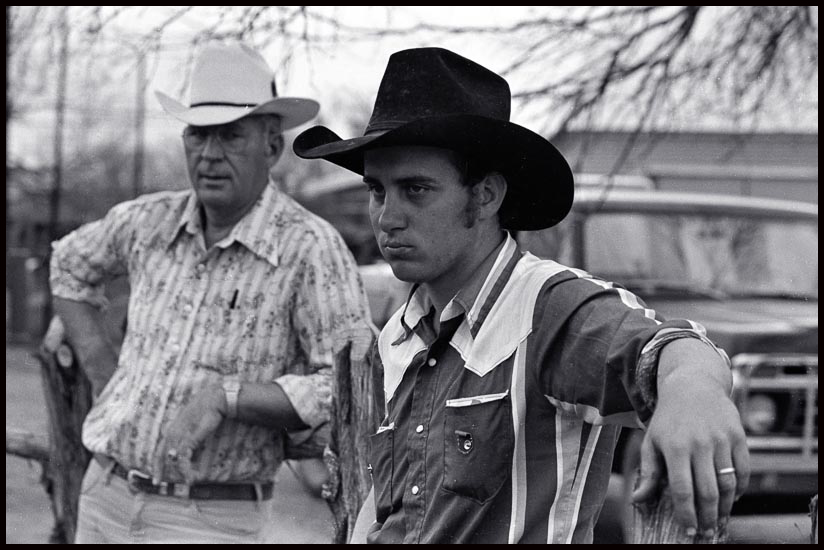
The Elrod family, father and son, Texas. 1980 © John MacPherson
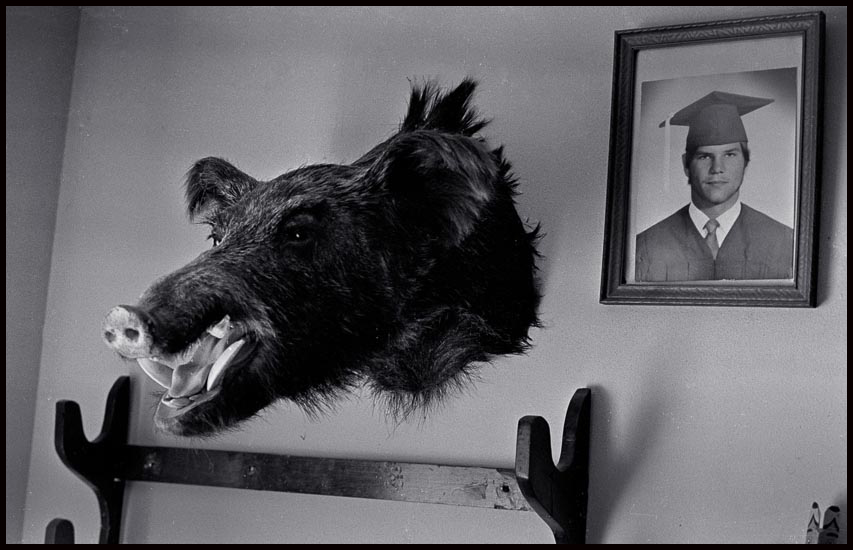
The Elrod family home, Texas. 1980 © John MacPherson
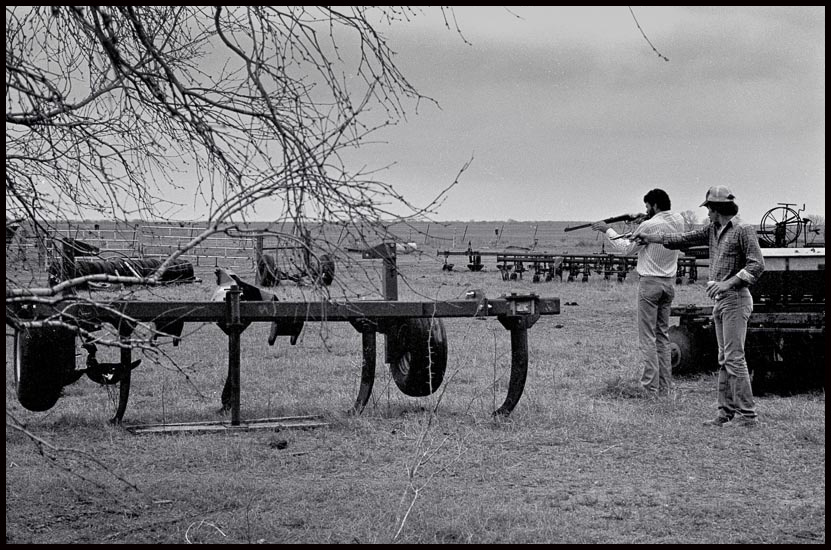
The Elrod family, Texas. 1980 © John MacPherson
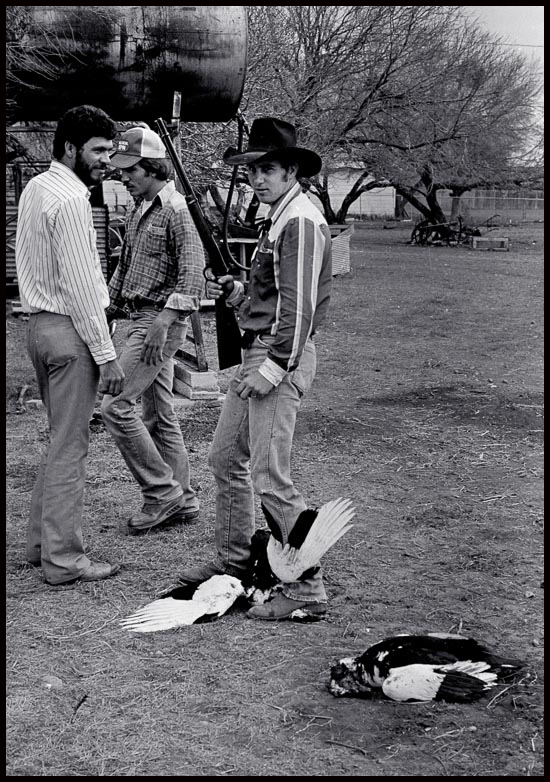
The Elrod family, Texas. 1980 © John MacPherson
And that brings me to the “other reason for this post” that I mentioned at the outset: a comment made by Richard Brown, a stern critic of my Scottish piece ‘Another Country’ and the people and their ‘places’ I’d portrayed within it. Mr Brown described it thus (and I quote):
“…these are only ordinary quality photos of only ordinary people and scenery, and the world is full of much better and more interesting stuff !!”
And you know, I fundamentally disagree with most of what he says; and I feel somewhat sad for him: his own ‘place’ must be a lonely and dispiriting one.
It’s tempting to think the rest of the world is more interesting, that the grass is greener elsewhere, and to overlook all that surrounds you. Truth is, no matter where you are in the world whether in the parts that are wet, or the parts that are dry, whether in the high mountains, or the flat and featureless plains below, when you get right down to it, it’s the ‘ordinary’ people who make it special. Yes, like my Scottish images from the 70’s these pictures of Texas may be ‘ordinary’, but the people they portray are far from ‘ordinary’. They wrestle their livings from the land, and they leave their mark upon it. And sometimes, if you’re lucky, they’ll leave their mark on you too.
Texas may be ‘in’ America, but it is in many respects ‘another country’. It’s all you might expect, but it’s also a great deal more than you could ever imagine.

Author — John Macpherson
John MacPherson was born and lives in the Scottish Highlands. He trained as a welder in the Glasgow shipyards, before completing an apprenticeship as a carpenter, and then qualified as a Social Worker in Disability Services. Along the way he has cooked on canal barges, trained as an Alpine Ski Leader & worked as an Instructor for Skiers with disabilities, been a canoe instructor, and tutor of night classes in carpentry, stained glass design and manufacture, and archery. He has travelled extensively on various continents, undertaking solo trips by bicycle, or motorcycle. He has had narrow escapes from an ambush by terrorists, been hit by lightning, caught in an erupting volcano, trapped in a mobile home by a tornado, kidnapped by a dog's hairdresser, rammed by a basking shark and was once bitten by a wild otter. He has combined all this with professional photography, which he has practised for over 35 years. He teaches photography and acts as a photography guide & tutor in the UK and abroad. His biggest challenge is keeping his 30 year old Land Rover 110 on the road. He loves telling and hearing stories.