
Preserving the future
Written by John MacphersonTwitter is marvellous. I was listening to the radio this morning and heard an article about Van Gogh’s reds fading to white, and possibly because he used cheap pigments as these were all he could afford. A piece of art history slowly disappearing. (Article on the science behind this)
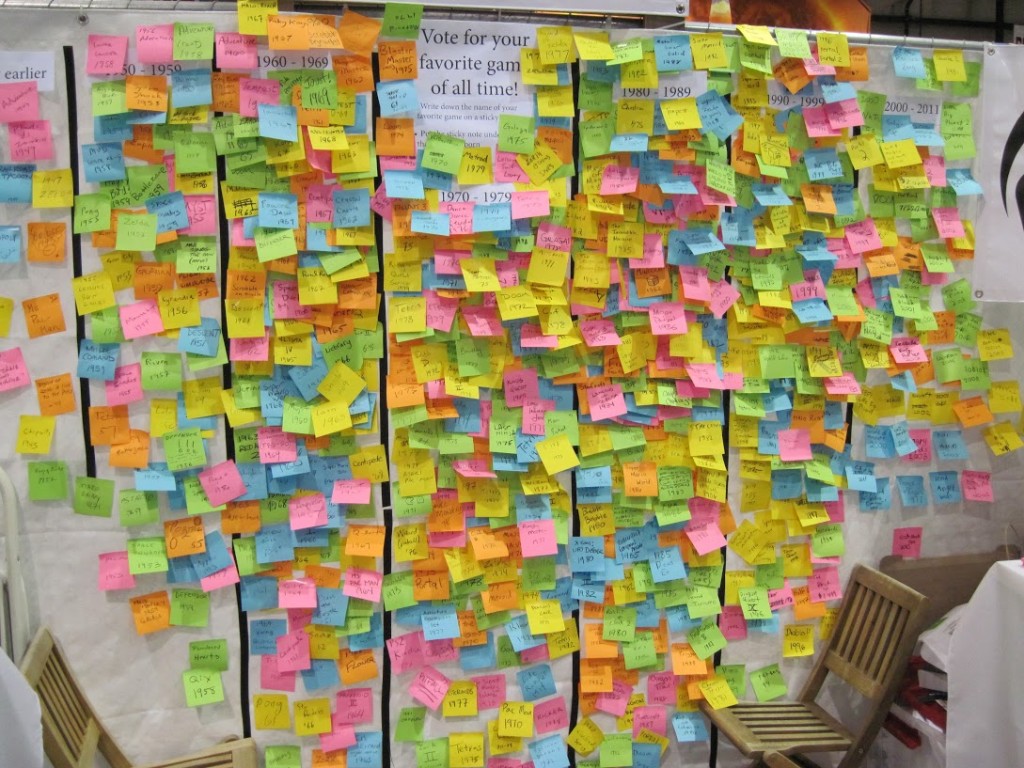
The Post-it Wall © Brian Quan
And as I listened two things slid through in front of me on Twitter. First an excellent article on light damage and conservation, by Judith Haemmerle, Executive Director, Digital Game Museum, Santa Clara, California, featuring a simple visual experiment using Post-it notes to show the damage that can occur through exposure to UV.
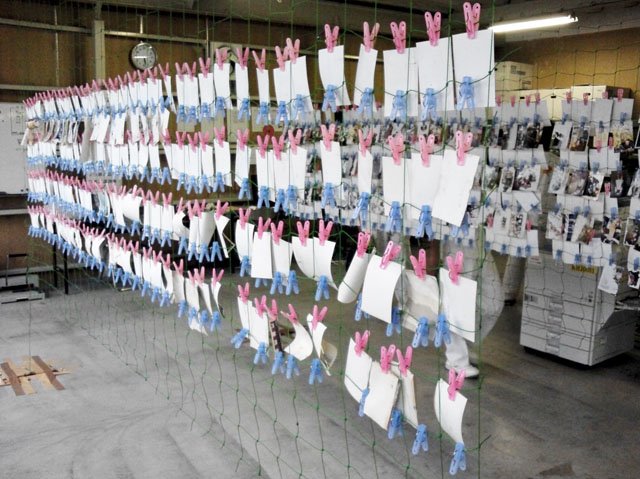
“In our startup video game museum, everything is done by volunteers on a ridiculously limited budget. So it’s always a balance between collections care and – well, everything else. My biggest anxiety last year was light damage.And then via Petapixel an article on how the Ricoh camera company, with the help from partners, has “returned 90,000 photos to victims of the 2011 tsunami in Japan”. This is being done through their Corporate Social Responsibility Policy, in the “Save the Memory Project”. Cleaning off water, mud and bacteria, gently removing dirt and then digitizing images, Ricoh staff have undertaken a massive task to reunite photographs with their owners or relatives. In a time when we’re reminded daily of “the tsunami of images that is going to swamp us all” it’s easy to forget how important just one image might be in reconnecting someone, some family, to their past, however dreadful the breaking of that link might have been.
Drying images © Ricoh
All I can say is well done Ricoh. What a fantastic undertaking.
I use Ricoh cameras, have done for several decades. The first Ricoh camera I ever used, almost 30 years ago helped me change the life experiences of two marginalized men, shaping the last few years of their lives in ways I’d never have imagined possible (link). I chose the camera because it was easy to use, but also because the images it produced were astonishingly high quality, way better than its diminutive size would suggest.
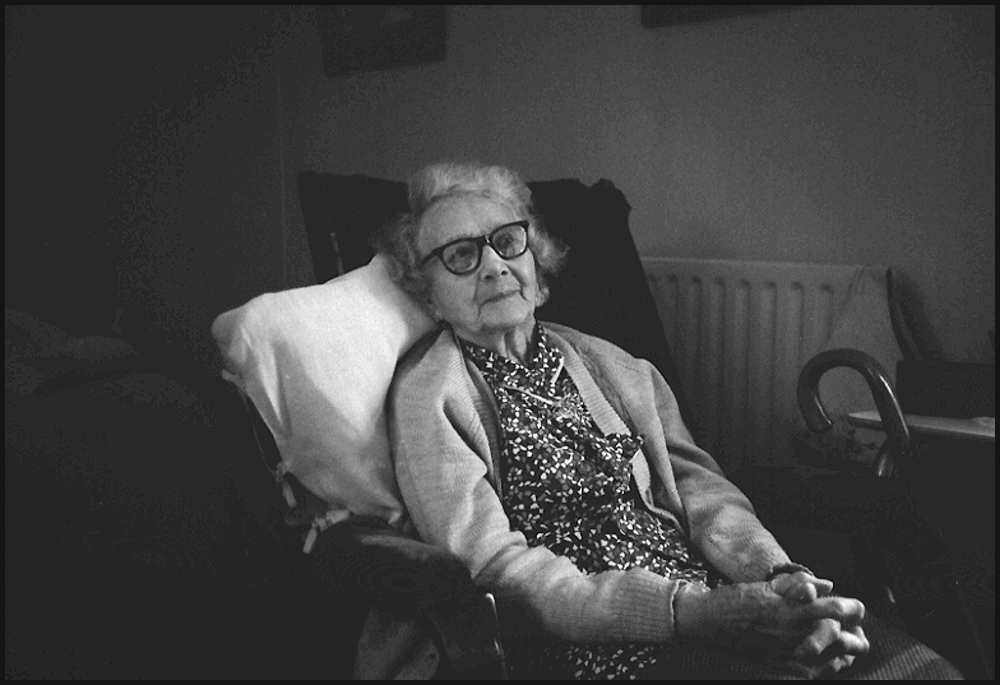
Resident of care home, shot with a Ricoh © Malcolm MacPhee/Inside The Fort
And today I use a couple of very small modern Ricoh cameras. Why? Oh, you’d have to use one to know. But with it I can capture moments I’d otherwise miss. And with a wee boy to bring up, that’s a good tool to have in my pocket.
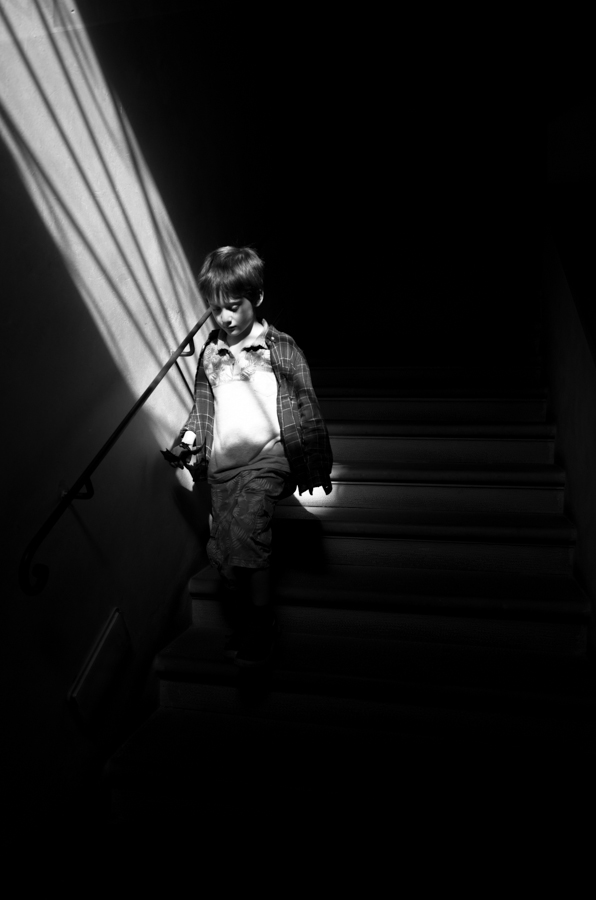
William in Florence, Italy © John MacPherson
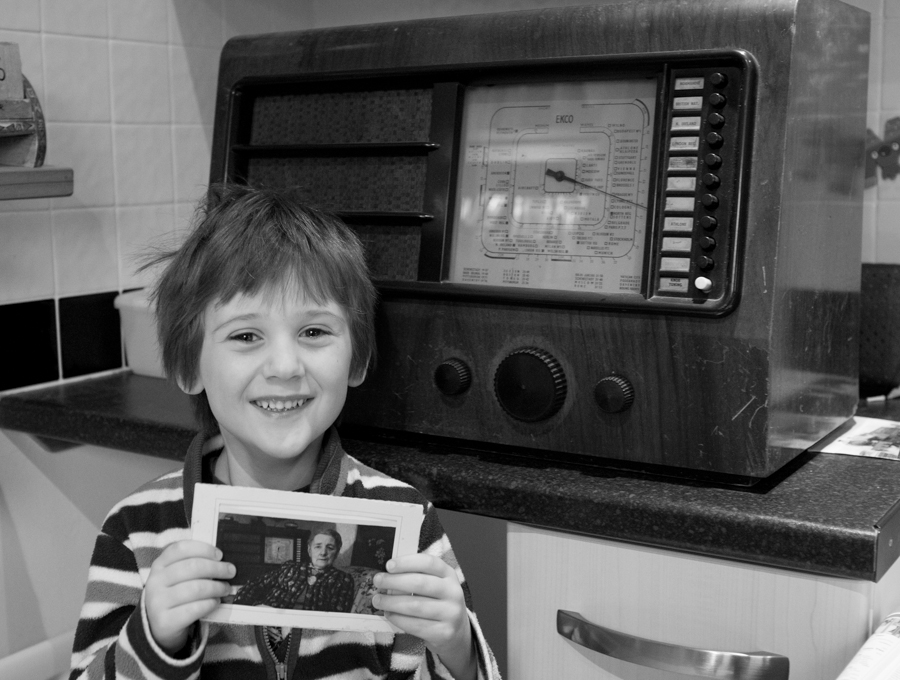
I’ve got a lot of photos of my son. I hope he enjoys them when he’s older, and it prompts him to add to the tsunami of images that surround us, by taking his own. I’m trying to teach him how, its slow progress, but I’ve starting by telling him how to save them, so he doesn’t lose them. Showing him old pictures of our family, like his great-grandmother and her radio, which is now our old radio, explaining to him these are images we’ve got because my dad saved the negatives. Negatives which William and I have scanned.
The old radio © John MacPherson
I think he gets it!
I think he has a sense of what photography does so well: it takes our present, and invests in it the richness of the past, for our future. So it doesn’t fade.

Author — John Macpherson
John MacPherson was born and lives in the Scottish Highlands. He trained as a welder in the Glasgow shipyards, before completing an apprenticeship as a carpenter, and then qualified as a Social Worker in Disability Services. Along the way he has cooked on canal barges, trained as an Alpine Ski Leader & worked as an Instructor for Skiers with disabilities, been a canoe instructor, and tutor of night classes in carpentry, stained glass design and manufacture, and archery. He has travelled extensively on various continents, undertaking solo trips by bicycle, or motorcycle. He has had narrow escapes from an ambush by terrorists, been hit by lightning, caught in an erupting volcano, trapped in a mobile home by a tornado, kidnapped by a dog's hairdresser, rammed by a basking shark and was once bitten by a wild otter. He has combined all this with professional photography, which he has practised for over 35 years. He teaches photography and acts as a photography guide & tutor in the UK and abroad. His biggest challenge is keeping his 30 year old Land Rover 110 on the road. He loves telling and hearing stories.